Chapter 20 - You Can Have Mine
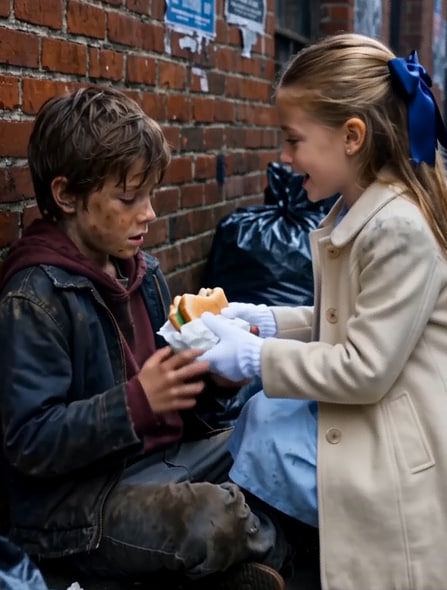
One year after Emily found Thomas in the rain, Boston woke beneath another gray September sky.
Rain began before noon.
Thomas stood at the kitchen window watching it.
He was sixteen now.
Taller.
Healthier.
Still thin.
Still wore the old gray hoodie sometimes, though Laura had repaired the elbow properly.
Emily came downstairs carrying two paper bags.
“You ready?”
“For what?”
“You promised.”
Thomas groaned.
“I was emotionally manipulated.”
“You signed a calendar.”
“That’s not legally binding.”
From the kitchen, Sarah—visiting for coffee—called, “Actually—”
Thomas pointed at her.
“Don’t.”
They were volunteering at a youth outreach center three blocks from the place Emily had first seen him.
Thomas had resisted the idea for months.
He did not want to become “the formerly homeless rich kid who saves homeless people.”
Those were his words.
So he volunteered quietly.
No Bennett Foundation.
No cameras.
No press.
He stocked socks.
Cleaned tables.
Helped teenagers fill out school forms.
And made sandwiches.
That afternoon, Laura walked with Thomas and Emily through the rain.
She carried the same cream handbag.
Emily noticed.
“Mom.”
“What?”
“You still have that?”
Laura looked down.
The handbag had been cleaned after the rainstorm.
A faint water stain remained near the bottom.
“I like it.”
“You dropped it.”
“I remember.”
Thomas smiled.
“I remember too.”
They reached the outreach center.
A boy of perhaps twelve sat beneath the awning.
Not Thomas.
Just another child having a terrible day.
He stared at the sandwich in Thomas’s hand.
Thomas stopped.
Laura watched.
So did Emily.
Thomas walked over.
He crouched.
“You hungry?”
The boy hesitated.
Thomas held out the sandwich.
“You can have mine.”
Emily stared at him.
“Hey. That’s my line.”
Thomas laughed.
The boy took it.
“Thanks.”
Thomas did not hug him.
He knew better now.
He simply sat nearby until the boy began eating.
Laura remained beneath the rain.
Her chest tightened.
For one second, the sidewalk folded backward in time.
Thomas at fifteen.
Dirty cheek.
Wet clothes.
Empty stomach.
Emily kneeling.
Then Thomas looked up.
“Mom?”
Laura walked toward him.
Her cream handbag slipped from her fingers.
Thomas jumped.
“Seriously?”
Laura laughed through sudden tears.
This time she had dropped it deliberately.
She pulled both children into her arms.
Emily protested.
“You’re crushing me.”
Thomas said, “She does that.”
Laura held them anyway.
A year earlier, Thomas had gone rigid when she embraced him.
Now he hugged her back.
Not desperately.
Not because he feared she might disappear.
Simply because she was his mother.
Later that evening, they returned home for dinner.
Thomas opened the refrigerator.
“Who ate my turkey?”
Emily looked suspiciously innocent.
“You?”
“No.”
“You’re lying.”
“Prove it.”
Thomas looked at Laura.
“Do we still have detectives?”
“No.”
“Unfortunate.”
Dinner became loud.
Normal.
Imperfect.
Eleanor joined them.
She had asked three days earlier.
Thomas had said yes.
Their relationship remained cautious.
But real.
After dinner, Eleanor handed Thomas a small envelope.
He stared.
“What is it?”
“A copy of your grandfather’s original letter creating the trust.”
Thomas’s face tightened slightly.
Eleanor noticed.
“No money tonight.”
“Good.”
She continued.
“There’s a sentence I think you should read.”
Thomas opened it.
Robert Bennett had written:
Power is safest when the person holding it remembers the people who cannot enter the room.
Thomas read the line twice.
Then looked at Eleanor.
“Grandpa wrote this?”
“Yes.”
“And everybody ignored him?”
Eleanor gave a sad smile.
“More or less.”
Thomas folded the letter.
“I’m keeping it.”
Laura watched.
The eighty-four million dollars no longer interested him as a treasure.
It had become responsibility.
That mattered.
After Eleanor left, Emily brought something from her room.
A clear plastic evidence sleeve.
Inside was the faded hospital bracelet.
Laura stared.
“How did you get that?”
“Detective Ruiz returned it after the case closed.”
Thomas took it.
His name.
His age.
Laura’s name beneath his.
For years, the bracelet had been hidden because Marlene said Laura was never supposed to see it.
Thomas rubbed his thumb across the scratched plastic.
“What do we do with it?”
Laura answered carefully.
“Whatever you want.”
“Throw it away?”
“If you want.”
“Frame it?”
“If you want.”
Emily said, “Put it with the sandwich.”
Thomas looked at her.
“What sandwich?”
“The first sandwich.”
“That was eaten.”
Emily rolled her eyes.
“I mean the story.”
Thomas smiled.
Then became serious.
He looked at Laura.
“Marlene told me this bracelet proved you gave me away.”
Laura’s throat tightened.
Thomas continued.
“But it had your name on it.”
“Yes.”
“All those years, the proof she was lying was on the thing she kept hidden.”
Laura sat beside him.
“Sometimes evidence exists before we’re ready to understand it.”
“That sounds like Sarah.”
From the doorway Sarah called, “I’m offended by how often that is used as an insult.”
Everyone laughed.
Thomas placed the bracelet inside the blue box containing James’s letters.
Not to worship the past.
Not to erase it.
To keep the truth together.
The next morning, rain still tapped against the windows.
Thomas entered the kitchen before school.
Laura was making sandwiches.
He stole one half.
“Hey.”
“You can have mine,” he said.
“That’s mine.”
“Exactly.”
Emily ran downstairs.
“Where’s breakfast?”
Thomas handed her the other half.
She took it.
Then looked suspicious.
“Did you lick this?”
“No.”
“You paused.”
“I was offended.”
Laura watched them argue.
A year ago, a sandwich had been charity.
Then evidence.
Then the beginning of a family secret collapsing.
Now it was just breakfast.
Thomas grabbed his backpack.
He checked once for crackers.
The old habit remained.
Laura noticed.
She did not tell him to stop.
Healing did not require pretending hunger had never happened.
Thomas reached the door.
Then turned back.
“Mom?”
Laura looked up.
For one second, she remembered the rain.
The dirty face.
The trembling question:
You know my name?
“Yes?”
“I’ll be home after school.”
Laura smiled.
Not because he needed permission.
Because he was telling her where he would be.
Because nobody was hiding him.
Because nobody was moving him.
Because nobody had to earn the right to come home.
“I’ll be here.”
Thomas nodded.
Then Emily pushed past him.
“Move. We’re late.”
“You’re always late.”
“You were dead for nine years. You don’t get opinions about punctuality.”
“Emily!”
“What?”
Thomas laughed so hard he had to hold the doorframe.
Laura tried to look stern.
Failed.
The children ran into the morning.
Thomas beside Emily.
Not a ghost.
Not a trust beneficiary.
Not evidence.
Not leverage.
Not the dead boy in a forged certificate.
Her son.
Alive.
And the simple kindness that had brought him home no longer looked accidental to Laura.
Emily had seen a hungry boy everyone else was walking past.
She had stopped.
She had noticed.
She had offered what she had.
Nine years of lawyers, money, fear, corporate power, forged papers, threats, and silence had hidden Thomas from his family.
A nine-year-old girl had broken through all of it with half a sandwich.
Laura looked at the cream handbag resting beside the door.
Then at the rain beyond the windows.
And finally at the hospital bracelet visible through the open blue box.
Once, it had proved how completely Thomas had been erased.
Now it proved something else.
His name had survived.
Her name had remained beside it.
And after nine years of people deciding what Thomas was allowed to know, where he was allowed to live, and who he was allowed to love, he had finally taken back the one thing none of them had ever truly owned.
May you like



His life.
THE END







