Chapter 18 - The Fall of the Hawthorne Matriarch
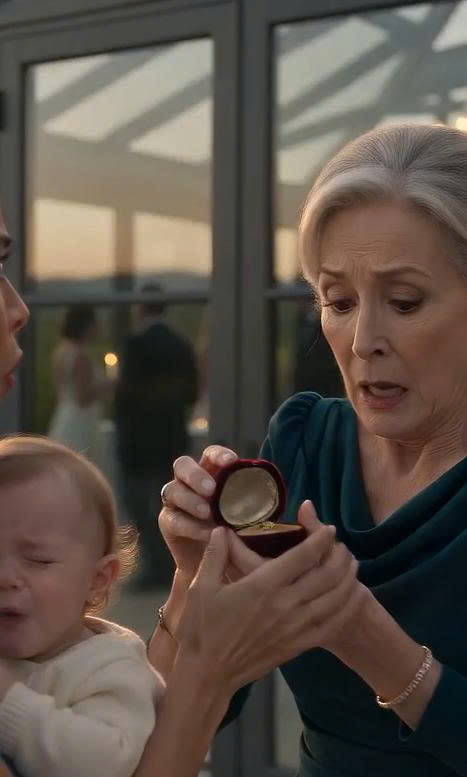
Evelyn eventually pleaded not guilty.
So preparations began for trial.
But civil cases moved faster.
The probate court validated Charles’s third will after extensive expert testimony.
Rose’s status as Charles and Eleanor’s daughter was supported by original birth records and uncontested genetic evidence already preserved in hospital archives.
No cheap surprise.
No last-minute revelation.
The truth had existed for decades.
People had hidden it.
The court removed Evelyn permanently from all fiduciary positions.
Ordered a full accounting.
Froze disputed assets.
Hawthorne Medical recognized James and Rose as equal beneficial controllers of the family voting block, subject to trust administration.
James and Rose together could dominate the company.
They chose not to.
That surprised the board.
Rose said, “We create independent governance.”
James agreed.
They established a voting arrangement requiring independent directors for major transactions.
Neither sibling could unilaterally sell the company.
Neither could appoint family members without review.
Sarah watched them sign.
Charles had spent his life designing structures to control people after death.
James and Rose used structures to limit themselves.
That was the first true break in the cycle.
Dr. Lena Foster remained CEO.
Employees applauded when she announced no further asset sales and rehired several workers affected by Malcolm’s layoffs.
James did not take an executive title.
Rose did not either.
They owned.
They did not rule.
Financial accounting showed Evelyn diverted approximately $41.6 million in Rose-related distributions and trust opportunities over two decades.
Some money had grown in investments.
Some was spent.
Some went into foundation properties.
Court-supervised settlements began returning assets.
Evelyn’s personal holdings were attached.
Her Manhattan townhouse.
Investment accounts.
Art.
Jewelry.
Even pieces she had worn to galas while Eleanor lived under another name.
Rose did not enjoy watching luxury disappear.
“None of it gives Mom back.”
James nodded.
“No.”
The criminal prosecution was stronger.
Malcolm testified.
Andrew Bell testified.
Victor testified.
Graham testified.
Patricia testified.
Financial records.
Forged letters.
St. Agnes restrictions.
The boat log.
Eleanor’s recording.
Daniel’s wedding footage.
Even Sarah’s slap became relevant as evidence of Evelyn’s immediate consciousness of guilt when confronted with the locket.
The defense tried to exclude it.
The judge allowed limited use.
At trial, Daniel described the wedding terrace.
He played the footage.
Evelyn reaching into Lily’s diaper bag.
Her panic at the locket.
The slap.
Sarah falling while protecting Lily.
Evelyn lying immediately.
Then the audio:
“Did you find it?”
“Yes.”
“Then destroy the photograph before James sees Rose.”
The jury watched Evelyn.
She did not look at them.
Sarah testified next.
Evelyn’s attorney attacked her.
“You dislike my client?”
“Yes.”
“You stand to benefit financially if your husband gains control?”
Sarah answered, “My husband voluntarily gave up executive control.”
The attorney changed direction.
“You and Rose became close during this dispute.”
“Yes.”
“So you want her to win.”
“I want the documents to mean what they mean.”
The courtroom went silent.
Sarah did not exaggerate.
That made her difficult to attack.
James testified for almost two days.
His own mistakes came out.
Defending Evelyn.
Ignoring warning signs.
His unauthorized access to corporate records.
His habit of hiding information from Sarah.
The defense tried to use those admissions to weaken him.
Instead, they made him credible.
“You expect this jury to believe Evelyn controlled your family for decades while you saw nothing?”
James looked at the jurors.
“Yes.”
“Convenient.”
“No. Humiliating.”
The defense attorney paused.
James continued.
“Power works best when people benefiting from it don’t ask how it works.”
Sarah felt tears in her eyes.
That was the lesson.
Not that Evelyn was uniquely monstrous.
That entire systems survive because comfortable people avoid uncomfortable questions.
Rose testified last.
She told the jury what it meant to grow up knowing her brother existed but believing he rejected her mother.
She described Eleanor watching James through photographs.
Evelyn’s forged letters.
The hidden inheritance.
St. Agnes.
Then the defense asked:
“Your mother voluntarily participated in the original disappearance, correct?”
Rose swallowed.
“Yes.”
“So Evelyn didn’t kidnap her.”
“No.”
“Your mother lied too.”
“Yes.”
“Your mother committed fraud too.”
“Possibly.”
James looked at Rose.
She did not protect Eleanor with false sainthood.
Then Rose added:
“My mother made one terrible choice. Evelyn spent twenty-four years making sure she could never undo it.”
That distinction stayed with the jury.
Closing arguments lasted a full day.
The jury deliberated three days.
Evelyn was convicted on multiple fraud, conspiracy, obstruction and financial exploitation counts.
Some charges related to unlawful restraint produced more complicated verdicts because the guardianship orders, however corruptly maintained, created legal ambiguity.
She was acquitted on two counts.
Convicted on most.
Sarah appreciated that too.
Justice did not need to pretend every accusation was equally provable.
At sentencing months later, Evelyn stood.
She asked to address James.
The judge allowed it.
Evelyn turned.
“I loved you.”
James looked at her.
“I know.”
She seemed startled.
“You know?”
“Yes.”
Tears entered her eyes.
“Then you understand.”
“No.”
His voice remained quiet.
“Love did not give you ownership.”
Evelyn’s face collapsed.
May you like



For the first time, James did not argue with her version of history.
He simply refused to live inside it.







