Chapter 20 - The Door Stays Open
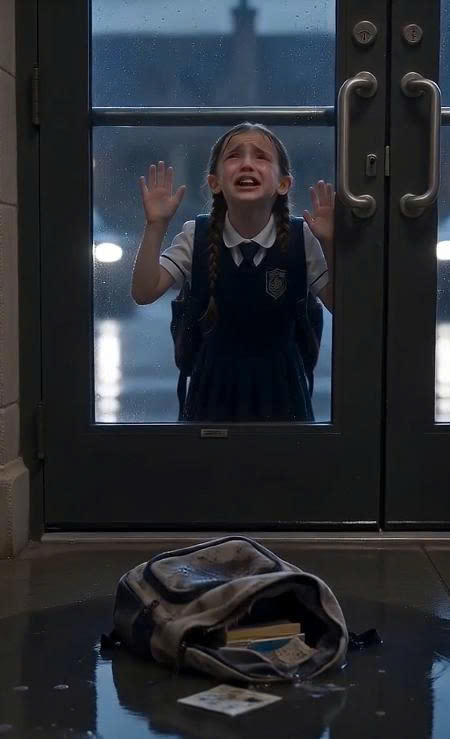
Rain fell on the morning Mia returned to Hawthorne Academy.
Not a storm.
Just steady autumn rain tapping softly against the windows.
Sarah almost laughed at the weather’s sense of symbolism.
Mia noticed.
“What?”
“Nothing.”
“You’re doing the weird Mom smile.”
“I do not have a weird Mom smile.”
“You absolutely do.”
They parked near the courtyard.
For several seconds Mia did not move.
Sarah waited.
The glass doors were twenty yards away.
The same doors.
Different locks.
Different policy.
Different people inside.
But memory did not care about policy manuals.
Mia’s breathing changed.
Sarah reached toward her.
Then stopped.
“Do you want my hand?”
Mia considered it.
“Yes.”
They walked together.
One year earlier, Mia had pounded on those doors while rain destroyed her homework.
Today an employee opened them before she reached the handle.
“Welcome back, Mia.”
She nodded.
Inside, Julia Alvarez waited.
So did Jonathan.
Several students.
Teachers.
New administrators.
No Diane.
The school had installed a permanent staffed dismissal desk near the lobby.
A sign beneath it read:
NO STUDENT WAITS ALONE.
Sarah stared.
Mia whispered, “Good rule.”
“Very.”
They walked toward Classroom 12.
The old storage space had been transformed.
Warm lights.
Glass walls.
Counselor offices.
A student reporting desk.
Small meeting rooms.
A cabinet explaining how students could report safety, academic, financial or ethical concerns without going through a single administrator.
The physical door had been removed entirely.
Mia stood where it once had been.
Julia approached.
“You okay?”
Mia nodded.
“I think so.”
The ceremony began without grandeur.
No donors on a stage.
No giant ribbon.
Jonathan spoke for four minutes.
“Hawthorne failed a student because adults protected authority instead of responsibility.”
Silence filled the room.
“The lesson is not that bad people sometimes hold power. Every institution already knows that risk. The lesson is that good systems must assume power can be abused and create ways to challenge it.”
Sarah thought again of Mia’s science assignment.
Structural failure.
What happens when one support carries too much load?
Then Julia spoke.
“I saw things that frightened me, and for too long I stayed quiet because I needed my job.”
She looked toward Mia.
“I wish courage had come sooner.”
Mia smiled at her.
“It came.”
Julia’s eyes filled.
Then it was Mia’s turn.
Sarah had offered to help write the speech.
Mia refused.
She stepped forward holding one wrinkled sheet of paper.
Sarah recognized it immediately.
The science homework rescued from the storm.
Water had blurred the edges.
The teacher’s red A remained visible.
Mia looked at the adults gathered around her.
“Last year, I thought this paper was ruined.”
She held it up.
“It got soaked because my backpack fell open outside.”
Sarah felt tears rise.
Mia continued.
“The question was about structural failure.”
A few people smiled.
“I wrote that when one part of a structure carries too much weight, it can break. I thought that was just science.”
She looked around Classroom 12.
“But Hawthorne had that problem too.”
Nobody moved.
“Too much depended on a few adults being honest. When some of them weren’t honest, other people were scared to say anything.”
Mia looked toward Julia.
“Teachers were scared.”
Toward Jonathan.
“Board members trusted people they loved.”
Then toward Sarah.
“Parents were busy.”
Sarah felt the words without flinching.
Mia had earned the right to say them.
“And kids were supposed to follow rules even when adults weren’t following theirs.”
A teacher lowered his head.
Mia held the page against her chest.
“The night I was outside, I thought the worst thing was that nobody opened the door.”
Her voice became quieter.
“But later I learned something worse.”
Sarah held her breath.
“Some people knew I was afraid and wanted me to stay afraid.”
Silence.
“That’s different.”
Mia looked toward the open entrance of Classroom 12.
“So I don’t want this room to be about me being brave.”
Sarah blinked back tears.
“I was scared.”
Mia smiled faintly.
“I cried a lot.”
A few students laughed softly.
“I want it to be about people not having to be brave alone.”
Sarah covered her mouth.
Mia looked at the wrinkled homework again.
“My answer said strong structures need more than one support.”
She placed the page inside a clear display folder on the student desk.
“Maybe schools do too.”
No applause came immediately.
For several seconds, nobody seemed willing to break the silence.
Then Julia started.
Jonathan joined.
Students.
Teachers.
Parents.
The room filled with applause.
Mia stepped away from the desk and went directly to Sarah.
Sarah hugged her.
“You said I was busy,” Sarah whispered.
Mia pulled back nervously.
“Are you mad?”
“No.”
“Really?”
“I was busy.”
Sarah touched her daughter’s cheek.
“I missed things I should not have missed.”
“You came back.”
Sarah looked through the glass wall toward the lobby.
The rain was getting heavier.
“Not soon enough that night.”
“But you came.”
Sarah understood that forgiveness and accountability could exist in the same sentence.
She hugged Mia again.
Later, when most guests had left, Jonathan approached.
“The foundation oversight committee approved the final restitution schedule.”
Sarah nodded.
“I heard.”
“And all scholarship accounts are fully restored.”
“Good.”
“Andrew’s first restitution payment cleared yesterday.”
Sarah felt almost nothing at his name.
That surprised her.
Jonathan glanced at Mia.
“She changed this place.”
Sarah watched her daughter laughing with Julia’s children.
“No.”
Jonathan looked at her.
“She exposed what needed changing.”
There was a difference.
On their way out, Mia stopped at the glass doors.
Rain hammered the courtyard.
For one second Sarah saw the eleven-year-old girl again.
Soaked blazer.
Blue lips.
Trembling hands.
Homework floating in black water.
Mia reached for the handle.
The door opened easily.
She stepped halfway outside.
Sarah’s heart jumped.
“Mia?”
Mia held out her hand.
“Come here.”
Sarah joined her beneath the awning.
They watched the rain.
Mia smiled.
“You know what I remember most?”
Sarah expected her to say the cold.
The fear.
Diane turning the lock.
“What?”
“You running.”
Sarah stared at her.
“What?”
“When you got out of the car.”
Mia laughed softly.
“You dropped your bag in the road.”
“I did.”
“And one shoe came off.”
Sarah had forgotten that.
“I ruined those shoes.”
“I know.”
“You remember that?”
“I remember thinking you looked crazy.”
Sarah laughed through tears.
Mia leaned against her.
“I thought nobody was coming.”
Sarah put an arm around her.
“I will always try to come.”
Mia looked up.
“Even if you’re busy?”
Sarah smiled.
“Especially then.”
Behind them, an employee checked the dismissal desk before closing the lobby.
Three students were waiting for rides.
Two staff members remained with them.
The lights stayed on.
The doors stayed unlocked.
Mia looked through the glass.
A year earlier, a locked door had been used to tell her she was powerless.
Now she understood something Diane never had.
Power was not the ability to lock a door.
It was not money.
A title.
A marriage.
A board vote.
A secret file.
A forged signature.
Or fear.
Real power was what happened when one frightened person kept the evidence.
When another finally spoke.
When someone admitted a mistake.
When institutions were forced to answer for what they had allowed.
When a mother learned that protecting her daughter required more than arriving after the danger.
And when an eleven-year-old girl refused to believe that adults were entitled to silence simply because they had keys.
Mia stepped back inside.
Sarah followed.
The glass door swung shut behind them.
May you like



It did not lock.
THE END







