Chapter 10 - The Competency War
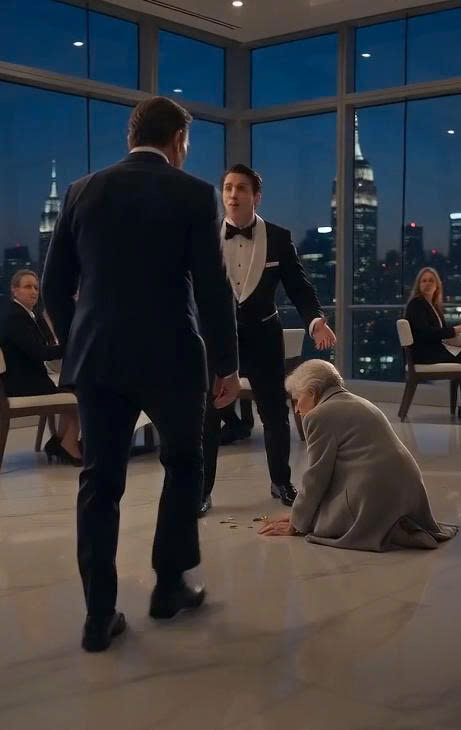
By morning, Eleanor’s dignity had become a legal battlefield.
Victor’s lawyers submitted affidavits describing her as “financially vulnerable,” “socially isolated,” and “potentially confused.”
They cited her inexpensive apartment.
Her lack of personal wealth.
Her dependence on public transportation.
Even the medicine bottle Marcus had dumped onto Aurelia’s floor.
David read the filing with increasing disgust.
“They’re using poverty as evidence of incompetence.”
Maya corrected him.
“Limited means. But yes.”
“She chose to live simply.”
“I know.”
“She owns a paid-off apartment in Queens.”
“I know.”
“She taught literature for thirty-two years.”
“I know.”
“She still does crossword puzzles in ink.”
Eleanor entered.
“Actually, I use pencil now.”
David stopped.
She took the petition.
Read three pages.
Then laughed.
“They say I’m unable to understand complex financial instruments.”
Maya looked uncomfortable.
“We’ll rebut it.”
“No.”
David frowned.
“What?”
Eleanor sat.
“I’ll testify.”
“You don’t have to.”
“That is exactly why I have to.”
At the Delaware hearing that afternoon, Eleanor appeared remotely from New York.
Victor sat in his attorney’s office.
David was present but no longer acting as CEO.
Chancellor Rebecca Harlan listened carefully.
Victor’s attorney emphasized Eleanor’s eleven-year delay.
“Mrs. Ward did not disclose this alleged trust until yesterday.”
Eleanor corrected him.
“Ms. Ward.”
“My apologies.”
“You aren’t sorry.”
The judge hid a smile.
Victor’s attorney continued.
“You claim Thomas Sinclair entrusted you with voting control over assets worth hundreds of millions of dollars?”
“Not the economic interest. Voting control under specific conditions.”
Maya looked pleased.
The distinction mattered.
“Why would he choose you?”
“Because I was the only sibling who didn’t want the company.”
Victor shifted.
The attorney asked about her medication.
Eleanor answered.
“Blood pressure.”
“Do you take any medication affecting cognition?”
“No.”
“Have you ever received mental-health treatment?”
Maya objected.
The judge sustained.
Then Victor’s attorney made his mistake.
“Ms. Ward, yesterday you entered an elite Manhattan restaurant carrying your possessions in a worn cloth bag. Do you consider that conduct consistent with the responsibility of managing valuable voting rights?”
Eleanor stared at him.
“My bag costs twelve dollars.”
The attorney blinked.
She continued.
“The spoon inside it was worth perhaps eight hundred dollars. The legal document inside the spoon may control voting rights worth several hundred million. If your argument is that value is always visible from the outside, then yesterday’s restaurant manager made the same mistake.”
David looked down to hide his reaction.
Eleanor leaned toward the camera.
“He judged me by my coat. You are judging me by my bag. Thomas judged me by whether I would keep my word.”
The judge denied Victor’s request for a guardian.
But the victory lasted thirteen minutes.
Victor’s lawyers produced a second filing.
This one challenged the validity of the trust amendment itself.
They argued the Class B shares had never been properly transferred because the company’s stock ledger reflected conversion.
Maya expected that.
What she did not expect was an affidavit from Ethan Cole.
David read it twice.
It stated:
To the best of my knowledge, no twelve-percent Class B block remained outstanding after Thomas Sinclair’s death.
David called Ethan.
“What did you do?”
Ethan sounded exhausted.
“I told the truth.”
“You knew about the trust.”
“I knew Thomas had planned something. I never saw the executed transfer.”
Maya took the phone.
“Was the stock ledger altered?”
“I don’t know.”
“Who maintained it in 2014?”
“Corporate secretary’s office.”
“Under whom?”
“Victor.”
They needed proof.
Without it, Eleanor might possess a perfectly valid trust document controlling shares that legally never entered the trust.
Victor had found the weakest point.
Claire arrived with Angela’s files.
Among them were payroll records but nothing about stock transfers.
David paced.
“We’re always one document behind him.”
Eleanor said, “Then stop chasing documents he expects you to chase.”
Everyone looked at her.
“What did Thomas care about more than paper?”
David answered.
“Records.”
“No. People.”
He frowned.
Eleanor pointed at the original trust amendment.
“Two witnesses.”
Maya checked.
Margaret Bell.
And Samuel Greene.
David stared.
“The facilities director?”
“The same man who opened Room 317?”
Eleanor nodded slowly.
Samuel had worked for Sinclair Crown much longer than David realized.
He had been an assistant building engineer in 2014.
David called him.
Samuel answered immediately.
When David asked about the trust signing, silence followed.
Finally Samuel said:
“I wondered when somebody would ask.”
“You witnessed it?”
“Yes.”
“Did you witness the stock certificates being transferred?”
Another pause.
“Yes.”
David stopped pacing.
“Where?”
“Thomas’s office.”
“Who else was there?”
“Corporate secretary Evelyn Shaw.”
Maya searched.
Evelyn Shaw had retired in 2016.
Still alive.
Age eighty-one.
Living in Connecticut.
David felt hope return.
Then Samuel said something else.
“David, I should tell you before you go looking for Evelyn.”
“What?”
“Victor already did.”
“When?”
“This morning.”
“How do you know?”
“She called me terrified.”
“Where is she now?”
“I don’t know.”
David’s blood ran cold.
Samuel continued.
“She said Victor had offered her five million dollars to sign an affidavit.”
Maya asked, “Saying what?”
“That Thomas never transferred the shares.”
David looked at the clock.
The asset-sale vote was scheduled for the next afternoon.
Victor did not need to prove his story forever.
He only needed to make the truth arrive too late.
Then Olivia appeared in the doorway.
She held a folder.
“I know where Evelyn Shaw is.”
David stared at her.
May you like



“How?”
“Because Victor asked me to help convince her.”







