Chapter 19 - Two Bags
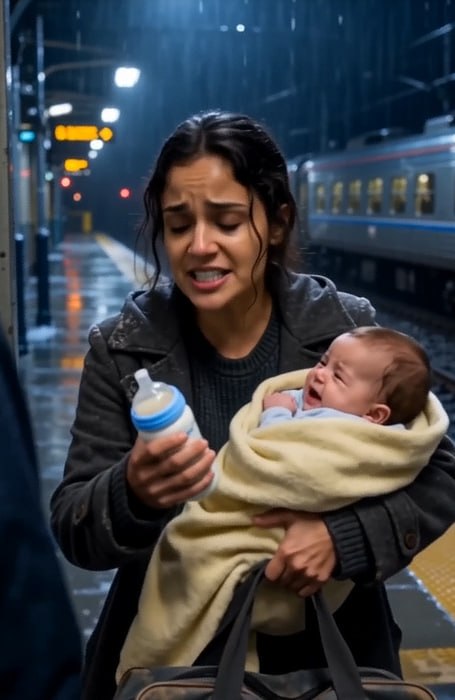
Maya and Luke’s divorce became final eleven months after the night at the station.
No dramatic courtroom victory.
Just signatures.
This time Maya read every page.
Twice.
Rachel laughed.
“You can sign.”
“I know.”
“You’ve been on page twelve for eight minutes.”
“I’m enjoying informed consent.”
Rachel smiled.
“Fair.”
The settlement preserved Maya’s lawful share of marital property.
Restitution claims took priority over Luke’s tainted assets.
Maya waived nothing concerning Rosie’s support.
Custody remained subject to later review after Luke’s release and rehabilitation.
Maya did not ask the court to erase him permanently.
She also did not promise access he had not earned.
Rosie was sixteen months old by then.
Walking badly.
Laughing loudly.
Obsessed with dropping spoons.
Maya had resumed her CPA coursework and accepted a job at an independent forensic-accounting firm assisting nonprofit housing organizations.
Her first assignment involved reviewing relocation payments.
When her supervisor told her, she laughed for almost a minute.
“Problem?” he asked.
“No.”
She smiled.
“I know the subject.”
Celia and the East Harbor families reached a court-approved settlement with Calder Holdings.
It included restitution based on verified unpaid relocation awards, additional damages, legal fees, and an independent claims administrator.
Not everyone believed it was enough.
Some families refused to praise Calder.
They were entitled to that.
David publicly agreed.
At a board meeting he said, “Restitution is not generosity. It is repayment.”
The quote spread widely.
Victor hated it.
His criminal case ended after a lengthy negotiation.
He pleaded guilty to conspiracy to commit wire fraud and obstruction-related conduct.
Other counts were dismissed as part of the agreement.
The judge imposed a substantial prison sentence considering his age, role, and conduct.
Maya did not attend.
David did.
When he returned, Maya asked, “How do you feel?”
“Nothing like I expected.”
“Happy?”
“No.”
“Sad?”
“Yes.”
“Relieved?”
“Yes.”
“All at once?”
“Yes.”
She understood.
Victor was still his father.
Justice did not rewrite childhood.
Grace also received prison time, though less because of cooperation.
Her restitution obligations consumed much of her wealth.
Before sentencing she sent Maya a letter.
Maya did not open it for three months.
When she finally did, Grace wrote:
I kept trying to become Nora because I thought power would make me safe. Instead I became useful to the man who frightened her.
You were right. Fear does not become courage simply because it changes sides.
Maya kept the letter.
Not as forgiveness.
Evidence of accountability.
David returned to business differently.
He never resumed the CEO role at his old redevelopment company.
Instead, after the permit investigations concluded and independent management stabilized the project, he sold part of his ownership to employees and institutional partners.
Room 17 remained.
The city tried to make it an official shelter.
David refused.
“It works because it is immediate,” he said. “No intake bureaucracy at midnight.”
So he funded it through an independent nonprofit with trained staff and safety procedures.
The original metal key was retired to a glass frame on the wall.
Maya hated that.
“A key should open something.”
David agreed.
They placed it back in use.
Exactly one year after Maya arrived at Ashbridge Central with two battered travel bags, an almost-empty bottle, and nowhere warm to go, she returned.
This time the station was bright.
Crowded.
Rosie toddled beside her in a yellow coat.
David carried one of the old travel bags.
Maya carried the other.
“You kept these?” he asked.
“Yes.”
“They’re terrible.”
“I know.”
“Why?”
Maya looked toward Room 17.
“To remember the difference between having little and being powerless.”
David said nothing.
She continued.
“That night I thought those bags proved I had failed.”
“And now?”
“They prove I left.”
Inside Room 17, Maya placed one bag on a shelf.
It contained donated baby supplies.
The second held toiletries and emergency clothes.
David smiled.
“You’re donating the famous bags?”
“They’ve done enough traveling.”
Rosie slapped both hands against the crib rail.
Maya laughed.
Then someone knocked.
A station employee opened the door.
A young woman stood outside holding a toddler.
Her eyes were red.
She had no coat.
“Is this…?”
She looked at the handwritten sign.
NO ONE GOES BACK INTO THE COLD TONIGHT.
Maya stepped aside.
“Yes.”
The woman hesitated.
“Do I have to fill something out?”
“Later.”
“Do I have to pay?”
“No.”
“What do you want from me?”
Maya froze.
Her own words.
One year earlier.
David looked at her.
Maya understood the circle closing.
“Nothing,” she said.
The woman began crying.
Maya did not touch her.
She remembered what fear felt like when strangers moved too quickly.
Instead she pointed toward the supplies.
“There’s food. The bathroom locks from inside. You can keep the key tonight.”
The woman accepted it.
Maya looked at David.
The same metal key lay in another tired hand now.
And for the first time, Maya understood exactly what David had meant.
May you like



Because someone once did the same for me.
The story was no longer only his.







