Chapter 20 - The Wheelchair in the Water
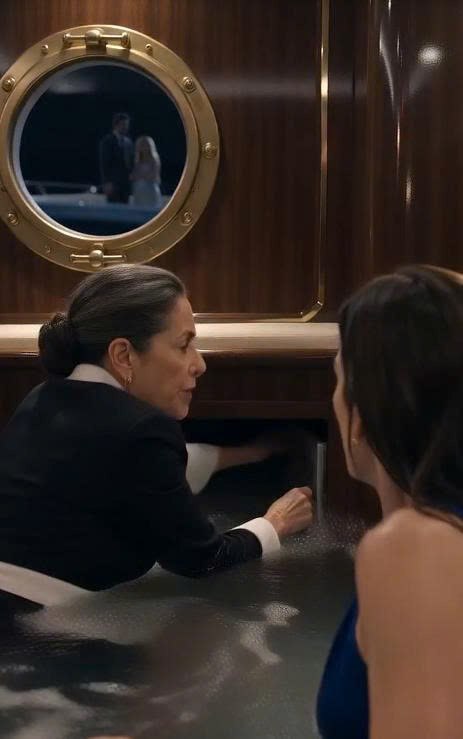
Two years after the sinking of Solenne, Isabella returned to the yacht before dawn.
The vessel had been rebuilt.
Not as a private family palace.
Laurent Oceanic donated long-term operational use to a maritime safety institute that trained yacht crews, engineers, and hospitality staff in evacuation, flooding response, passenger assistance, and sabotage awareness.
The old master cabin had become a classroom.
Victor’s hidden safe was preserved behind glass.
Empty now.
A small plaque explained only that documents recovered there contributed to major criminal and corporate investigations.
No family mythology.
No heroic language.
Facts.
Maria arrived carrying coffee.
Walking without assistance.
“You’re early.”
“So are you.”
“I’m old.”
“You’re fifty-nine.”
“Ancient.”
Isabella smiled.
They descended toward the reconstructed lower cabin.
The training staff had restored the watertight door.
Beside it, inside a glass evidence case, sat a replica of the industrial locking strap Julian had used.
The original remained in government custody through portions of the litigation.
Maria touched the glass.
“Small thing.”
“Almost killed us.”
“Many things are like that.”
On the other side of the room sat something Isabella had not expected.
A wheelchair.
Maria’s wheelchair.
The actual chair recovered from Solenne after salvage.
Salt had corroded the rims.
Fabric was faded.
One armrest was bent.
Isabella stared.
“I thought you threw it away.”
“I almost did.”
“Why keep it?”
Maria walked toward it.
“For a long time, I thought the chair represented Charles.”
“The push.”
“Yes.”
“Then?”
Maria touched the backrest.
“It represented my lie.”
Ten years.
Sitting when she could stand.
Watching.
Waiting.
Surviving.
“Now?”
Maria smiled.
“It’s furniture.”
Isabella laughed.
“That simple?”
“No.”
Maria looked at her.
“But I’m tired of objects owning meanings I didn’t choose.”
Students began arriving upstairs.
Young deckhands.
Engineers.
Stewards.
Captains.
People from wealthy private vessels and small commercial operators.
Nobody knew Isabella would speak.
She preferred it that way.
A safety instructor began demonstrating emergency flooding procedures.
“What is the first mistake passengers make?” he asked.
A trainee answered, “Waiting for instructions.”
“Sometimes.”
Another said, “Panicking.”
“Sometimes.”
Maria whispered, “Trusting the fiancé.”
Isabella nearly laughed aloud.
The instructor continued.
“The most dangerous assumption is that a safety mechanism is functioning simply because it exists.”
Isabella looked at the watertight door.
A handle could exist.
A door could look secure.
And someone outside could still thread a strap through it.
Families were like that.
Companies too.
Words like love.
Trust.
Protection.
Inheritance.
They sounded secure until somebody tested what actually held them in place.
After training, Isabella stood beside the porthole.
Two years earlier she had looked through this circle and seen Julian on the tender.
Camille beside him.
Her cousin’s arms around her fiancé.
That moment had felt like the complete betrayal.
It had not been.
Behind it waited Charles.
Victor.
Reeves.
Graham.
Vane.
The trust.
The money.
The inheritance.
The doctor.
The stairs.
The safe.
Twenty years of resentments and transactions compressed into one locked door.
Maria stood beside her.
“What are you thinking?”
“That I almost thought the affair was the worst part.”
“Reasonable at the time.”
“Camille’s baby. Julian. I thought that was the secret.”
Maria nodded.
“It was just the visible one.”
Isabella looked at her.
“Why did Dad give you the key instead of me?”
Maria was quiet for a long time.
“Because he thought I knew how to wait.”
“Did you?”
“Too well.”
“Do you regret it?”
“Yes.”
The answer surprised Isabella.
Maria continued.
“I regret lying to my children. I regret letting you think my life ended on those stairs.”
“But if you hadn’t—”
“Charles might have killed me.”
“Yes.”
“Both things are true.”
Isabella smiled.
Of course.
Both things.
Maria touched the wheelchair.
“Your father believed secrets were tools. Charles believed secrets were weapons. Julian believed secrets were currency.”
“And you?”
“I thought secrets were shelter.”
Isabella looked at the old chair.
“Were they?”
“For a while.”
Maria turned toward her.
“But shelters become prisons if you never leave.”
They walked upstairs.
On deck, morning light spread across the Atlantic.
A small tender moved across the water.
Isabella watched it.
Her body still reacted.
A tightening in the chest.
Cold memory.
Julian standing safely above black water while she pounded on steel.
She no longer hated herself for remembering.
Trauma did not disappear because criminals were convicted.
It became something she learned to recognize before it made choices for her.
The training captain called from the stern.
“Ms. Laurent, we’re doing a man-overboard drill. Want to observe?”
Isabella looked at Maria.
Maria shook her head.
“Don’t look at me.”
Isabella smiled.
“I’ll participate.”
She put on a life vest.
The instructor explained procedures.
The rescue dummy went overboard.
Crew members moved.
No shouting.
No performance.
One person maintained visual contact.
Another called position.
Another deployed flotation.
Another turned the vessel.
Everybody had a job.
Nobody watched someone drown to see what they could gain from it.
When the dummy came safely alongside, Isabella felt tears in her eyes.
Maria noticed.
“You okay?”
“Yes.”
“Sure?”
Isabella looked across the water.
“Yes.”
Then she thought of the first night.
The water at her shoulders.
Her fists against steel.
Julian’s face through the porthole.
And behind her, Maria’s wheelchair.
For years Isabella had remembered Maria standing as the impossible moment.
The shock.
The secret.
The revelation that the paralyzed woman could walk.
Now the moment meant something else.
Maria had not stood because she suddenly became powerful.
She had always possessed the strength.
She stood because hiding it had stopped being more important than saving someone.
That was the choice Isabella remembered.
Not the wheelchair.
Not the knife.
Not even the key.
The choice.
Maria had spent ten years surviving by pretending weakness.
Then, in a room filling with seawater, she decided survival required revealing the truth.
Isabella had spent most of her life doing the opposite.
Using power to avoid truths that threatened comfort.
Julian’s betrayal had ended that life.
Victor’s evidence had explained why.
Charles’s crimes had nearly destroyed what remained.
But none of them got to decide what came next.
Isabella removed her engagement ring from a small chain around her neck.
She had kept it as evidence until authorities released it.
Maria raised an eyebrow.
“Finally?”
Isabella looked at the diamond.
Julian had once slipped the bank-box key behind its velvet case.
Even his promise of marriage had carried another secret.
She did not throw the ring into the ocean.
Too theatrical.
And diamonds were expensive.
Maria watched as Isabella placed it inside her pocket.
“What are you going to do with it?”
“Sell it.”
Maria laughed.
“For what?”
Isabella looked toward the students preparing the next drill.
“Scholarships for maritime safety training.”
Maria nodded thoughtfully.
“Practical.”
“I’m trying something new.”
The sun climbed higher.
Behind them, inside the reconstructed cabin, the old wheelchair remained beside the watertight door.
A relic from a night when Isabella Laurent believed she had discovered the most impossible truth imaginable:
Maria could walk.
She had been wrong.
The impossible truth was larger.
Her father had been murdered.
Her uncle had built wealth from betrayal.
Her fiancé had loved access more than he loved her.
Her cousin had chosen resentment over blood.
A company could become dangerous when protecting it mattered more than protecting people.
And a woman could survive all of that without becoming the people who hurt her.
Maria started toward the stairs.
Isabella called after her.
“Maria.”
She turned.
“Thank you for standing up.”
Maria looked at the ocean.
Then back at Isabella.
“I didn’t stand up for you.”
Isabella smiled.
“I know.”
Maria’s expression softened.
“I stood because we were both going to die.”
“Exactly.”
For once, nobody had needed to be rich.
Nobody had needed to be family.
Nobody had needed to be useful.
Two people were drowning.
That had been enough.
Isabella followed Maria toward the upper deck.
Behind them, the ocean glittered beneath the morning sun.
The same ocean where Julian Cross had once watched her disappear.
Only she had not disappeared.
Neither had Maria.
Neither had Victor’s evidence.
And after years of people using silence to survive, the truth had finally done something none of them expected.
May you like



It kept someone alive.
THE END







