Chapter 20 - What the Camera Could Not See
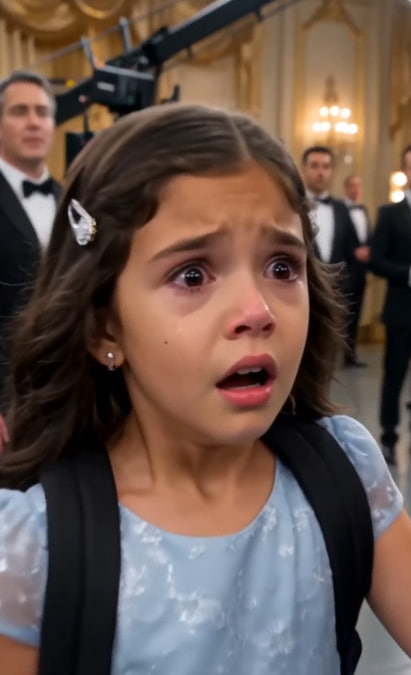
The awards ceremony began at seven.
At seven twenty-three, Mara stood backstage holding the Starlight Orchid.
It had been returned to the heritage collection after the criminal case and insurance settlement.
The diamonds were cleaned.
The platinum repaired.
The sapphire caught the stage lights exactly as it had the night Evelyn pulled it from Ivy’s backpack.
For months, Mara had hated the object.
Now it felt strangely ordinary.
Beautiful.
Valuable.
And innocent.
Objects did not create lies.
People assigned stories to them.
Tonight, the brooch would be displayed inside a secured case as part of an exhibition about artifact preservation and provenance.
Not worn.
Not owned by one family.
Documented.
Tracked.
Visible.
Ivy stood beside Mara in a new pale-blue dress.
Not the same one.
She had outgrown it.
Her black velvet backpack, however, remained the same.
“You nervous?” Mara asked.
“No.”
A pause.
“Little bit.”
“Me too.”
Julian approached in a tuxedo.
Ivy inspected him.
“You look like last time.”
“That is how tuxedos work.”
She laughed.
Then her expression became serious.
“Is Grandma watching?”
Mara and Julian exchanged a glance.
Evelyn had been sentenced two months earlier.
She would spend several years in custody followed by supervised release and financial restrictions.
Mara had not taken Ivy to visit.
Julian had visited once.
He returned quiet.
Evelyn had asked about Ivy.
She had not asked forgiveness.
Not yet.
“I don’t know if she can watch,” Julian said.
Ivy nodded.
“Do you miss her?”
“Yes.”
“Me too sometimes.”
Julian crouched.
“That’s okay.”
“I’m still mad.”
“That’s okay too.”
Ivy looked relieved.
The stage manager gave Mara a two-minute warning.
Tonight Mara would introduce the Lillian Ellison Preservation Fellowship, funded not by a Hartwell family donation but through recovered assets and independent sponsors.
The fellowship would train young archivists.
Nora was in the front row.
Tessa stood in production control.
Daniel sat beside Leah Brenner, who had reluctantly accepted an invitation.
Marcus supervised security.
People who had once existed at the edges of the Hartwell story now occupied its center.
Mara looked at the monitor wall.
Camera Four showed the backstage corridor.
Nothing dramatic.
Crew members.
Cables.
Ivy adjusting her backpack.
Julian straightening his cuffs.
Mara smiled.
Once, that camera had captured evidence.
Tonight it captured only life.
The stage manager pointed.
“Thirty seconds.”
Ivy hugged Mara.
“Go.”
Mara stepped onto the stage.
Applause rose.
She reached the podium.
For one dangerous second, she saw another version of this room.
Evelyn gripping Ivy’s wrist.
Julian standing beside his mother.
A diamond held like proof.
Then the memory passed.
Mara looked into the audience.
“My mother believed an archive had one responsibility above all others,” she began.
“To keep the record accurately enough that powerful people cannot replace what happened with what is convenient.”
The room became still.
“She learned how difficult that responsibility can be.”
Mara did not describe the scandal.
Everyone knew it.
“Tonight, this fellowship carries her name because she did the work even when the institution around her failed to protect her.”
Nora wiped her eyes.
Mara continued.
“But I want to correct one phrase we use too easily.”
She looked toward Julian.
Then toward Ivy in the wings.
“We often say the truth restores dignity. I no longer believe that.”
A faint murmur moved through the audience.
“Dignity is not something an accusation can actually remove. It can damage a reputation. It can destroy a career. It can hurt a child. Those things matter.”
Her voice tightened.
“But the people who lied about my mother never owned her dignity.”
Mara looked at Ivy.
“And the person who lied about my daughter never owned hers.”
The applause began before Mara finished.
She waited.
When it faded, she said, “The work is not to give dignity back. The work is to correct the record, repair what can be repaired, and make it harder for the next frightened person to be sacrificed for somebody else’s convenience.”
Backstage, Ivy was crying.
Julian knelt beside her.
“You okay?”
She nodded.
“Happy cry.”
“Those are dangerous.”
She giggled through tears.
After the ceremony, guests moved into the exhibition hall.
The Starlight Orchid rested inside a glass case.
Its label included full provenance.
No euphemisms.
No erased years.
Recovered following investigation into fraudulent disposition of Hartwell Heritage Collection assets.
Ivy read the label.
“That’s a lot of words.”
“It’s an archive,” Mara said. “They love words.”
Ivy pointed at the last line.
“What’s that?”
Mara read it.
Authentication assisted by records preserved by Lillian Ellison.
Ivy smiled.
“So Grandma Lillian caught it.”
“In a way.”
Julian joined them.
For a moment, the three stood in front of the diamond.
A year ago it had nearly broken them.
Now it was only evidence of what they had survived.
Ivy opened her backpack.
Julian reflexively looked inside.
She caught him.
“Daddy.”
He froze.
Then laughed.
“Sorry.”
Ivy reached inside and pulled out a folded sheet of paper.
“I made something.”
She opened it.
A drawing.
Three figures stood beneath a large square camera.
One was Mara.
One was Julian.
One was Ivy.
In the corner, she had drawn a woman with gray hair holding a binder.
Lillian.
Above everyone she had written:
CAMERA FOUR SAW WHAT HAPPENED.
Underneath, in smaller letters:
BUT I KNEW FIRST.
Mara’s eyes filled.
Julian covered his mouth.
Ivy looked worried.
“Is it bad?”
Mara knelt.
“No.”
She pulled her daughter into her arms.
“It’s perfect.”
Julian crouched beside them.
Ivy let him into the embrace.
Across the exhibition hall, the diamond glittered behind glass.
No longer hidden.
No longer planted.
No longer powerful enough to define anyone.
When they finally stepped apart, Ivy put the drawing back into her backpack.
Then she zipped it herself.
“Ready to go home?”
Julian asked.
Ivy took Mara’s hand.
Then Julian’s.
“Yes.”
They walked toward the studio doors together.
Above the emptying soundstage, Camera Four continued recording.
It captured them leaving.
It captured the lights fading.
It captured an ordinary family walking out of a place where something terrible had happened.
But it could not capture the hardest part.
The choice to believe before proof became convenient.
The courage to ask before obedience became harm.
The slow rebuilding of trust after love had proved insufficient by itself.
Those things happened beyond the frame.
May you like



And this time, nobody needed a camera to make them true.
THE END







