Chapter 17 - Before Claire Knew His Name
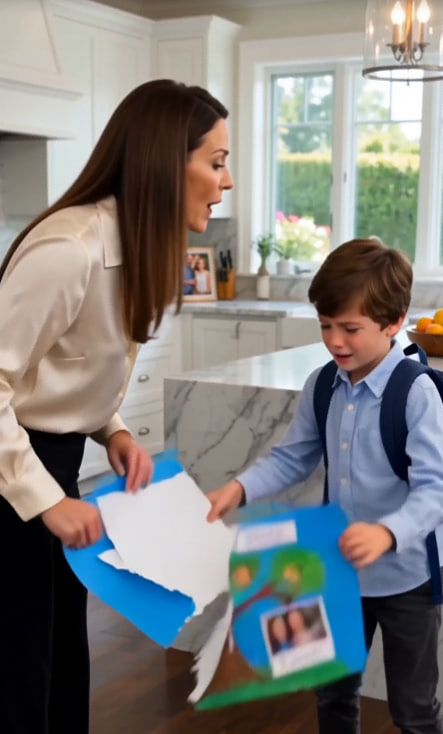
Claire considered throwing the photograph away.
Instead she gave it to Maya.
Old habits had changed.
Evidence first.
The photograph came from a packet Daniel had once left at Melissa’s apartment.
Melissa had forgotten the box existed.
Inside were old sales materials from Robert’s printing company.
Staff photographs.
Client notes.
A clipping about Robert selling part of the business.
And several pages concerning Claire.
Her university.
Her illustration work.
Her mother’s cancer fundraiser.
Nothing illegal.
All publicly obtainable.
Still unsettling.
Daniel agreed to answer questions through the restorative program.
Claire submitted one.
Why did you have a photograph of me before we met?
His answer took two weeks.
Because after Robert fired me, I became obsessed with proving he had misjudged me. I followed his company, read articles about him and saw you in a fundraiser story. Later I saw you at the auction and approached you deliberately.
Claire stopped reading.
Not fate.
Not coincidence.
Deliberate.
Daniel continued.
I did not approach you intending to marry you or steal from you. I wanted Robert to see me succeed in a room where he had once excluded me. Then I liked you. That is the truth, even if it is ugly.
Claire believed parts.
Maybe all.
There was no way to prove intent from eleven years earlier.
But she no longer needed every question solved.
She asked herself whether knowing changed anything important.
Yes.
It changed the story of how they met.
No.
It did not change the life that followed.
Daniel had genuinely loved her in whatever way he was capable of at the time.
He had also built their first interaction around resentment.
Both.
Claire discussed it with Dr. Morgan, who had become her own therapist too through a referral network.
“I keep wanting one sentence that explains him.”
“Why?”
“So I know how I missed it.”
“Would one sentence help?”
“No.”
Claire smiled tiredly.
“I suppose not.”
“You didn’t marry a spreadsheet of future behavior.”
“I married a person.”
“Yes.”
“A person who lied.”
“Yes.”
“A person who also loved me.”
“Possibly.”
Claire frowned.
“You don’t sound convinced.”
“It isn’t my job to determine whether Daniel loved you.”
“Then whose is it?”
“Yours, if the question matters.”
Claire considered that.
Eventually she decided it mattered less than she expected.
Love without respect had not protected her.
Whether Daniel’s feelings were genuine did not alter what she needed now.
Robert struggled more with the photograph.
“He targeted you because of me.”
Claire shook her head.
“Don’t make yourself the center.”
He looked offended.
Then laughed.
“Fair.”
“You fired him for something he did.”
“Yes.”
“He chose what happened afterward.”
“Yes.”
“You made mistakes later.”
“Yes.”
“But you didn’t arrange my marriage.”
“No.”
Robert had finally learned the difference between responsibility and omnipotence.
Neither father nor daughter needed him blamed for everything.
The photograph did something unexpected for Lily years later.
At eleven, she asked how her parents met.
Claire had always given a simplified answer.
“At a charity auction.”
Now she added:
“Your dad already knew who I was.”
“Creepy.”
Claire laughed.
“A little.”
“Did you know him?”
“No.”
“Then why did you marry him?”
“Because I got to know him afterward.”
“Was he nice?”
“Yes.”
Lily looked skeptical.
“Really?”
“Yes.”
“That’s weird.”
“People are complicated.”
Lily hated that phrase.
“You always say that.”
“Because you keep asking complicated questions.”
By then Lily’s therapeutic visits with Daniel had become monthly supervised community visits.
Libraries.
Cafes.
Parks.
She still did not want to be alone with him.
Daniel did not pressure her.
Owen, almost eighteen, chose a different relationship.
He saw Daniel occasionally without supervision but kept emotional distance.
Melissa worried.
Owen told her:
“I need to figure out what kind of relationship I want without you deciding it for me.”
Claire laughed when Melissa repeated it.
“What?”
“He sounds like you.”
“No child should have that burden.”
“You’re unbearable.”
Their friendship had become real.
Rachel remained more distant but stayed in occasional contact.
Evan completed his civil settlements and left real estate.
Marissa found accounting work after serving professional sanctions and cooperating fully.
No one’s life froze at the worst thing they had done.
That did not erase consequences.
It simply made the story more truthful.
Claire’s illustration career grew.
Her third book won an award.
At the ceremony Lily whispered:
“Are we rich now?”
Claire nearly choked.
“No.”
“Grandpa says artists never know.”
“Grandpa is banned from financial commentary.”
Robert, seated behind them, whispered:
“Unfair.”
Claire smiled.
Her next project was a book she wrote herself.
Not about abuse.
Not directly.
It was about a child building a treehouse with doors that only opened from the inside.
Her editor loved it.
Claire almost rejected publication because the metaphor felt too obvious.
Lily read the manuscript.
“It’s good.”
“You don’t think the door thing is too much?”
“No.”
“What do you think it means?”
Lily shrugged.
“You should get to decide who comes in.”
Claire stared.
Children simplified what adults intellectualized.
The book was published the following spring.
On the dedication page Claire wrote:
For Lily—may every door in your life open because you choose it.
Daniel received a copy through Lily.
He later sent one message.
That dedication is what I should have understood years ago.
Claire did not reply.
She did not need to.
The past no longer demanded constant response.
Then Robert suffered a mild heart attack.
He survived.
Recovery was expected.
But for the first time, Claire saw the possibility of losing him.
At the hospital, Lily sat beside Grandpa’s bed holding his hand.
Robert looked at Claire.
“There’s something I need to fix.”
Claire groaned.
“If this is another secret financial document, I’m unplugging your monitor.”
He laughed painfully.
“No.”
“What?”
“My will.”
Claire stiffened.
Robert continued.
“I named you executor years ago.”
“That’s normal.”
“I also put conditions on what you inherit.”
Claire stared.
“Conditions?”
“Nothing terrible.”
“That sentence has never ended well in this family.”
He smiled.
“I know.”
“What conditions?”
“That you keep the printing company shares in the family.”
Claire’s expression changed.
Robert nodded.
“I know.”
“You’re going to remove it?”
“Yes.”
“Why?”
“Because I finally understand inheritance isn’t permission to continue controlling someone after you’re dead.”
Claire sat beside him.
“Mom would be impressed.”
“No.”
Robert smiled.
May you like



“She’d ask why it took me this long.”
---







