Chapter 17 - The Power Henry Never Explained
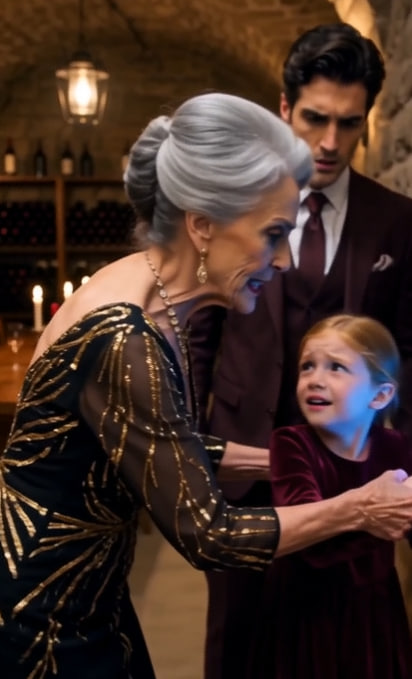
Anna refused to accept the role immediately.
That surprised everyone except Eleanor.
The trust amendment did not give Anna ownership of Henry’s fortune.
It appointed her trust protector for a limited period over certain family holding entities until Lucy reached twenty-five.
The institutional trustee would still control trust assets.
Professional managers would still run investments.
But Anna would have power to approve or block replacement of certain trustees and directors where Lucy’s trust interests were involved.
Henry had not made Anna rich.
He had made her difficult to bypass.
Michael reacted with stunned silence.
Veronica reacted with fury.
“You?”
They met through lawyers.
Anna kept her voice calm.
“I didn’t ask for it.”
“Henry did this to punish us.”
“Perhaps.”
“You have no experience.”
“That may be why the amendment requires independent advisers.”
“You closed your business seven years ago.”
Anna felt the old humiliation rise.
Veronica had always treated motherhood as proof Anna had abandoned ambition.
“I closed my firm because Michael’s travel schedule and the vineyard made two demanding careers difficult with a baby.”
“You chose that.”
“Yes.”
Anna smiled slightly.
“Choosing something does not make me incapable of everything else.”
Veronica looked away.
The amendment included a letter from Henry explaining his reasoning.
Anna is not free of bias. No one is. But she has one advantage over the rest of us: she has repeatedly walked away from money when keeping it would have required becoming someone she did not want to be.
Anna had to stop reading.
She remembered the fights Henry referenced.
When he offered to buy Anna and Michael a larger house if they moved onto estate land, Anna declined.
When he offered to fund her design firm in exchange for taking Vale Crest projects exclusively, she declined.
At the time, Henry had called her stubborn.
Apparently, he had also been watching.
The letter continued.
Do not mistake this appointment for a reward. It is a burden. If Anna does not want it, she must be permitted to decline.
That line mattered most.
Choice.
Finally.
Anna asked Eleanor, “What happens if I decline?”
“A professional trust protector named in the alternative provision takes over.”
“Competent?”
“Extremely.”
“Then Lucy doesn’t need me to accept.”
“No.”
Anna smiled.
Henry had learned something before he died.
He had created a choice rather than a trap.
She took three days.
Then accepted provisionally, subject to independent counsel and annual review.
Not because she wanted control.
Because for the next few years, she wanted to make sure nobody again used Lucy’s age as an invitation.
Michael agreed not to challenge the appointment.
Veronica did challenge it.
Then withdrew after her lawyers reviewed Henry’s competency records and the amendment’s safeguards.
Vale Crest’s restructuring moved forward.
Several non-core properties would be sold.
The Sonoma parcels would remain protected pending independent valuation.
Valora’s contracts were terminated.
Some payments were returned through settlement.
Michael agreed to repay Anna’s stolen investment funds over time using separate property and future earnings.
The guarantee she had genuinely signed became the hardest issue.
The lender eventually released Anna after Vale Crest substituted collateral from the independent stabilization reserve and other assets.
Freedom arrived not as a dramatic courtroom victory but as an email containing eleven dry words:
Anna Bennett Vale is hereby released from all obligations under the guaranty.
She printed it.
Then cried for ten minutes.
Michael pleaded guilty months later to offenses arising from unauthorized access to Anna’s accounts and falsified corporate records.
His cooperation affected the outcome, but it did not erase consequences.
The final sentence included custody-related restrictions handled separately by family court, financial restitution, probationary supervision after a period of confinement, and disqualification from serving as a fiduciary for specified entities.
Pike’s case remained contested.
He denied directing the fake confession and blamed subordinates for portions of the accounting manipulation.
Sam Crane admitted his role in falsifying the biometric record.
Julia entered a cooperation agreement and faced consequences for false accounting entries she had approved.
No one walked out clean merely because they eventually told the truth.
That felt important.
Veronica avoided criminal charges on some allegations but resolved substantial civil claims involving Valora and the reserve transfer. Her conduct remained under scrutiny, and her access to Lucy stayed restricted.
One afternoon, months after the cellar, Anna met her in the vineyard gardens.
A supervisor remained nearby.
Lucy was not present.
Veronica looked smaller somehow.
Not physically.
Socially.
The machinery around her had disappeared.
No assistant.
No driver waiting by the path.
No family authority that everyone automatically obeyed.
“I sold Palm Springs,” she said.
Anna nodded.
“I heard.”
“Most of the proceeds went into settlement.”
“I heard that too.”
Veronica looked across the vines.
“Henry always said I cared too much about houses.”
“Did you?”
“I cared about having something nobody could threaten to take away.”
Anna understood more than she wanted to.
“And then you started taking from others.”
Veronica’s mouth tightened.
“Yes.”
No argument.
Anna asked, “Why did you keep contacting Lucy?”
Veronica’s eyes filled.
“Because if she hated me, then I would have become exactly what everyone said I was.”
“So you asked a seven-year-old to protect your image of yourself.”
Veronica closed her eyes.
“Yes.”
That admission cost her something.
Good.
“I won’t tell Lucy to forgive you.”
“I know.”
“I won’t tell her not to.”
Veronica opened her eyes.
“When can I see her?”
“When the therapist believes it is appropriate and when Lucy wants to.”
The old Veronica would have demanded.
This one nodded.
Anna walked away.
Her phone rang before she reached the car.
Mr. Reed.
He was no longer estate manager.
He had declined reinstatement.
Instead, the institutional trustee had retained him temporarily to complete the archive inventory.
“Anna,” he said, “we found something.”
She nearly groaned.
“What now?”
“It isn’t evidence.”
“Good.”
“It’s for Lucy.”
Anna stopped.
“What?”
“A small wooden box behind the back panel of the vault.”
“Another secret compartment?”
“Henry enjoyed those.”
She smiled despite herself.
“What’s inside?”
“I didn’t open it.”
“Why?”
“Because it says not to.”
Anna laughed.
“Finally, someone learned.”
Reed continued.
“The inscription says: ‘Lucy may open this when she decides the cellar no longer frightens her.’”
Anna became quiet.
Henry had anticipated even that.
Or hoped for it.
“When was it placed there?”
“Before his final hospitalization.”
“What do you want me to do?”
“Nothing.”
That answer surprised her.
“Nothing?”
“It belongs to Lucy’s future choice.”
Anna looked across the vineyard.
For once, nobody needed to open the box.
May you like



And she intended to keep it that way.
---







