Chapter 15 - Charles’s Defense
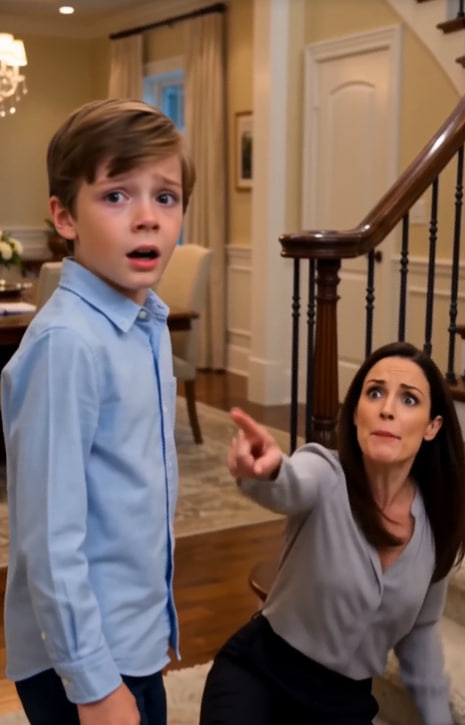
Victoria laughed when Rebecca told her.
Then stopped when she realized it was real.
“He’s blaming me?”
“His defense team says the audio captures you accusing him because you were panicked and attempting to deflect your own role.”
Jonathan stared.
“What role?”
“They suggest Victoria tried to stop Daniel from leaving and may have grabbed him.”
Victoria went white.
“That didn’t happen.”
“The security images place you nearby.”
“I never touched him.”
“Marcus?”
“Says he did not see you touch Daniel.”
Victoria sat.
For years Charles had used her false statement against Jonathan.
Now he was using her correction against her.
Jonathan wanted to promise she would be fine.
He had learned not to make promises where only facts belonged.
“We deal with evidence.”
Victoria nodded.
The recorder became central.
Audio experts enhanced portions without altering content.
A previously unclear section emerged just before the splash.
Victoria’s voice:
“Dad, let him go!”
Then Daniel:
“Get your hands off me.”
Then Jonathan’s impact.
Then water.
Charles’s defense became harder.
Not impossible.
But harder.
Meanwhile, investigators confirmed Daniel’s environmental allegations had been substantially accurate.
Whitmore Agricultural had failed to report contamination promptly.
Charles authorized delayed disclosure.
The company, under independent leadership now, entered a remediation settlement and publicly apologized.
Jonathan supported it.
Several board members accused him privately of destroying his own family’s legacy.
He answered:
“If our legacy cannot survive cleaning up what we damaged, it deserves to change.”
For once, the sentence did not sound like something Emily would have said.
It sounded like him.
Caleb struggled in quieter ways.
He started asking Jonathan where he was going whenever he left a room.
“Office.”
“When are you back?”
“Thirty minutes.”
“Promise?”
Jonathan realized the boy had begun fearing adults disappeared when secrets grew too large.
He arranged counseling.
Caleb protested.
“I’m not crazy.”
“Neither is your counselor.”
“Do I have to talk about Daniel?”
“No.”
“Victoria?”
“No.”
“Grandpa?”
“No.”
“What do I have to talk about?”
“Whatever you want.”
Caleb considered.
“Can I talk about dinosaurs?”
“Apparently.”
He went.
His therapist eventually helped him create language for the family:
Jonathan was his adoptive father and biological uncle.
Emily was his adoptive mother.
Victoria was his biological mother and aunt by the role she had occupied.
Daniel was his biological father.
Evelyn was his biological grandmother.
Charles was his maternal grandfather.
Messy did not mean wrong.
One evening Caleb asked Victoria:
“If you’re my biological mom, does that mean Dad is also my uncle?”
“Yes.”
“So Dad is his own brother-in-law?”
Victoria blinked.
Jonathan laughed so hard he nearly choked.
For ten seconds, the family secret became ridiculous instead of dangerous.
They needed moments like that.
The trial began eleven months after the project was torn.
Caleb did not attend.
Jonathan and Victoria did.
Evelyn sat behind prosecutors.
Charles entered wearing a dark suit.
No handcuffs visible.
No melodrama.
A man who had spent decades commanding rooms now had to ask permission before speaking.
The prosecution did not claim premeditated murder.
Instead it focused on the confrontation, physical struggle, delayed emergency response, and deliberate cover-up.
Marcus testified.
He admitted accepting scholarship money.
Defense counsel attacked him.
“You benefited financially from silence.”
“Yes.”
“So today you benefit from changing your story?”
“No.”
“How do we know?”
Marcus looked toward the jury.
“You don’t. That’s why there are pictures.”
Evelyn cried.
Victoria testified next.
Defense counsel brought up addiction.
Hospitalization.
Her false statement.
Every vulnerability Charles had predicted.
Victoria did not run.
“Yes, I lied.”
“Yes, I abused medication.”
“Yes, I was afraid.”
Then:
“No, none of that changes what my father did.”
Charles stared at her throughout.
Jonathan testified about his concussion and reconstructed memories.
Defense counsel asked:
“Isn’t it convenient that your recovered memory now helps you?”
Jonathan answered:
“My memory is incomplete. That is why I rely on the evidence that does not depend on it.”
Rebecca later told him it was the strongest answer he gave.
The recorder played.
Dad, let him go.
Get your hands off me.
The courtroom went silent.
Charles looked down.
For the first time, Jonathan wondered whether his father felt regret.
Then the defense presented its case.
Charles testified.
Against his lawyers’ advice, according to whispers.
He insisted he had grabbed Daniel only to stop him from attacking Jonathan.
“He twisted away.”
“Did you push him?”
“No.”
“Why did you tell police you never touched him?”
Charles paused.
“I was afraid.”
The prosecutor let the silence sit.
Then:
“Afraid of what?”
Charles looked toward Victoria.
“Losing my family.”
Victoria closed her eyes.
The prosecutor asked:
“And so you lied to your family?”
Charles’s answer came quietly.
“Yes.”
The trial lasted three weeks.
The jury deliberated two days.
Jonathan did not speculate with Caleb.
When the call came, he was helping rebuild the blue school project on stronger board.
Rebecca said:
“They reached a verdict.”
Jonathan stood.
Caleb looked up.
“Is Grandpa going to jail?”
“I don’t know yet.”
“Are you leaving?”
“Yes.”
Caleb touched the unfinished poster.
“Come back.”
Jonathan bent and kissed his head.
“I will.”
At the courthouse, the clerk read the verdict.
Charles was not convicted of intentionally killing Daniel.
The evidence could not prove intent beyond reasonable doubt.
But the jury found him guilty of charges arising from the fatal confrontation and subsequent deliberate obstruction and evidence concealment.
Victoria began crying.
Evelyn did not.
She only whispered:
“Daniel finally existed in the truth.”
Charles was remanded pending sentencing.
As officers approached, he looked at Jonathan.
Then Victoria.
For once he had no instruction.
No threat.
No explanation.
He simply said:
“I did what I thought I had to.”
Jonathan answered:
May you like



“That was always the problem.”
---







