Chapter 9 - The Cost of Not Looking
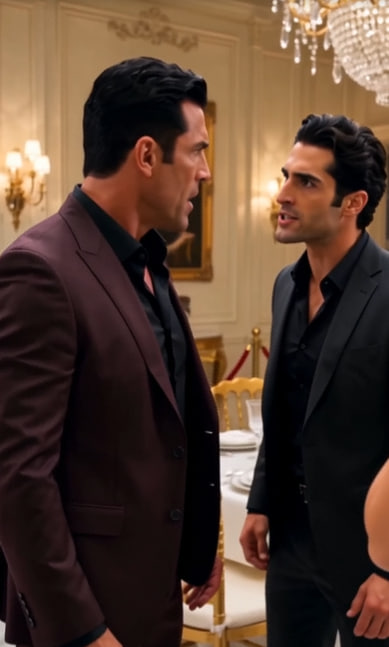
Domenico convened the company’s board without Valentina, Marcus, or family counsel.
He wanted no one to mistake personal anger for corporate governance.
The independent directors asked brutal questions.
Why had Marcus been hired without full conflict review?
Why were restoration contracts approved through overlapping executive accounts?
Why had Domenico allowed personal relationships to influence vendor recommendations?
Why had no one investigated Sofia’s earlier concerns?
“I don’t have a good answer,” Domenico said.
One director, Susan Bellamy, stared at him.
“That isn’t acceptable.”
“I know.”
“Do you?”
He did not defend himself.
The board authorized an independent forensic audit.
Domenico voluntarily surrendered final approval authority over foundation restoration contracts until the review concluded.
Marcus’s contracts were suspended.
Not because Domenico ordered it.
Because the board did.
That distinction protected the company.
It also humbled him.
When he returned to the mansion, Ruby was building a castle from sofa cushions.
“Daddy.”
“Yes?”
“You look mad.”
“I’m not mad.”
“Your eyebrows are mad.”
He touched them.
“Traitors.”
Ruby giggled.
Then pointed to the cushion castle.
“You live there.”
“It looks small.”
“You have to ask Queen Ruby.”
“May I enter?”
“No.”
Domenico stared.
She burst out laughing.
It was the best thing he had heard all week.
That evening Valentina called.
He almost ignored it.
Then answered.
“I received Marcus’s letter,” she said.
“So did half my board.”
“I didn’t know he would do that.”
“Do you still expect me to believe things you didn’t know?”
Silence.
Then:
“No.”
That answer stopped him.
Valentina continued.
“I’ve been thinking about what you asked.”
“Which part?”
“Why I packed Ruby’s room.”
Domenico leaned against the study desk.
“I already know why.”
“No.”
Her voice sounded tired.
“You know the excuse.”
He said nothing.
“I was jealous of a child.”
The sentence was so ugly she almost whispered it.
Domenico closed his eyes.
Valentina continued.
“Not of Ruby herself.”
“That distinction does not help.”
“I know.”
“She had her mother’s place.”
Domenico frowned.
“What does that mean?”
“In your grief. In the house. In the stories everyone told.”
Valentina laughed bitterly.
“Even her chair.”
“The gold chair?”
“Sofia chose those chairs.”
Domenico looked toward the dining room.
He had forgotten.
Sofia had hated the original dark mahogany set.
She replaced it with absurd gilded chairs because, as she put it, “If we’re going to live in a ridiculous mansion, we should at least admit it.”
Ruby loved them because her mother had called them princess chairs.
Valentina had known.
“She took that chair because Sofia chose it?” Domenico asked.
“No.”
“Then why?”
“Because Ruby refused to leave the table.”
“So you took away the thing she was holding.”
“Yes.”
“And packed Sofia’s photograph.”
“Yes.”
“And told her the storage room was where she would sleep if she kept mentioning her mother.”
Valentina was silent.
Domenico’s voice lowered.
“You knew exactly what you were doing.”
This time she did not deny it.
“I wanted control.”
There it was.
Not discipline.
Not boundaries.
Control.
“Why?”
“Because everything else felt like it belonged to somebody before me.”
Domenico looked at Sofia’s desk.
“You married a widower with a daughter.”
“I thought I could handle it.”
“You handled it by making a child feel temporary.”
“I know.”
“Stop saying you know.”
Valentina cried then.
Quietly.
He heard it through the phone.
Months earlier he would have crossed any room to comfort her.
Now he stayed where he was.
She finally said, “Marcus knew.”
Domenico straightened.
“Knew what?”
“That I was struggling with Ruby.”
“So?”
“He kept telling me you would never really choose me while Sofia was still everywhere.”
Domenico’s jaw tightened.
“He used it.”
“Yes.”
“To get access?”
“I think so.”
“What exactly did he tell you?”
“That Sofia had tried to destroy his business before she died. That the ledger was full of false notes. That if auditors found it, they might treat her assumptions as evidence.”
“And you believed him.”
“I wanted to.”
Again that phrase.
Domenico realized wanting to believe could be more dangerous than ignorance.
“Did you help him take the ledger?”
“No.”
“Did you know he took it?”
“Afterward.”
“Did you tell him to return it?”
“Yes.”
“Did he?”
“No.”
“Did you tell me?”
“No.”
“Then you helped him keep it.”
Valentina did not respond.
The next day, a new witness changed the investigation.
Rosa Bennett, a weekend housekeeper who had worked the evening the suitcases were packed, asked to meet Domenico.
She arrived clutching an envelope.
“I should have given this to you sooner.”
“What is it?”
“Something Mrs. Valentina told me to throw away.”
Domenico did not touch it immediately.
“When?”
“The afternoon she packed Ruby’s room.”
“What did she say?”
“That it was old rubbish from Sofia’s desk.”
Rosa had placed it in her cleaning cart.
Before emptying the cart, she noticed Sofia’s foundation logo.
She could not bring herself to throw it away.
So she took it home.
Domenico opened the envelope.
Inside was a photocopy of an invoice from eight years earlier.
Marcus’s original company.
A restoration project.
$96,000.
Across the bottom Sofia had written in blue ink:
Work confirmed incomplete. Do not pay balance. M. threatened legal action when questioned.
Stapled behind it was proof of payment.
The full balance had been paid anyway.
Authorized by Domenico.
He stared at his own signature.
Then remembered.
Marcus had told him the dispute was resolved.
Domenico never asked Sofia.
He had trusted convenience over the woman beside him.
May you like



And Sofia’s ledger might contain years of warnings he had failed to hear.
---







