Chapter 18 - The Truth Costs Everyone
Harborstone’s lawsuit collapsed gradually.
Not dramatically.
Discovery revealed Martin Kessler knew Ethan lacked specific authority for the land option.
An internal Harborstone email read:
COLE SAYS FAMILY APPROVAL CAN BE CLEANED UP AFTER CONTROL SHIFTS.
Another:
CELESTE EXPECTS TRUST VOTES BEFORE CLOSE.
The company had not innocently relied on authority.
It had gambled that control would change before anyone challenged the deal.
Harborstone settled.
It released the land option.
Paid part of Bennett Heritage Group’s litigation costs.
Accepted repayment of legitimate joint-venture amounts under restructured terms.
No miraculous windfall.
Just a costly escape.
The company still had to absorb losses.
Ryan’s own consequences came next.
The independent investigation concluded he had failed to exercise adequate oversight and had approved material transactions without sufficient review.
It found no evidence he knowingly joined Ethan’s concealment.
The board offered to restore him as CEO.
Ryan declined.
Priya stared.
“You fought this hard and you’re walking away?”
“I fought for the company not to be stolen through my children.”
“You could come back.”
“I know.”
“What will you do?”
“Remain a director for now. Learn how not to be necessary.”
Priya smiled.
“That may be your hardest assignment.”
Ryan agreed.
Celeste’s consequences were more severe.
She entered a plea agreement involving attempted fraud, false statements connected to trust proceedings, and conspiracy-related financial conduct.
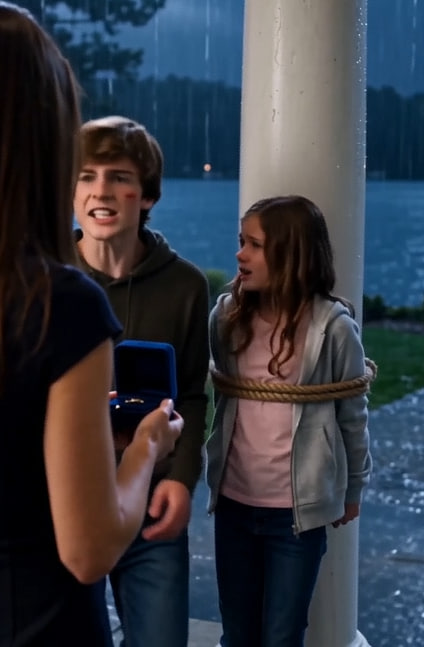
The local charge arising from Noah’s slap and Emma’s restraint was resolved separately under an agreement requiring counseling, probationary conditions and no unsupervised contact with the children.
She repaid the $350,000 Harborstone advance.
To do it, she sold her vineyard interest and two investment properties.
Her remaining Bennett shares were placed under independent voting arrangements for a period required by her settlement.
She did not lose everything.
She lost control over much of what she had tried to control.
Ethan faced criminal charges involving fraud, falsified records, obstruction-related conduct, and undisclosed self-dealing.
He pleaded not guilty initially.
Months later, after Martin Kessler began cooperating and the forensic evidence expanded, Ethan entered a negotiated plea to several counts.
Ryan attended none of the hearings.
Lydia did.
When Ryan asked why, she said:
“I wanted to see the man I spent twenty years fearing become ordinary.”
“Did he?”
“Yes.”
That answer stayed with him.
People seemed enormous while they held your secrets.
Courtrooms reduced them to names on schedules.
Noah’s phone was returned.
He immediately bought a new one.
“What’s wrong with that one?” Ryan asked.
“It feels like evidence.”
Fair.
Emma received therapy.
So did Noah.
So did Ryan.
The therapist asked Ryan:
“What do you feel when you look at the porch?”
“Anger.”
“At Celeste?”
“At myself.”
“Why yourself?”
“Because I keep imagining what would have happened if the necklace hadn’t fallen.”
“That event was not under your control.”
“My belief was.”
The therapist waited.
Ryan continued:
“I had already accepted little stories about Emma being careless.”
“From whom?”
“Celeste. Ethan.”
“Did you believe she was dishonest?”
“No.”
“Then what are you punishing yourself for?”
“For needing the necklace to fall before I understood the danger.”
The therapist nodded.
“Understanding after evidence is not failure. Ignoring evidence would have been.”
Ryan thought of Ethan’s summaries.
His own signatures.
That distinction mattered.
One spring afternoon Celeste asked to see the children.
Not alone.
Through their therapist.
Emma refused.
Noah agreed to a short supervised meeting.
Ryan did not pressure either.
Celeste sat across from Noah in a counseling room.
“I’m sorry.”
Noah looked at her.
“You said that to Dad.”
“I’m saying it to you.”
“You hit me.”
“Yes.”
“You framed Emma.”
“Yes.”
“You thought I’d turn against her.”
“Yes.”
Noah stared.
“Why should I forgive you?”
Celeste’s eyes filled.
“You shouldn’t because I ask.”
Noah seemed surprised.
Celeste continued:
“If you ever forgive me, it has to be because it becomes useful to you. Not because I need it.”
Noah looked toward the therapist.
Then back.
“I don’t forgive you.”
Celeste nodded.
“I understand.”
“But I don’t hate you.”
She began crying.
Noah looked uncomfortable.
“Please don’t make that a big thing.”
She laughed through tears.
“I won’t.”
May you like



Progress did not look like reunion.
Sometimes it looked like a boundary respected.







