Chapter 13 - What Trust Cost
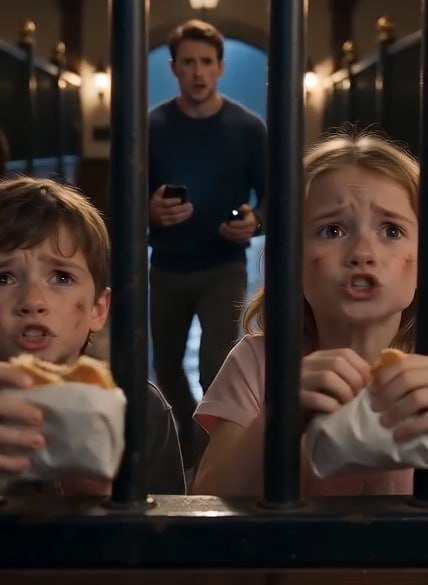
The court stopped the foreclosure sale twelve hours before the auction.
Temporary relief.
Not victory.
Norcrest’s attorneys argued that Claire’s notarized deed was valid.
Tessa argued forgery.
The judge ordered handwriting analysis, electronic discovery and deposition of the notary.
The notary could not be found.
Meanwhile, Piedmont Commercial Bank accelerated Ashford Development’s seventeen-million-dollar facility.
Vendors stopped extending credit.
Two development sites halted construction.
Employees began calling Graham directly.
“Are we going under?”
He had no answer.
Spencer did.
He held a companywide meeting and blamed the crisis on Graham’s refusal to approve the Hawthorne rescue transaction.
The press picked up the story.
FAMILY FEUD THREATENS 1,100 JOBS
Graham watched the report from his kitchen.
Owen sat beside him.
“Is Uncle Spencer famous now?”
“No.”
“Are you?”
“No.”
The boy frowned at the television.
“They say you’re selfish.”
Graham turned it off.
“They don’t know everything.”
Owen stared at him.
“You didn’t know everything either.”
The words were not cruel.
That made them worse.
“No,” Graham said. “I didn’t.”
“Because you weren’t here.”
Graham swallowed.
“Yes.”
Owen’s eyes filled.
“You always say work is for us.”
“It was.”
“Then why did it make you leave us?”
Graham had no defense.
He pulled out a chair.
“I thought providing things was the same as being there.”
Owen looked away.
“I don’t care about things.”
Graham’s phone rang.
He almost answered automatically.
Then he turned it off.
That single motion made Owen look back.
Later, Tessa arrived carrying bad news.
“The guarantee is enforceable against you personally.”
“Even if Spencer deceived me?”
“Fraud may give us claims against Spencer, but lenders can often rely on signed documents unless they participated in the fraud.”
“So I’m liable.”
“Potentially.”
“How much?”
“Up to seventeen million, depending on asset recovery.”
Graham laughed once.
He had money.
Not seventeen million in liquid assets.
“If I sell my company shares?”
“The shares are collapsing in value.”
“Townhouse?”
“Maybe three million.”
“Investments?”
“Another four.”
“I could lose everything.”
Tessa looked around Hawthorne Ridge.
“Not this. It belongs to the children.”
That should have comforted him.
Instead it showed how complete Claire’s foresight had been.
Graham had trusted Spencer with his password, his board papers and his company.
Claire had trusted nobody.
That night, Nora joined him on the stable steps.
“I heard Owen.”
Graham nodded.
“He’s right.”
“Children can be right and still forgive.”
“I don’t deserve easy forgiveness.”
“No.”
He looked at her.
Nora smiled faintly.
“Neither do I.”
They sat in silence.
Finally Graham asked, “Why did Meredith say Claire stopped trusting horses?”
“Because she wanted to make me look responsible.”
“How?”
“Claire once complained that I had failed to tighten a girth properly.”
Graham turned.
“When?”
“Six months before she died. Nothing happened. I apologized.”
“So Meredith wanted to build another story.”
“Yes.”
A false story where Nora’s negligence caused Claire’s accident.
Just as she had built a false story where Graham’s parenting caused the children’s hunger.
Meredith did not merely lie.
She constructed alternate realities.
Tessa called near midnight.
“We found the notary.”
“Where?”
“Dead.”
Graham closed his eyes.
“Convenient.”
“Heart attack eighteen months ago. Nothing suspicious.”
“So no witness.”
“Maybe one.”
“Who?”
“The notary’s journal is held by her estate.”
“Does it show Claire?”
“That’s the interesting part.”
May you like



Tessa paused.
“It shows Spencer.”







