Chapter 19 - The Truth Under Oath
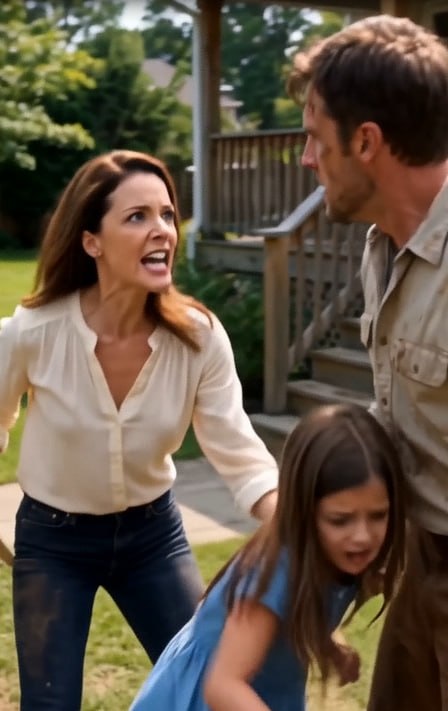
The trial began nine months after the backyard.
Wren did not testify in open court.
Prosecutors had enough without putting her through it.
Her earlier statements and the physical evidence helped establish the investigation, but the case rested on adults, records, digital logs, financial motive, and Nathan’s contemporaneous documentation where legally admissible.
Helen testified.
So did the pharmacist.
The cardiology practice’s cybersecurity specialist.
The medical examiner.
The courier service manager.
The forensic accountant.
Samuel Price.
And Evelyn.
Cole sat at the defense table looking smaller than she remembered.
His attorney attacked Nathan first.
“Nathan Mercer committed fraud, correct?”
“Yes,” Evelyn said.
“He forged your signature?”
“Yes.”
“He concealed losses?”
“Yes.”
“He lied to his board?”
“Yes.”
“And yet you want this jury to believe everything he wrote when it helps the prosecution.”
“No.”
The attorney paused.
“No?”
“I want them to believe evidence that can be independently confirmed.”
She looked toward the jury.
“Nathan’s note said his prescription changed. The pharmacy confirmed it. He said Cole accessed his accounts. Digital records confirmed access from devices connected to Cole. He said Cole moved money through Bracken Ridge. Bank records confirmed it.”
The attorney stepped closer.
“You hated Mr. Barrett by the time your daughter accused him.”
“I was afraid of him.”
“Not my question.”
“Yes. I hated him.”
“You wanted revenge.”
Evelyn thought of the backyard.
The shovel.
Wren screaming.
“Yes.”
Murmurs.
The attorney smiled.
“Thank you.”
“But wanting revenge didn’t create his bank transfers.”
The smile vanished.
“It didn’t create the pharmacy logs. It didn’t create the server payment. It didn’t make him lie about being at my house. It didn’t put his company card behind the phishing system.”
The prosecutor did not need to rehabilitate her much after that.
Cole eventually testified against his lawyer’s advice.
He admitted the Bracken Ridge scheme.
Admitted the Scottsdale losses.
Admitted returning to Nathan’s house.
Admitted handling Nathan’s medication organizer.
But he denied altering the prescription.
“Why did you return that night?” the prosecutor asked.
“To convince Nathan not to destroy the company.”
“Did he agree?”
“No.”
“Did you know about his board meeting the next morning?”
“Yes.”
“What would happen if he told the board?”
“My career would be over.”
“Your investment?”
“Gone.”
“Your Scottsdale project?”
“Gone.”
“Possible criminal investigation?”
Cole stared at him.
“Yes.”
“And three weeks earlier, you had helped arrange a five-million-dollar key-person insurance policy.”
“The board knew about key-person coverage.”
“But this increase was requested by you.”
“Yes.”
“Then Nathan died.”
“Yes.”
The prosecutor approached the evidence screen.
“Mr. Barrett, who paid for the virtual server used in the credential theft?”
“Barrett Strategic.”
“Your company?”
“Yes.”
“Who had access?”
“I did.”
“Employees?”
“No.”
“Partners?”
“No.”
“So when you told police an employee might have used it—”
“I was speculating.”
“You had no employees.”
“No.”
The courtroom was silent.
The prosecutor displayed Nathan’s pharmacy records.
“Who arranged delivery of the altered prescription?”
Cole looked at the jury.
Then at Evelyn.
For one second, she saw the old arrogance.
The man who had sat in Nathan’s chair because he believed possession could become ownership if nobody resisted long enough.
“I did.”
“Why?”
“Nathan asked me to pick up his medication sometimes.”
“That isn’t what I asked.”
Cole’s breathing changed.
“Why did you arrange delivery of this prescription?”
No answer.
The prosecutor waited.
“Because you knew it had been changed?”
“No.”
“Because you changed it?”
“No.”
“Because if Nathan followed the printed directions, his already vulnerable heart would be exposed to a dangerous dose?”
“NO.”
Cole slammed his hand against the witness rail.
The judge ordered him to compose himself.
The jury watched.
The mask had cracked.
Closing arguments lasted a day.
Deliberations lasted fourteen hours.
Evelyn sat between Helen and Leah when the jury returned.
On murder in the first degree:
“Guilty.”
Helen folded forward and sobbed.
On wire fraud:
“Guilty.”
Computer intrusion:
“Guilty.”
Embezzlement:
“Guilty.”
Evidence tampering:
“Guilty.”
Witness intimidation:
“Guilty.”
Evelyn did not feel triumph.
That surprised her.
She had imagined relief as something bright.
Instead it felt like a door finally closing after a storm.
Cole was led away.
He looked at Evelyn once.
She held his gaze.
Then chose not to give him the last word.
Outside, reporters shouted questions.
Evelyn ignored them.
Wren waited in a private courthouse room with Helen’s sister.
When Evelyn entered, Wren ran into her arms.
“Is it over?”
Evelyn held her.
“The trial is.”
“Is he going away?”
“Yes.”
“For how long?”
“A very long time.”
Wren nodded.
Then asked the question Evelyn had feared for months.
“Was Dad a good person?”
Evelyn crouched.
“He loved you more than anything.”
“That’s not what I asked.”
No more easy lies.
Evelyn took her daughter’s hands.
“Your dad was brave at the end.”
Wren waited.
“And before that?”
“He was scared. And proud. And he made choices that hurt people.”
“So he wasn’t good?”
Evelyn brushed hair from her face.
“He was a person. People can love deeply and still fail badly.”
Wren thought about it.
“Did he try to fix it?”
“Yes.”
“Did he?”
“Some of it.”
“And the rest?”
May you like



Evelyn squeezed her hands.
“We did.”







