Chapter 21 - The People Who Paid the Price
Grant Meridian did not survive unchanged.
Michael insisted on that.
The rescue financing closed three weeks later.
The family’s voting power fell dramatically.
Sophie’s trust remained valuable, but no longer capable of controlling the company.
Michael’s own influence shrank even more.
Paul had predicted this as humiliation.
Michael experienced it as relief.
The new board created an independent restitution program.
Historical employee claims would be reviewed by retired judges and benefits specialists.
Michael contributed a large portion of his personal shares.
Richard Grant’s estate contributed assets from a family foundation.
Former employees were not required to sign silence agreements.
That condition mattered most.
At the first public meeting, Thomas Price’s photograph appeared on a screen.
Adrian sat in the front row.
Vanessa could not attend.
Michael walked to the microphone.
He had prepared a speech.
Then abandoned it.
“My family’s company accused Thomas Price of financial misconduct he did not commit.”
The room went still.
“We knew enough to correct that accusation years ago. We did not.”
An elderly woman began crying.
Michael recognized her from the restitution list.
“Our apology is late. Money is late. Public correction is late. None of that makes it meaningless, but none of it makes it sufficient.”
He looked at Adrian.
“Thomas Price was telling the truth.”
Adrian lowered his head.
Afterward, Michael approached him.
For a moment neither spoke.
Then Adrian said, “Dad would have hated this room.”
Michael almost smiled.
“My father would have hated my speech.”
“Maybe they would have had something to talk about.”
They stood beside each other without friendship.
Without forgiveness.
But no longer entirely as enemies.
Adrian had agreed to plead guilty to a lesser financial offense for his role in Northstar.
His law license would likely be suspended or lost.
He did not complain.
“I stopped asking questions,” he told Michael.
“I know that problem.”
Vanessa’s plea was harsher.
She admitted conspiracy to commit wire fraud, misuse of company funds and state charges related to Sophie’s abandonment.
Her cooperation reduced potential federal exposure, but it did not erase punishment.
At the plea hearing, the judge asked whether anyone forced her to admit guilt.
“No.”
“Did you knowingly participate in fraudulent transactions?”
“Yes.”
“Did you knowingly possess a minor child’s passport without authorization?”
“Yes.”
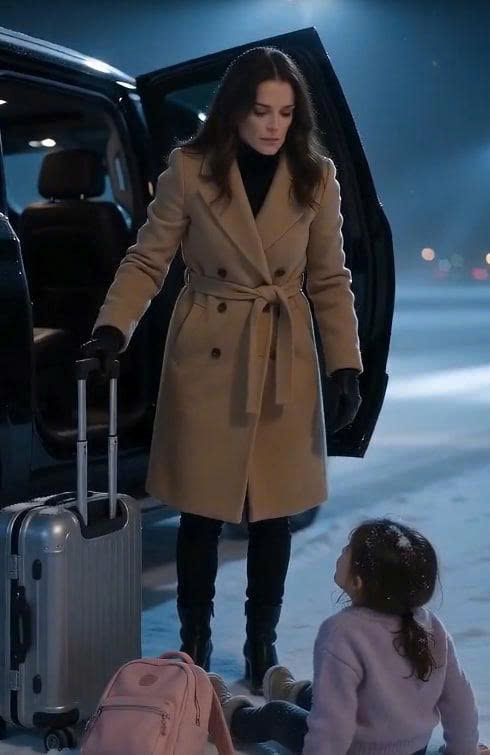
“Did you intentionally push the child from your vehicle at the airport?”
Vanessa closed her eyes.
“Yes.”
Michael watched from the back.
Not for revenge.
Because Sophie deserved at least one adult to witness the truth being stated without qualification.
After court, Vanessa’s attorney approached.
“She wrote Sophie a letter.”
Michael did not take it.
“Sophie can decide when she is older.”
“Vanessa may be sentenced before then.”
“That is not Sophie’s responsibility.”
The attorney nodded.
Then handed Michael a different envelope.
“This one is for you.”
Michael nearly refused.
He opened it that night.
Vanessa had written only one page.
I loved you after I had already made loving me dangerous.
I kept thinking if I repaired my father’s life, I could become the person you believed I was. Instead I used every wrong done to me as permission for the next wrong I did to someone else.
Do not tell Sophie I was misunderstood.
Tell her I knew better.
Michael folded the letter.
He did not cry.
He placed it in a locked drawer.
Some truths did not need immediate use.
Paul’s criminal case moved toward trial.
His lawyers attacked Vanessa’s credibility.
Correctly, in part.
She had lied extensively.
So prosecutors built the case without depending solely on her.
Documents.
Financial records.
Audio.
Witnesses.
The preserved Hangar Four files.
Paul’s personal Halcyon fee.
One crime supported another.
His strategy of spreading responsibility eventually trapped him.
Too many people possessed pieces of the truth.
At home Sophie began sleeping through the night again.
Not always.
Some storms still frightened her.
When snow struck the windows, she checked the driveway.
Michael learned not to say, “There’s nothing to be afraid of.”
There was.
Memory.
Instead he said, “I’m here.”
One night she asked, “Did Vanessa love us?”
Michael hated the question.
“I think she loved us in the way she knew how.”
“Was it fake?”
“Some things were fake.”
“All?”
“No.”
Sophie looked confused.
“How can somebody love you and hurt you?”
Michael thought of Richard.
Laura.
Vanessa.
Himself.
“People can feel something real and still make terrible choices.”
“Then love isn’t enough?”
“No.”
“What else?”
Michael sat on the edge of her bed.
“Choices.”
Sophie nodded.
Then pulled the blanket higher.
“Good night.”
“Good night.”
As Michael closed the door, his phone rang.
Rachel.
“Paul wants a plea deal.”
Michael leaned against the hallway wall.
“Will prosecutors give him one?”
“Maybe.”
“What does he want?”
“Reduced prison exposure in exchange for full disclosure of historical misconduct.”
Michael looked toward Sophie’s room.
“What are they asking me?”
“Nothing legally.”
“And unofficially?”
“Whether Grant Meridian will cooperate with disclosure even if it exposes Richard further.”
Michael did not need time.
“Yes.”
Rachel paused.
“You’re sure?”
“Yes.”
The old Michael would have protected the family name.
May you like



The new Michael understood names were not children.
They did not need protecting from truth.







