Chapter 17 - The Vote
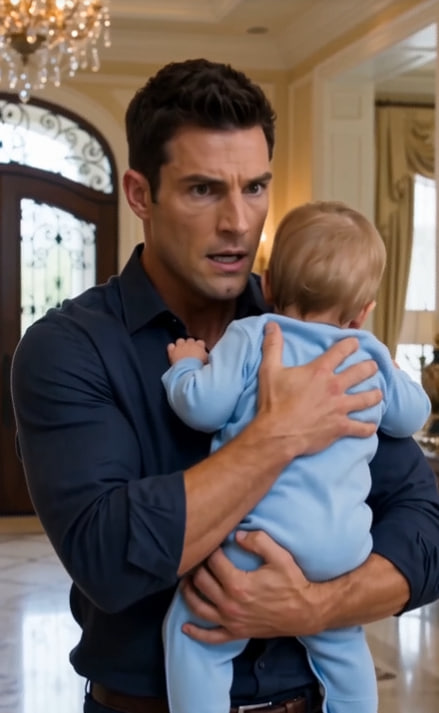
Three weeks later, the largest board meeting in Whitmore Holdings history began without Margaret.
Her chair remained empty.
Daniel noticed it immediately.
For thirty-eight years, Margaret had occupied every room as though absence itself required her permission.
Now the company had continued without her.
The forensic audit was not finished.
Julian Avery was under federal investigation for wire fraud and embezzlement.
Margaret faced separate charges related to the falsified laboratory submission and the incident involving Noah.
Her attorneys denied criminal intent.
The courts would decide.
Daniel no longer needed to.
Grace called the meeting to order.
Two issues dominated the agenda.
Governance reform.
And the Evelyn Marlowe claim.
Jonathan attended with counsel.
Daniel had spent the previous week negotiating not from the position his mother would have chosen—how little must we admit?—but from a different question.
What can we prove?
The partnership agreement had been authenticated.
Company records supported several of Evelyn’s historical claims.
The legal question of damages after decades was complicated.
The moral question was not.
Daniel stood.
“My aunt Evelyn Whitmore Marlowe contributed materially to the company that became Whitmore Holdings.”
The room was silent.
“For decades, official histories minimized that contribution. Litigation later rejected her ownership claim based partly on an incomplete record.”
Jonathan watched him.
Daniel continued.
“We now know evidence existed that should have been disclosed.”
He looked toward the directors.
“I recommend the company formally correct its history, establish a settlement process with Evelyn’s estate and create an independent review of legacy ownership records.”
One director frowned.
“That may expose us to substantial liability.”
“Yes.”
“You’re comfortable with that?”
“No.”
Daniel looked at him.
“Comfort is not the standard.”
Grace almost smiled.
The motion passed eight to four.
Afterward Grace asked everyone to remain.
“One more item.”
Daniel knew it was coming.
“CEO confidence.”
He had asked for the vote himself.
Margaret’s scandal had damaged the company.
Daniel’s family name now appeared in every article.
He believed the board deserved the right to decide whether he should stay.
Grace addressed him.
“You requested this.”
“Yes.”
“Any statement?”
Daniel stood.
“I used to think leadership meant having enough authority to prevent uncertainty.”
He glanced at Margaret’s empty chair.
“I was wrong.”
He told them what he had learned.
That control could conceal weakness.
That loyalty without accountability became permission.
That companies could inherit family dysfunction when leaders treated institutions as private property.
“I want to remain CEO,” Daniel said. “But I will not use family voting power to guarantee it.”
The independent fiduciary controlling the descendant trust had already agreed to abstain.
Daniel’s personal shares would not be used.
Only independent directors would vote.
Daniel left the room.
He waited in the hallway alone.
Ten minutes later Grace opened the door.
“Come in.”
Daniel returned.
Grace looked at him.
“Eight votes to retain you. Two against. Two abstentions.”
Daniel exhaled.
“Thank you.”
“Don’t.”
Grace closed the folder.
“Earn the next vote.”
Daniel smiled.
“I will.”
That afternoon, he drove to see Margaret.
She had been released pending court proceedings and was staying at a rented condominium because a protective order barred her from contact with Noah.
Daniel had not seen her since the courthouse.
She opened the door herself.
No makeup.
Gray hair loose.
For the first time she looked sixty-six instead of fifty.
“I saw the board statement,” she said.
“About Evelyn?”
“Yes.”
“You disagree?”
“I spent half my life preventing exactly that.”
“I know.”
Margaret let him inside.
“Did Jonathan demand the company?”
“No.”
“Then what did he want?”
“Recognition. A settlement process. Transparency.”
Margaret laughed quietly.
“That simple.”
“No.”
Daniel sat.
“Nothing about this is simple.”
She looked at him.
“How is Noah?”
Daniel hesitated.
“Healthy.”
Margaret swallowed.
“Walking?”
“Almost.”
A painful smile appeared.
“He was stubborn about walking.”
Daniel stared.
“You noticed?”
“I noticed everything about him.”
“Then why?”
Margaret looked away.
“I told you.”
“No. You explained the trust.”
He leaned forward.
“You never explained how you could look at him and do what you did.”
Margaret’s eyes filled.
“There is no explanation that makes it acceptable.”
Daniel waited.
“I had spent months looking at Noah as a countdown.”
Her voice trembled.
“Every milestone reminded me time was closing.”
Daniel said nothing.
“I stopped seeing him as a baby.”
Margaret wiped her face angrily.
“I saw the trust. The audit. Evelyn. Your father. Everything I had buried.”
Daniel felt no urge to comfort her.
But he listened.
“That morning,” she said, “when I saw him crawling toward Edward’s study, I thought about the blue ledger.”
Daniel understood.
“The ledger was behind the wall.”
“Yes.”
“You thought I might find it.”
“Yes.”
“So you disabled the camera.”
Margaret looked at him.
“Yes.”
“And sent the nanny away.”
“Yes.”
Daniel’s stomach tightened.
“You planned to hurt him.”
“No.”
“You planned something.”
“I planned to frighten him away from the stairs.”
“He was fifteen months old.”
“I know.”
“You used your foot.”
“Yes.”
“And he fell.”
“Yes.”
Her voice broke.
“I knew the moment it happened what I had become.”
Daniel looked at her.
“No.”
Margaret frowned.
“You knew when you watched him cry and called him a bastard.”
She closed her eyes.
Daniel stood.
“I came because I wanted to know whether you understood.”
Margaret looked up.
“Understand what?”
“Why I won’t bring Noah here.”
Her face collapsed.
“Ever?”
Daniel’s answer was quiet.
“Not unless a court, a therapist and a long history of changed behavior give me reasons I do not have today.”
Margaret nodded through tears.
Daniel moved toward the door.
“Daniel.”
He stopped.
“Do you hate me?”
He considered the question.
“No.”
Margaret looked almost relieved.
Daniel continued.
“But that does not mean you get me back.”
He left.
Outside, winter sunlight reflected off the buildings.
Daniel stood on the sidewalk and understood something his mother never had.
Consequences were not revenge.
May you like



Sometimes they were simply boundaries that arrived years too late.
---







