Chapter 18 - The First Honest Contract
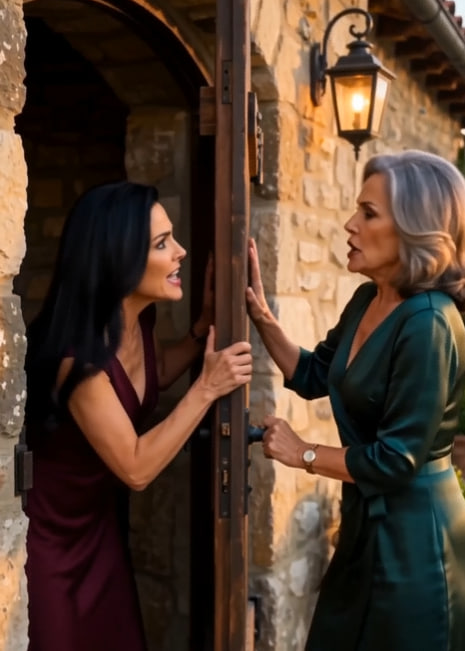
The charity tasting happened in April.
Reyes Vineyard and Laurent Cellars appeared on the same poster for the first time in decades.
Not merged.
Not consolidated.
Side by side.
Separate.
Cooperating.
Isabel liked the symbolism more than she admitted.
Camila organized most of it.
Luis complained about parking.
Sofia designed a small logo of two grape leaves that did not touch but grew from the same line of soil.
“It’s scientifically questionable,” Luis said.
Sofia glared at him.
“It’s art.”
Luis surrendered.
Julian attended as a guest.
Helena did not.
Over six hundred people came.
The event raised enough money to fund part of a seasonal-worker housing project.
At sunset, Isabel stood near the same terrace where Sofia’s recording had exposed everything.
A year earlier, she had believed family unity meant avoiding fractures.
Now she saw another possibility.
Sometimes healthy relationships depended on visible boundaries.
Camila approached holding two wine glasses.
“To non-mergers.”
Isabel accepted one.
“To contracts everyone reads.”
They clinked glasses.
Later, Camila produced a folder.
Isabel groaned.
“Absolutely not.”
“Read the title.”
Mutual Emergency Water Cooperation Agreement.
Isabel blinked.
“What is this?”
“A proposal.”
“For what?”
“If either vineyard suffers temporary well failure, the other can sell limited water capacity under pre-agreed terms.”
Isabel looked at her.
“No ownership rights?”
“Explicitly excluded.”
“No automatic renewal?”
“Excluded.”
“No collateral?”
“God, no.”
“Independent counsel?”
“Required.”
Isabel smiled.
“This is what your mother could have asked for.”
“I know.”
They negotiated for six weeks.
Not because they distrusted each other.
Because good agreements deserved care.
Engineers evaluated capacity.
Lawyers defined limits.
Insurance was reviewed.
Environmental regulations were considered.
Both businesses retained the right to refuse if their own operations were threatened.
When they finally signed, there was no family dinner.
No emotional speech.
No manipulation.
Two owners sat across from each other in Maya’s conference room.
Read.
Asked questions.
Changed language.
Signed.
Maya looked at Isabel afterward.
“How does it feel?”
“Boring.”
“Excellent.”
Isabel laughed.
The contract became one of her favorite documents.
Not because it was profitable.
Because it represented consent functioning properly.
That summer, the divorce became final.
The court paperwork arrived on a Tuesday.
Isabel opened it in her office.
No dramatic reaction.
She simply sat down.
Marriage dissolved.
Four years reduced to administrative language.
She expected grief.
It came.
But so did relief.
Julian called that evening.
“I got the order.”
“So did I.”
Silence.
“I’m sorry,” he said.
“I know.”
“I won’t say it again.”
“Thank you.”
Another silence.
Then Julian said, “I bought a place.”
“Where?”
“Sebastopol.”
“Near your consulting work?”
“Yes.”
After leaving Laurent, Julian had begun advising smaller wineries on operations and financing.
Ironically, he had become meticulous about disclosure.
Isabel found that almost funny.
“I hope it goes well,” she said.
“I hope so too.”
They said goodbye.
No promise to remain friends.
No vow never to speak.
Just goodbye.
Weeks later, Isabel received an unexpected visitor.
Helena.
She did not enter the property.
She waited at the gate and called.
“I’m here.”
“I can see that.”
“I brought something.”
Isabel considered refusing.
Then walked down.
Helena stood beside her car holding a sealed archival box.
“I found these in André’s storage.”
“What?”
“Letters between him and your father.”
Isabel’s guard rose.
“Why give them to me?”
“Because some belong to your family.”
“Have you read them?”
“Yes.”
“Anything about the north parcel?”
“Yes.”
Isabel stiffened.
Helena handed over the box.
“You should read them yourself.”
No conditions.
No plea.
Isabel took it.
Helena looked older and smaller than she remembered.
For a moment, neither spoke.
Then Helena said, “I was wrong.”
Isabel waited.
Not mistaken.
Not desperate.
Wrong.
“I know,” Isabel said.
Helena nodded.
“Do you hate me?”
Isabel considered lying.
“No.”
Helena seemed surprised.
“That doesn’t mean I trust you.”
“I know.”
“And it doesn’t mean I forgive you.”
Helena looked down.
“I know.”
The phrase had once infuriated Isabel when Julian used it.
From Helena, now, it sounded different.
No attempt to shorten consequences.
Just acknowledgment.
Helena returned to her car.
Before getting in, she said, “The cellar door was unforgivable.”
Isabel’s body went cold at the memory.
“Yes.”
“I told myself I only wanted to scare you.”
“You wanted to control me.”
Helena closed her eyes.
“Yes.”
Then she left.
Inside the archival box, Isabel found twenty-three letters.
Most were ordinary.
Crop yields.
Equipment.
Family jokes.
Two stubborn men insulting each other’s pruning methods.
Then one letter from André to Miguel:
Helena believes joining the properties would strengthen both families. She is not wrong about the economics, but I fear she confuses what could be good with what she has the right to demand.
Isabel stopped.
The sentence described the entire tragedy.
Not every bad idea began as a bad outcome.
Sometimes the corruption occurred when a person decided potential benefit gave them the right to remove another person’s choice.
She folded the letter carefully.
Then she placed it beside her father’s photograph.
Not as proof in a lawsuit.
As history.
May you like



The kind no one needed to manufacture.
---







