Chapter 20 - The Cane by the Door
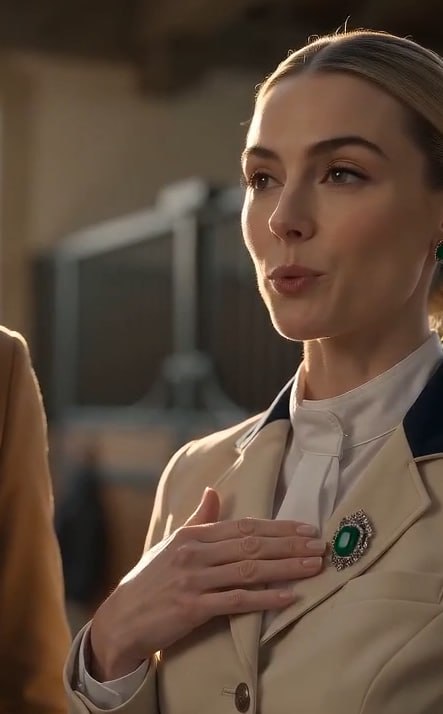
One year after Victor locked Eleanor inside the tack room, Hawthorne Ridge held its autumn open day.
Children from local agricultural programs toured the barns.
Apprentices demonstrated farrier work.
Mason complained that visitors touched everything.
Claire told him this was how public events worked.
The south pasture rolled green beneath a clear Virginia sky.
No resort.
No construction stakes.
No Red Cedar signs.
A conservation easement now protected most of it permanently.
Eleanor stood near the stable entrance with her polished wooden cane.
She was sixty-nine.
Her knee still bothered her on damp mornings.
She no longer treated the cane as something embarrassing.
That surprised her.
Before the attack, she had used it grudgingly after an old riding injury worsened.
After Victor weaponized it, she nearly stopped using it altogether.
Claire noticed.
“You’re limping because you’re trying to prove something to furniture.”
“It is not furniture.”
“It’s a stick.”
“It is walnut.”
“Prestigious stick.”
Eleanor laughed.
Then used it.
A group of children gathered around Sovereign Crown’s stall.
The stallion had returned after the attempted transfer.
Mason kept everyone three feet back.
“Fingers stay attached better when you follow instructions.”
A little girl raised her hand.
“Does he bite?”
“Only people with poor judgment.”
Claire whispered:
“He’d fit into the family.”
Eleanor nudged her.
Later they walked toward the tack room.
The door stood open.
Always open now when occupied.
Mason had removed the exterior lock permanently.
Inside, the old black riding boots remained beneath the saddle rack.
Claire noticed.
“You kept them.”
“Of course.”
“You hid evidence in one.”
“James taught me creativity.”
“James taught this family too many hidden-compartment tricks.”
Eleanor smiled.
Then grew quiet.
On the wall beside the door hung a framed copy of Hawthorne Ridge’s new employee policy.
No family member could override safety procedures.
No one could remove records from controlled storage.
Suspected elder abuse or coercion had mandatory reporting procedures.
Professional governance in a stable sounded almost absurd.
Eleanor no longer found it absurd.
People needed systems precisely because love and loyalty were unreliable safeguards.
A car approached.
Claire looked outside.
Not Victor.
He remained incarcerated.
It was Patricia Sloan, invited to speak at a foundation seminar on elder financial exploitation.
Eleanor groaned.
“Your favorite person,” Claire said.
“She asked me what day it was.”
“She was doing her job.”
“She enjoyed it.”
Patricia entered and smiled.
“Mrs. Ashford.”
“I know what day it is.”
Patricia laughed.
“I’m glad.”
The seminar drew lawyers, physicians, bankers, farm owners, and social workers.
Eleanor had agreed to speak.
She hated public confession.
Claire considered that one reason she should do it.
Eleanor stood at the lectern.
The emerald brooch shone on Claire’s jacket in the front row.
Mason leaned against the back wall.
Eleanor placed her cane beside the lectern.
“People ask how someone could nearly take control of an estate worth tens of millions of dollars.”
She looked around.
“They expect the answer to be a brilliant forgery.”
Pause.
“Or a corrupt doctor.”
Another pause.
“Or an ambitious relative.”
She shook her head.
“Those were parts of it.”
The room quieted.
“The real vulnerability was trust without verification.”
She thought of Thomas.
Victor.
Natalie.
James.
Rebecca.
Herself.
“I believed loving people meant handling problems privately.”
She swallowed.
“My husband believed the same thing. My sister did too.”
Claire watched.
“We covered mistakes because we feared scandal. We hid painful truths because we feared hurting children. We gave second chances without changing systems.”
Eleanor looked toward the stable doors.
“Eventually, someone learned that our silence was an asset.”
No one moved.
“My nephew used my cane to force me to my knees.”
Her voice remained steady.
“He locked me inside a room on my own property because he believed fear would make me surrender control.”
She touched the cane.
“I thought the worst thing about that moment was weakness.”
Pause.
“I was wrong.”
Claire’s eyes filled.
“The worst thing was that he believed my physical vulnerability reduced my right to decide.”
Eleanor lifted the cane.
“This does not make me incompetent.”
She set it down again.
“Needing help does not make anyone available for control.”
Afterward, several people approached her.
One elderly man spoke about a son pressuring him over property.
A woman described a sister controlling their mother’s bank account.
Eleanor listened.
Not as a matriarch.
Not as someone dispensing judgment.
Just listened.
By late afternoon, visitors left.
The stable became quiet.
Claire found Eleanor beside the tack room.
“Ready?”
“In a minute.”
Claire waited.
Eleanor looked at the wooden door.
A year earlier she had pounded against it shouting her daughter’s name.
Claire had arrived unexpectedly.
Victor lied.
The outside latch exposed him.
Then the riding boot.
The documents.
The brooch.
The memory card.
One revelation after another.
Eleanor had once remembered that evening as the night Victor tried to steal Hawthorne Ridge.
Now she understood it differently.
It was the night all the hidden things began coming out.
Not only Victor’s conspiracy.
Thomas’s theft.
Natalie’s deal.
Rebecca’s debt.
Paul’s embezzlement.
James’s concealment.
Eleanor’s control.
Every secret the family had treated as protection eventually became someone else’s leverage.
Claire touched the emerald brooch.
“Mom?”
“Yes?”
“Do you regret opening the card?”
Eleanor thought.
“No.”
“Even knowing everything it led to?”
“Yes.”
Claire frowned.
“You just gave two opposite answers.”
“I’m sixty-nine. Apparently I’m allowed complexity.”
Claire laughed.
Eleanor smiled.
Then she reached into the old left riding boot.
Claire stared.
“What are you doing?”
Eleanor removed a small envelope.
“Oh no.”
“What?”
“Please tell me this family has stopped hiding legal documents in footwear.”
“It isn’t legal.”
Claire opened it.
Inside was a handwritten note.
For Claire.
She read.
This estate is not proof that I loved you more than Rebecca, Victor, or anyone else. Land cannot measure love. Money cannot repair silence. If Hawthorne Ridge ever becomes a burden, sell what the trust permits, protect what deserves protecting, and live your own life.
Claire stopped.
Her eyes filled.
Eleanor continued:
“I put it there because I knew you’d complain.”
Claire laughed through tears.
“You’re impossible.”
“Competently impossible.”
They hugged.
No inheritance argument.
No title.
No trustee vote.
Just mother and daughter.
When they separated, Claire picked up Eleanor’s cane.
For one second Eleanor’s body tensed.
The old memory arrived instantly.
Victor ripping it from her hand.
Marble? No—stable stone beneath her knee.
The helplessness.
The locked door.
Claire noticed.
She immediately held the cane out.
“Sorry.”
Eleanor looked at it.
Then at her daughter.
And something shifted.
Victor had taken the cane to remove her balance.
Claire was offering it back.
Same object.
Different act.
Control versus care.
Eleanor smiled.
“Keep holding it.”
Claire raised an eyebrow.
“Why?”
“My knee feels fine.”
They walked toward the courtyard together.
Claire carried the cane.
Eleanor carried nothing.
At the stable door, Eleanor paused.
“Claire.”
“Yes?”
“If I need it, I’ll ask.”
Claire nodded.
“I know.”
That mattered.
Help offered.
Not imposed.
Strength chosen.
Not performed.
Behind them, the tack-room door remained open.
The emerald brooch caught the last sunlight.
The old riding boots sat beneath the rack.
And Hawthorne Ridge—no longer protected by secrets, fear, or one woman’s control—settled into evening.
Eleanor walked beside her daughter without the cane for twenty yards.
Then her knee began to ache.
She stopped.
“Claire.”
Claire looked over.
Eleanor smiled.
“I need it.”
Claire handed it back immediately.
No hesitation.
No judgment.
Eleanor wrapped her fingers around the polished walnut handle.
A year earlier, Victor had used that cane to make her powerless.
Now she used it because she had finally learned that accepting support was not surrender.
She tapped it once against the stone.
May you like



Then walked home under her own authority.
THE END







