Chapter 18 - After the Vote
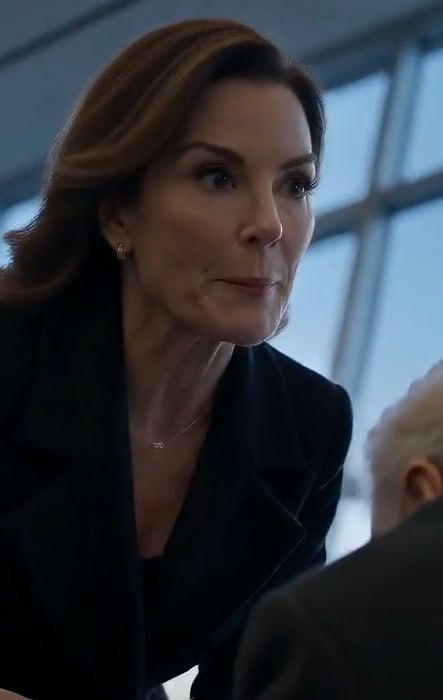
Monica did not go quietly.
Within forty-eight hours, Merrick filed to enforce Damian’s stock pledge.
Her lawyers argued the debt was valid, mature, and unpaid.
Damian’s lawyers countered that Monica and Merrick had acquired the loan as part of a fraudulent scheme to manipulate corporate voting control.
The court issued temporary restrictions preventing any voting transfer while the dispute proceeded.
Monica still held the debt.
But not the company.
At Whitmore Aerospace, the board made changes immediately.
Damian was removed as CEO for cause.
The vote was unanimous except for Damian, who did not vote.
Nina Patel became permanent CEO subject to annual board review.
Stephen Cole remained independent chair.
Graham resigned.
Arthur was offered his old executive-chair title ceremonially.
He declined.
Employees were stunned.
Rachel asked him later:
“Was that difficult?”
“Yes.”
“Regret it?”
Arthur thought.
“No.”
The Founder Voting Trust litigation remained.
The forged incapacity activation was voided.
Arthur legally regained the voting authority.
Then he surprised everyone again.
He instructed counsel to restructure the trust.
No family member would automatically become successor trustee.
An independent fiduciary institution and two elected independent directors would oversee voting after Arthur.
Damian stared when he heard.
“You’re taking the company away from the family.”
Arthur answered:
“I’m taking control away from inheritance.”
“What about Rachel?”
“She agrees.”
Damian looked toward her.
Rachel nodded.
“I never wanted a throne.”
Arthur winced slightly.
“That word is deserved.”
The company launched a competitive strategic review.
Northstar was allowed to participate.
So were six other bidders.
Three months later, the board chose not to sell.
Instead, a minority investment from a pension-backed industrial fund provided $120 million in capital without transferring control.
The valuation:
$635 million.
Northstar’s original $480 million proposal looked even worse in hindsight.
Merrick’s eighteen-million-dollar fee disappeared entirely.
Graham’s seven-million-dollar fee too.
The defense customer resumed new work after Whitmore adopted compliance reforms and submitted to independent monitoring.
Not everything recovered.
One major contract was lost permanently.
Legal fees exceeded $22 million.
Arthur’s old concealment cost the company a regulatory settlement and compliance expenses.
Whitmore paid.
Arthur personally contributed $5 million toward remediation and employee compliance initiatives.
Not because it erased anything.
Because some consequences should be borne by the person who caused them.
Then prosecutors acted.
Monica faced charges involving forged corporate and medical documents, attempted fraud, unlawful access to medical information, and conspiracy.
Damian faced charges tied to use of false corporate records and coercive conduct.
The airport assault was handled separately.
Graham faced fraud and conspiracy exposure but received consideration for cooperation.
Arthur was not charged criminally in connection with 2011 after investigation concluded certain limitation periods and factual issues prevented prosecution.
He did not celebrate.
Regulators imposed civil penalties.
The board publicly censured his historical conduct.
His honorary “Founder Chairman Emeritus” title was withdrawn.
The old Arthur would have fought that.
The new one signed the acknowledgment himself.
Rachel found him reading it.
“You okay?”
“No.”
“Want them to reverse it?”
“No.”
He folded the paper.
“Consequences are supposed to cost something.”
The divorce between Damian and Monica became vicious.
Damian accused Monica of exploiting his debt.
Monica accused Damian of using her as a scapegoat.
Both had evidence against the other.
Rachel refused involvement.
One afternoon Damian came to see Arthur.
No suit.
No driver.
He looked older than forty-one.
“Monica offered to settle the debt.”
“Terms?”
“I surrender six percent of my voting shares and waive claims against Merrick.”
Arthur shook his head.
“Your lawyers?”
“Say we may beat enforcement entirely because of the fraudulent-purpose evidence.”
“Then listen to them.”
Damian stared.
“You’re not going to fix it.”
“No.”
A faint smile crossed Damian’s face.
“I think that may be the first useful thing you’ve done for me.”
Arthur laughed.
Then silence.
Damian looked at the cane.
“I’m sorry.”
Arthur’s expression changed.
“For what?”
Damian stared at him.
“You know.”
“I want you to say it.”
Damian swallowed.
“I kicked your cane because you wouldn’t obey me.”
Arthur remained still.
“I watched you fall.”
“Yes.”
“I took advantage of the fact you were recovering from surgery.”
“Yes.”
“I was trying to scare you into signing.”
“Yes.”
Damian’s eyes filled.
“I’m sorry.”
Arthur looked toward the window.
“I believe you.”
Damian’s breath caught.
“That doesn’t mean we’re okay.”
“I know.”
“It doesn’t mean I trust you.”
“I know.”
“It doesn’t mean consequences disappear.”
“I know.”
Arthur finally looked at him.
“But I believe you’re sorry.”
Damian nodded.
That was all Arthur could offer.
For now.
Later that week, prosecutors announced Damian had reached a plea agreement.
He would plead guilty to conspiracy involving false corporate records and a misdemeanor assault charge from the airport incident.
No prison guarantee had been made publicly.
His cooperation would be considered.
He would surrender disputed corporate benefits and accept a multi-year bar from serving as an officer or director of a public or government-contracting company.
Arthur read the announcement alone.
Then he opened the old leather briefcase.
Inside, the forged chairman document remained preserved in an evidence sleeve.
At the bottom:
Arthur Whitmore.
A signature he never made.
For decades, Arthur had feared retirement because he believed leaving the chair meant losing himself.
Damian had tried to steal the chair.
Monica had tried to monetize it.
Graham had betrayed friendship for access to it.
Now Arthur looked at the forged document and understood something none of them had understood soon enough.
May you like



A title had never been the company.
And control had never been the same as legacy.







