Chapter 12 - The Phone from the Crash
Who mailed Rachel’s phone?
Owen Black’s widow denied having it.
Martin denied it.
Vanessa claimed never to have seen it.
Forensics found old fingerprints.
Rachel.
Owen.
And one unidentified partial.
Detective Kim reconstructed events.
Owen reached the crash scene before emergency responders.
His dashcam showed him stopping.
He claimed in old notes that he never approached Rachel’s vehicle.
The fingerprint proved otherwise.
He likely took the phone.
Why?
Vanessa had told Martin to delete everything.
Owen may have removed evidence.
Then kept it as insurance.
His widow searched deeper through his belongings.
She found a handwritten list of “security packages” and one name:
C. MORGAN — if I die.
Catherine.
Everyone turned to her.
Catherine stared.
“I never met Owen.”
But bank records showed Owen sent her a certified letter two years earlier.
Catherine had moved offices.
The letter was returned.
After Owen died, someone cleaning his files may have found the instructions and finally mailed the phone.
No grand mastermind.
Just delayed evidence.
Rachel’s unsent text transformed the homicide case.
She suspected sabotage before the crash.
She was returning home.
That undercut Vanessa’s argument that the brake leak was merely meant to stop Rachel from reaching authorities.
Rachel had already abandoned the trip.
The danger continued anyway.
Prosecutors upgraded charges.
Vanessa now faced felony murder-related theories tied to sabotage, though exact charging depended on Connecticut law and prosecutorial strategy.
Daniel did not celebrate.
He sat in Rachel’s old garden and cried.
“She was coming home.”
Catherine sat nearby.
“Yes.”
“I would have listened.”
Catherine did not answer.
Daniel looked at her.
“You don’t believe me.”
“I believe you believe that now.”
He flinched.
“Fair.”
Rachel’s draft text said not to tell Martin.
She finally knew Martin was compromised.
But did she still trust Daniel?
Enough to come home.
That mattered.
Not as absolution.
As unfinished possibility.
Lily learned only that her mother had tried to return home before the crash.
“Was she scared?”
“Yes.”
“Did she want you?”
Daniel’s throat tightened.
“She wanted to talk to me.”
“Would you have believed her?”
He did not lie.
“I hope so.”
Lily frowned.
“That means you don’t know.”
“No.”
She leaned against him.
“Then believe me faster.”
“I will.”
The family-court case moved.
Vanessa’s claimed fifteen-percent proxy was suspended after Martin testified that he inserted the clause at Vanessa’s request and intentionally concealed it among unrelated documents.
The judge called the evidence “substantial proof of fraudulent inducement.”
Daniel regained his voting rights.
He did not retake the CEO role.
Vanessa’s civil leverage collapsed.
Her divorce claim weakened.
Then another financial problem emerged.
Lily’s missing real-estate trust interest had increased Daniel’s personal wealth and voting power for four years.
Even if unwitting, restitution required unwinding transactions.
Daniel would lose a significant portion of his net worth.
Naomi estimated between $35 and $50 million in property interests might shift back to Lily’s trust.
Daniel signed consent to restore them without litigation.
Naomi raised an eyebrow.
“You’re not going to fight valuation?”
“No.”
“You could negotiate.”
“No.”
“It is legally your right.”
“It was never morally mine.”
Power reversal again.
By giving up wealth, Daniel strengthened his credibility with the court and independent board.
But it hurt.
He had to sell a vacation property in Nantucket.
A private investment fund.
Part of his art collection.
Lily watched movers remove paintings.
“Are we poor now?”
Daniel laughed.
“No.”
“Vanessa said people can lose everything.”
“We’re not losing everything.”
“What are we losing?”
“Things that should have belonged to your trust.”
Lily considered.
“Can the trust buy the paintings?”
Daniel smiled.
“If future-you wants terrible paintings, maybe.”
Eleanor sold jewelry Thomas had given her.
One diamond necklace had been worth nearly $400,000.
She used proceeds to help restore the charity.
Lily watched her pack it.
“Do you miss it?”
“A little.”
“Then why sell it?”
“Because some shiny things cost more than their price.”
Lily nodded as though that made sense.
At Walker Children’s Food Initiative, an independent board replaced the Walker family’s control.
The charity recovered millions through restitution and insurance.
Catherine accepted a temporary unpaid role helping rebuild compliance.
Daniel did not.
Rachel had built it.
The family had nearly corrupted it.
He wanted distance.
Then Vanessa’s attorneys announced a surprise witness.
Caleb Cole.
Vanessa’s twelve-year-old nephew.
They intended to show Vanessa’s devotion to him.
Prosecutors objected to using a child for sympathy.
The judge limited testimony.
Caleb ultimately did not appear.
Vanessa withdrew the request.
Perhaps even she had one boundary left.
That night Daniel received a handwritten jail letter from Vanessa.
He almost threw it away.
Naomi told him to preserve it.
He read.
I did love Lily.
Daniel stopped.
Then continued.
That is the part no one will believe.
I loved her until every time she said Rachel’s name, I heard the crash.
I started seeing her as evidence instead of a child.
Daniel’s hands shook.
Vanessa wrote:
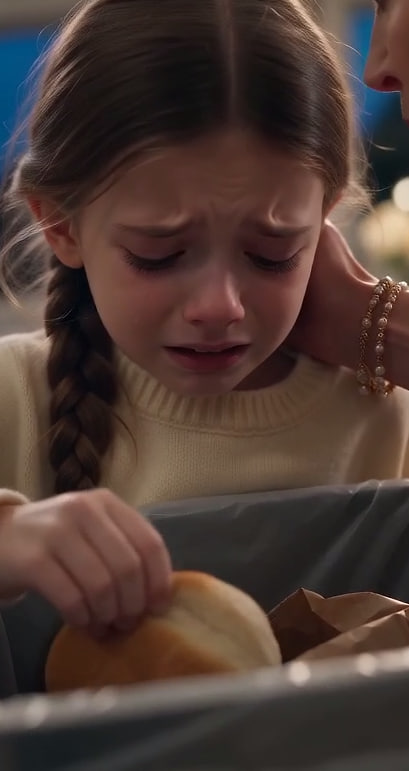
The night in the kitchen, she asked for food after refusing dinner because I removed Rachel’s photograph.
I wanted to make her ashamed of needing anything from me.
I know what that makes me.
Daniel sat silently.
The final paragraph:
There is one thing Rachel never discovered.
Martin kept a second set of books.
They are not about the charity.
They are about Walker Hospitality.
Ask Susan Hart about Property 41.
May you like



Daniel’s grief turned to dread.
Even from jail, Vanessa could still open doors.







