Chapter 20 - Give That Back
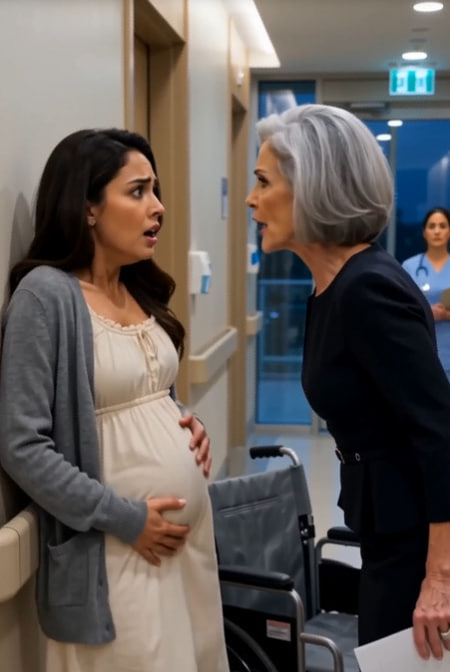
One year after Maya first returned to St. Gabriel, she came back again.
This time there was no court case.
No investigation.
No corrected record waiting.
The clinic had invited her to speak privately with a small patient-safety committee made up of physicians, nurses, administrators and former patients.
Maya had refused public interviews.
She had no interest in becoming a symbol.
But she agreed to this.
Not to tell people what had been done to her.
To tell them what nearly allowed it to work.
“The dangerous part,” Maya said, seated at a conference table, “wasn’t one forged document.”
The room was quiet.
“It was the accumulation of assumptions.”
A relative says a pregnant woman is anxious.
True.
The woman says she wants space from her husband.
True.
She questions missing money.
True.
She considers staying with a friend.
True.
Then someone rearranges those truths until they tell a false story.
Maya looked at the nurses.
“If a family member says a patient is confused, ask the patient.”
At the physicians.
“If a relative gives you psychiatric information, verify the source.”
At administrators.
“And if someone signs a document giving away important rights, make sure the person knows the document exists.”
No dramatic applause followed.
Only notes.
Questions.
Discussion.
That pleased Maya.
Real change was rarely cinematic.
Afterward she walked through the maternity corridor.
Owen was two now.
He waited downstairs with Tessa because his primary interest in hospitals involved pushing every button he could reach.
At the elevators, Maya saw a wheelchair.
For a second she remembered Victoria shoving one toward her knees.
Then the memory passed.
Not vanished.
Passed.
The elevator opened.
Downstairs, Owen escaped Tessa’s hand and ran toward Maya.
“Mama!”
Maya crouched.
He collided with her chest.
Tessa laughed.
“He has been trying to invade restricted areas.”
“Sounds serious.”
“Deeply.”
Owen was holding a blue plastic folder the clinic receptionist had given him to carry.
Maya reached for it.
He twisted away.
“No!”
She laughed.
“Owen, give that back.”
The words stopped her.
Give that back.
The first words from that corridor.
Only now there was no fear in them.
Owen squealed and ran three feet away.
Maya stood.
“Excuse me, sir. That folder belongs to the clinic.”
“No!”
Tessa whispered, “Very strong legal position.”
Maya laughed harder.
Eventually Owen surrendered the folder in exchange for being allowed to press the elevator button.
Outside, Ethan waited on the sidewalk.
It was his parenting day.
Their relationship had become something Maya once would have thought impossible.
Not marriage.
Not friendship exactly.
Cooperation.
Sometimes warmth.
Occasional irritation.
Boundaries that did not require war.
Ethan crouched when Owen ran toward him.
“Buddy!”
Owen climbed into his arms.
Ethan looked at Maya.
“How was the meeting?”
“Good.”
“Hard?”
“Less than I expected.”
He nodded.
Then:
“My mother sent another letter.”
Maya felt no immediate tightening anymore.
“What did she say?”
“She’s asking permission to send Owen a birthday card.”
Maya considered.
Victoria had spent nearly two years in therapy.
She had complied with every legal restriction.
She had not contacted Maya directly.
Most importantly, her recent letters no longer called the plan protection.
She had written:
I used my fear to justify taking choices away from you. Ethan helped me, but I was not merely following him. I altered your therapist’s words because the truth did not support what I wanted to believe.
No but.
It did not create forgiveness automatically.
It created possibility.
Maya looked at Owen.
“Send the card to you first.”
Ethan nodded.
“If it’s appropriate, you can read it to him.”
“Okay.”
“That’s all for now.”
“Okay.”
No argument.
No pressure.
Maya adjusted Owen’s little jacket.
“Have fun with Dad.”
“Zoo!” Owen shouted.
Ethan grinned.
“We’re seeing elephants.”
“Apparently I’ve been replaced.”
Owen kissed her cheek with the chaotic force of a toddler and waved.
Maya watched them walk away.
Once, the sight of Ethan carrying their son away from her would have triggered every memory of the custody affidavit.
Now Maya understood something that had taken years to learn.
Safety was not making sure nothing could ever happen.
Safety was knowing she could respond if it did.
Trust was not blindness.
It was permission given after evidence.
Love was not ownership.
And forgiveness—if it ever came—would not mean pretending the locked doors had never existed.
Tessa stood beside her.
“What now?”
Maya looked toward the subway entrance.
“Lunch.”
“That’s disappointingly normal.”
“I worked very hard for normal.”
They walked toward a small restaurant on the corner.
Halfway there, Maya’s phone rang.
Ethan.
She answered immediately.
“What happened?”
His voice sounded amused.
“Nothing terrible.”
In the background Owen was yelling something about a bus.
Ethan said, “He keeps asking for the folder.”
“What folder?”
“The one from the clinic.”
Maya smiled.
“I gave it back.”
Ethan became quiet.
He remembered too.
Of course he did.
“Maya.”
“Yes?”
“I’m glad you did.”
She looked across the street.
Traffic moved.
People crossed beneath changing lights.
A woman pushed a stroller.
Someone carried flowers.
Ordinary lives moving past one another without knowing anything about the wars people had survived privately.
Maya answered:
“So am I.”
She ended the call.
That evening, after Owen returned, Maya placed him in bed.
He demanded two stories.
Then three.
Finally his eyes began to close.
“Mama?”
“Yes?”
“My paper?”
“What paper?”
He yawned.
“Blue.”
“The folder?”
He nodded sleepily.
“That wasn’t ours.”
“Why?”
Maya smiled.
“Because not everything we can hold belongs to us.”
Owen seemed to consider this profound statement for approximately two seconds.
Then he fell asleep.
Maya sat beside him.
Years earlier, Victoria had believed family gave her the right to hold on.
To Ethan.
To the company.
To Owen.
To Maya’s decisions.
Ethan had believed fear gave him permission to sign where Maya would not.
Maya had once believed marriage required endless explanation before she was allowed to say no.
All of them had learned, in different ways and at different prices, that love without consent could become another form of possession.
Maya kissed Owen’s forehead.
On the dresser sat a photograph from his birthday.
Maya on one side.
Ethan on the other.
Owen between them.
No Victoria.
Not yet.
Maybe never.
Maybe someday.
The uncertainty no longer frightened Maya.
Some decisions belonged to the future.
She did not have to control them tonight.
Before leaving the room, Maya opened the small drawer where she kept important documents.
Passport.
Birth certificate.
Divorce decree.
Updated medical proxy.
No secret pages.
No signatures she had not made.
She closed the drawer.
Then she switched off the light.
For years afterward, Maya would sometimes remember the woman she had been in that hospital corridor: heavily pregnant, pressed against a wall, holding forged papers while the two people claiming to protect her quietly prepared to take her choices away.
She no longer felt ashamed of that frightened woman.
She felt grateful to her.
Because even while shaking, Maya had read the second page.
May you like



And once she saw what someone had written in her name, she never again allowed anyone else to tell her what her own life was supposed to mean.
THE END







