Chapter 10 - Martin’s Version of the Truth
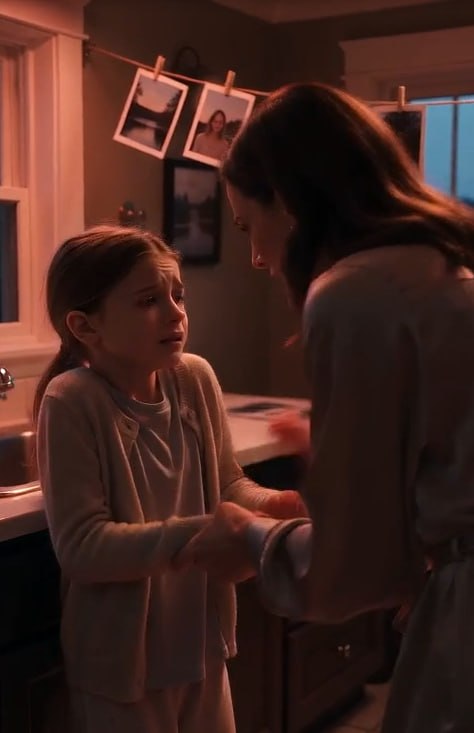
Martin Vale finally agreed to a recorded interview.
Not because he wanted to cooperate.
Because federal financial investigators had begun subpoenaing his bank records.
His strategy changed.
He blamed Vanessa.
Vanessa, he claimed, created Northstar.
Vanessa forged Emily’s trust amendment.
Vanessa stole Lakehurst funds.
Vanessa manipulated Nathan after Emily’s death.
And Vanessa was at the lake when Emily drowned.
Martin admitted visiting Lake Alder that evening.
He said he left at 8:15.
Emily was alive when he left.
He claimed they argued over Lakehurst finances.
He denied touching her.
He denied returning.
Then he produced a receipt from a gas station thirty-seven miles away timestamped 8:51 p.m.
Nathan stared at it in Grace’s office.
“That gives him an alibi.”
“Maybe.”
“Can it be fake?”
“The receipt is genuine.”
Security footage from the station was long gone.
Credit-card records showed Martin’s card used there.
Grace said, “A card can travel without its owner.”
Just like a phone.
Martin had been building alibis with objects.
He understood evidence better than everyone around him because evidence was his profession.
Then Nathan suffered his worst setback.
The district attorney called.
They had obtained records showing Nathan’s electronic signature on a Lakehurst loan guarantee connected to one of Martin’s suspicious debt facilities.
The signature dated six months before Emily’s death.
Nathan denied signing.
But investigators also found an email from his account:
Fine. Execute it.
Nathan stared at the screen.
“I didn’t send this.”
Grace asked, “Who had access to your email?”
“Emily.”
“Anyone else?”
“Vanessa sometimes handled travel reservations after Emily died.”
“Before?”
Nathan thought.
Martin’s firm had established his estate-planning portal.
Their IT staff had helped synchronize signatures and secure files.
His face changed.
“Martin had copies of my digital signature.”
Grace nodded.
“But proving misuse may take time.”
The trust court reacted badly.
The judge temporarily limited Nathan’s authority over major financial decisions until signature issues could be resolved.
An independent corporate fiduciary was appointed.
Nathan walked out of court feeling as though Martin had won.
Again.
Chloe saw the headlines.
DAD’S SIGNATURE LINKED TO LAKEHURST DEBT.
“Are you going to jail?”
“No.”
“You said that fast.”
Nathan sat beside her.
“Because I know I didn’t steal money.”
“But people thought Mom slipped.”
“Yes.”
“They were wrong.”
“Yes.”
“So maybe you’re wrong too.”
The sentence terrified him.
Not because Chloe accused him.
Because she had learned not to accept certainty from adults.
That night Nathan almost drank.
He poured whiskey into a glass.
Then stared at it.
Emily had once accused him of using avoidance like medicine.
Debt.
Silence.
Work.
Anything that delayed pain.
He poured the whiskey into the sink.
The next morning he asked Chloe whether she wanted to stay with Ruth for a while.
Her answer was immediate.
“No.”
“Things may get ugly.”
“They’re already ugly.”
“I’m trying to protect you.”
Chloe looked at him.
“Tell me the truth instead.”
Nathan nodded.
“Okay.”
He explained only what was age-appropriate.
His signature appeared on documents he believed were false.
A court had temporarily limited his control over some of her inheritance.
That did not mean he was guilty.
It meant the court wanted proof.
Chloe listened.
Then asked, “Can Mom’s camera prove it?”
“I don’t think so.”
She looked at the yellow camera sitting inside an evidence bag.
“There were twenty-seven pictures.”
Nathan frowned.
“What?”
“Disposable cameras usually have twenty-seven exposures.”
He stared.
They had developed seventeen usable frames.
“Maybe the rest were blank.”
Chloe shook her head.
“I remember clicking it more.”
Nathan called the photo technician.
The negatives contained twenty-seven frames.
Ten had been considered severely underexposed or damaged.
With digital enhancement, some information might be recoverable.
Two days later, the technician called.
Frame twenty-three showed almost nothing.
Frame twenty-four showed the dock.
Frame twenty-five showed a blurred hand.
Frame twenty-six showed Martin and Emily.
Not near the water.
Inside the boathouse.
Martin’s hand was gripping Emily’s arm.
Frame twenty-seven was almost completely black.
Except for one object illuminated by flash.
The old boathouse clock.
8:43 p.m.
Martin’s gas receipt forty miles away was timestamped 8:51.
His alibi was impossible.
Unless the camera clock was wrong.
But the clock was not inside the camera.
It was physically mounted on the boathouse wall.
And maintenance photographs taken that same afternoon showed it keeping correct time.
Martin Vale had lied.
He was at Lake Alder eight minutes before the gas station supposedly proved he was elsewhere.
Someone else had used his card.
May you like



The murder investigation changed overnight.
And Martin disappeared.







