Chapter 13 - The Will That Never Was
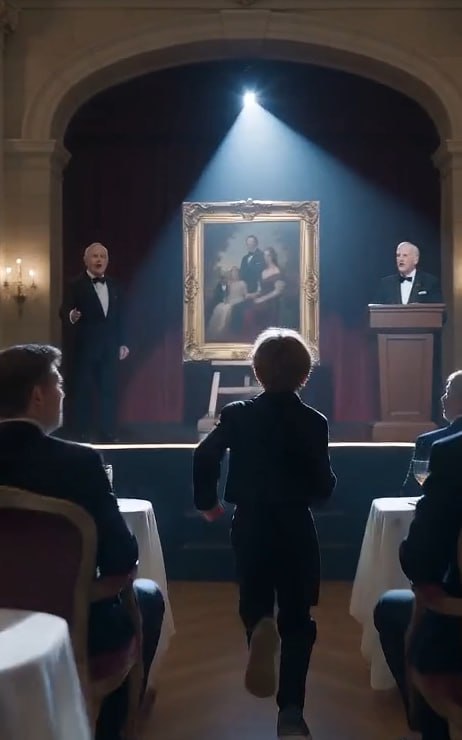
The courtroom filled before nine.
Employees.
Reporters.
Lawyers.
Family.
Ethan sat beside Rosa.
Victor sat across the aisle.
Eleanor sat behind separate counsel.
Leonard Pierce entered through a side door with an officer.
He looked terrified.
But he came.
Rebecca began with Lillian Cho.
The conservator authenticated her report.
She explained the hidden portrait.
The infrared image.
Victor’s instruction to stop.
Victor’s lawyer asked, “Did Mr. Ashcroft know a will was behind the frame?”
“No.”
“So his instruction does not prove concealment of a will.”
“No.”
It proved something narrower.
Victor knowingly concealed evidence of Margaret’s portrait.
Then Mr. Hale testified.
He described the auction.
Ethan running.
The rip.
Victor’s slap.
The hidden painting.
The envelope.
Video played.
RRRIP.
Gasps again, now through courtroom speakers.
Then Victor’s hand hit Ethan.
Eleanor looked down.
The judge watched without expression.
Mr. Hale testified that Victor immediately demanded the envelope.
Then Leonard took the stand.
His voice trembled.
He described Henry’s stroke.
Grady’s documents.
The signed tax page.
The assembled 1982 will.
Rebecca showed the differing paper.
The old memo.
Leonard read his own words.
Mr. Ashcroft did not review the assembled document in our presence.
Victor’s lawyer attacked.
“You accepted payments from Ashcroft-controlled entities for twenty years.”
“Yes.”
“You lied by omission for four decades.”
“Yes.”
“You are testifying now because you fear legal consequences.”
“Yes.”
“So why should anyone believe you?”
Leonard looked toward Ethan.
“Because being a coward for forty years does not make the truth false.”
Silence.
Then Eleanor testified.
Victor did not look at her.
Rebecca asked, “Did Henry Ashcroft review and execute the 1982 will admitted to probate?”
Eleanor’s lips trembled.
“No.”
A wave moved through the courtroom.
“Did you know that in 1985?”
“Yes.”
“Did you permit that document to be offered as Henry’s will?”
“Yes.”
“Why?”
“Because Silas Grady told me Henry intended to protect me and Victor.”
“Did you believe him?”
“I wanted to.”
Rebecca let the words sit.
“Did Margaret challenge the estate?”
“Yes.”
“What did you do?”
Eleanor began crying.
“I helped accuse her of taking foundation money.”
“Did she take it?”
“No.”
Ethan’s throat tightened.
“Who did?”
“My brother received it. I authorized the transfers.”
“Why accuse Margaret?”
“To frighten her into signing the settlement.”
Victor closed his eyes.
Eleanor continued.
“I told myself I was protecting Victor.”
Rebecca asked, “Was Victor involved in 1986?”
“No. He was twelve.”
That mattered.
Even now, Eleanor would not place guilt where it did not belong.
“Did he later learn the truth?”
“Yes.”
“When?”
“2004.”
The 2016 recording played next.
Victor’s own voice.
I know what my mother and Grady did.
I know about the real will.
Victor’s lawyer objected repeatedly.
Authentication.
Context.
Relevance.
Most objections failed.
Then Victor testified.
Nobody expected him to.
His attorney advised against it.
He did it anyway.
“I knew in 2004 that Henry had expressed continued intent to benefit Margaret.”
Rebecca asked, “Why destroy the cassette?”
“Fear.”
“Fear of what?”
“Losing control of the company.”
“And the estate?”
“Yes.”
“Did you threaten Margaret in 2016?”
Victor looked toward Ethan.
“Yes.”
“Did you believe she had stolen foundation money?”
“By then, no.”
“So you knowingly used a false accusation.”
“Yes.”
“Why?”
“Because I needed her to stop.”
Rebecca’s voice sharpened.
“Stop doing what?”
“Asking for what was hers.”
The courtroom became silent.
Victor realized what he had said.
Rebecca did not rescue him.
“Did you authorize four hundred thousand dollars of charitable foundation money to purchase Margaret’s silence?”
“Yes.”
“Did you know the portrait auction contained a secondary canvas?”
“Yes.”
“Did you order the conservator to stop?”
“Yes.”
“Why?”
“Because I suspected it showed Margaret.”
“And you wanted it sold before anyone saw her.”
Victor closed his eyes.
“Yes.”
Rebecca sat.
Victor’s attorney stood.
“Mr. Ashcroft, did you believe reopening probate could endanger Ashcroft Holdings?”
“Yes.”
“How many employees?”
“Approximately twenty-three hundred.”
“Did you personally take the four hundred thousand paid to Margaret?”
“No.”
“Did you create the fraudulent 1982 will?”
“No.”
“Were you involved in the 1986 coercion?”
“No. I was twelve.”
“Did you believe for years that maintaining continuity protected the company?”
“Yes.”
Ethan watched.
Victor was guilty of serious choices.
But not every crime in the family belonged to him.
That distinction mattered.
The judge recessed.
Three hours later, she returned.
Her ruling was not a cinematic declaration that Ethan owned everything.
It was slower.
More careful.
More powerful.
The court found substantial evidence that the 1982 instrument had been procured through fraud and had not been validly executed as Henry Ashcroft’s will.
The old probate proceeding would be reopened.
Victor was suspended as trustee immediately.
A neutral fiduciary would control estate assets.
The 1978 will would undergo formal probate review as a potentially controlling instrument.
The 1986 settlement would be examined for fraud, duress, and breach of fiduciary duty.
The 2016 agreement would not prevent Ethan from asserting inheritance claims.
The matter would be referred to appropriate state and federal authorities for investigation of foundation misuse, false filings, and possible evidence tampering.
Victor sat motionless.
Eleanor cried silently.
Outside, reporters shouted.
Ethan did not feel victorious.
Rebecca touched his shoulder.
“You okay?”
“No.”
“That’s allowed.”
Across the courthouse steps, Victor stood surrounded by cameras.
An employee shouted at him.
“Is the company safe?”
Victor looked toward Ethan.
Then surprised everyone.
He stepped to the microphones.
“I have resigned as president of Ashcroft Holdings effective immediately.”
Chaos erupted.
Victor continued.
“The board will operate under independent leadership.”
A reporter asked, “Did Ethan Cole destroy your family?”
Victor looked at the twelve-year-old boy he had slapped months earlier.
“No.”
His voice broke.
“We did that ourselves.”
Then he walked away.
For the first time, Ethan did not see a powerful man losing a fortune.
He saw a frightened boy who had grown older without ever learning how to put down what his mother had taught him to protect.
And Ethan understood something.
May you like



Justice did not require pretending Victor had never been human.
It required refusing to let his humanity excuse what he had done.







