Chapter 17 - What Margaret Ordered
The prosecution separated intent from outcome.
Margaret had not ordered Jonathan to kill Sarah.
The recovered footage showed that clearly.
But she had ordered him to make Sarah’s boat unusable.
She watched him tamper with it.
She expressed concern.
She failed to stop Sarah from taking it.
After the explosion, she ordered evidence erased.
Jonathan’s liability was more direct.
He physically removed the safety fuse and loosened the vent system.
He later helped falsify records and shift blame to Owen.
During a pretrial hearing, Jonathan finally looked at Daniel.
“I didn’t think it would explode.”
Daniel sat behind prosecutors.
Jonathan continued.
“I thought she’d make it five hundred yards.”
Sarah’s brother Noah whispered, “That’s supposed to help him?”
Daniel said nothing.
Jonathan’s attorney presented expert testimony that the specific explosion was not guaranteed.
The state expert agreed.
“Not guaranteed.”
Then added:
“Foreseeable.”
That word mattered.
When Margaret’s attorney questioned the same expert, he emphasized that Margaret did not touch the engine.
The prosecutor played the video.
Margaret:
Make sure that boat does not leave tonight.
Jonathan:
How?
Margaret:
Pull the battery. Take the keys. Disable it.
Then later:
Put it back.
The defense argued Margaret attempted to reverse the plan.
The prosecution asked the question everyone had been waiting for.
“What did she do when Sarah boarded?”
Nothing.
Margaret stood six feet away.
She knew Jonathan had touched the fuel-vent system.
She let Sarah start the engine.
That silence became part of the case.
During plea negotiations Jonathan agreed first.
He would plead guilty to a serious offense arising from reckless conduct causing Sarah’s death, financial fraud, falsification, and evidence tampering.
He faced years in prison.
Not life.
Not a melodramatic sentence.
Consequences scaled to provable conduct.
Margaret refused initially.
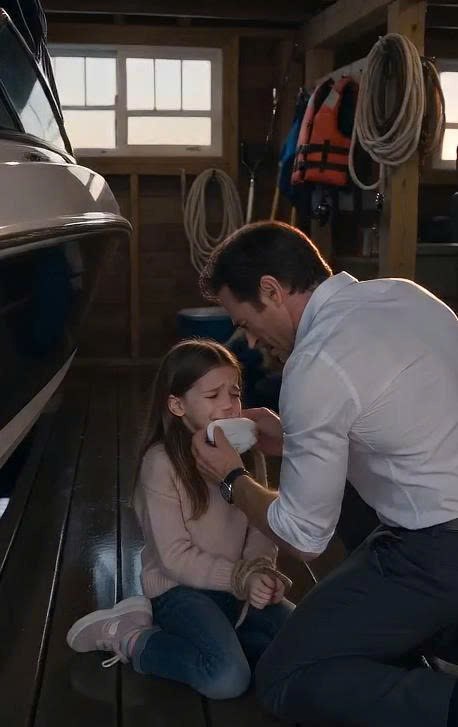
Then prosecutors added the current boathouse case involving Lily.
The video was overwhelming.
Unlawful restraint.
Child endangerment.
Coercive conduct.
And attempted manipulation of a witness relevant to an active investigation once Sarah’s death had reopened.
Her lawyers advised settlement.
Margaret requested one condition.
She wanted to address Daniel before accepting.
The judge allowed a brief statement.
Margaret stood.
“Daniel.”
He looked at her.
“I loved you.”
He felt Lily’s voice in his head.
Did Mommy want to leave you because of Grandma?
Margaret continued.
“I know you think every choice I made proves otherwise.”
Daniel shook his head.
“No.”
She stopped.
“I think that’s the problem.”
“What?”
“You did love us.”
Margaret’s eyes filled.
Daniel continued.
“You loved us and still hurt us.”
Silence.
“That’s what you never understood.”
Margaret looked down.
“Love wasn’t enough to make what you did safe.”
She began crying.
Daniel did not move toward her.
The judge accepted the plea framework after extensive questioning.
Margaret acknowledged helping plan interference with Sarah’s departure, participating in concealment, fraudulent trust conduct, and abusing Lily in the boathouse.
She did not claim she meant well.
The court would sentence later.
Outside, reporters surrounded Daniel.
“Do you forgive your mother?”
“No comment.”
“Do you hate her?”
He stopped.
That question was too simple.
“No.”
The reporters quieted.
Daniel continued.
“But I will never let my love for her be used as evidence that she should escape consequences.”
Then he walked away.
At home Lily was building a cardboard marina.
She looked up.
“What happened?”
“Grandma admitted she did bad things.”
“Did she say sorry?”
“Yes.”
“Do you forgive her?”
Daniel smiled sadly.
“Everybody keeps asking me that.”
“What’s the answer?”
“I don’t know yet.”
Lily nodded.
“Me neither.”
He sat beside her.
“That’s okay.”
She attached a paper sail to a boat.
“Can I forgive her later?”
“Yes.”
“Can I not?”
“Yes.”
“What if I forgive some things and not other things?”
Daniel looked at his daughter.
“You may be smarter than every lawyer I’ve met this year.”
Lily smiled.
Then became serious.
“Daddy?”
“Yes?”
“Are we keeping the boathouse?”
Daniel looked toward the court documents.
The property would likely return fully to Lily’s trust.
“That won’t be my decision.”
“Why?”
“Because Grandpa put it in a trust for you.”
“But I’m seven.”
“Exactly.”
“So who decides?”
“An independent trustee until you’re older.”
Lily frowned.
“Can I tell them what I want?”
“Yes.”
She looked at her cardboard marina.
“I don’t want that place to be scary.”
Daniel felt something shift.
“What would you make it?”
Lily thought.
“A place where kids learn boats.”
“Safety?”
“And how to fix stuff.”
Daniel smiled.
“Your mom would like that.”
Lily pointed toward the tiny cardboard roof.
“And cameras.”
Daniel laughed softly.
“Cameras?”
“So grown-ups can’t say things didn’t happen.”
Daniel’s smile faded.
A seven-year-old should not have needed that lesson.
But if she had learned it, he would make sure she learned the next one too.
May you like



Evidence mattered.
But children should not have to produce it before being believed.







