Chapter 19 - Sarah’s Last Decision
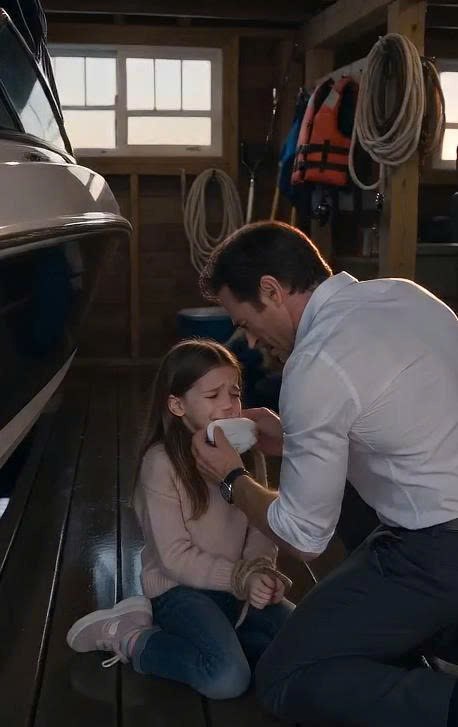
Before the boathouse reopened, the security company delivered one final archive item.
Not deleted footage.
A motion clip Sarah herself had saved manually three weeks before her death.
Daniel almost did not watch.
Then he did.
Sarah stood alone inside the boathouse.
She looked directly into the camera.
“Testing.”
She laughed at herself.
Then Lily, five years old, ran into frame.
“Mommy!”
Sarah crouched.
“What are you doing out here?”
“Looking for you.”
Sarah pointed toward the camera.
“See that?”
“Yes.”
“That’s the estate camera.”
“Is it watching us?”
“It watches the boats.”
“Why?”
“So if something breaks or disappears, we don’t have to guess.”
Lily waved.
“Hi, camera.”
Sarah laughed.
Then she said something Daniel did not expect.
“If you’re ever scared out here and you can’t find Daddy or me, stand where that camera can see you.”
Daniel stopped the video.
He cried.
Not loudly.
Not dramatically.
Sarah had turned a security device into a safety rule.
Twenty-two months later Lily remembered.
The camera had not saved her because machines were magical.
It saved her because her mother had taught her where to look.
Daniel brought the clip to Lily’s therapist first.
They decided Lily could see it if she wanted.
She did.
Lily watched five-year-old herself wave at the camera.
Then laughed.
“I remember.”
Daniel looked at her.
“What?”
“Mommy told me cameras don’t get embarrassed.”
He frowned.
“What does that mean?”
“She said people sometimes pretend they didn’t see something because they’re embarrassed.”
Daniel felt the sentence reach directly into his chest.
Sarah had understood the Mercers perfectly.
The security footage became important at Margaret’s final child-abuse disposition.
Not because it changed guilt.
Because it explained why Lily had pointed upward in Chapter One—though neither Lily nor Daniel thought of life in chapters.
Margaret’s attorney did not contest the footage.
At the end of the hearing Margaret asked the court whether she could write Lily letters.
The judge deferred to therapists and Daniel subject to the no-contact order.
Months later, the first letter arrived through counsel.
Daniel did not open it.
He gave it to Lily’s therapist.
Lily eventually chose to read one paragraph.
Her grandmother wrote:
You told the truth when I wanted you to be afraid of it.
Lily folded the letter.
“Do I have to answer?”
“No.”
She put it away.
“I don’t want to.”
“Okay.”
Daniel did not say maybe later.
No pressure disguised as hope.
That was another family pattern ending.
Mercer Marine’s new leadership invited Daniel to speak at its annual governance meeting.
He refused the keynote.
Accepted a panel.
No stage alone.
He spoke about signature authority.
Family-company conflicts.
Independent controls.
Then an audience member asked:
“What single reform would have prevented the Mercer crisis?”
Daniel thought.
“None.”
The room quieted.
“Systems matter. Audits matter. Independent trustees matter.”
He paused.
“But we had systems.”
He looked toward Maya in the audience.
“What failed first was our willingness to believe evidence that threatened relationships we wanted to preserve.”
Another executive asked:
“So culture?”
“Yes.”
Daniel nodded.
“And ego.”
Afterward Maya said, “Not bad.”
“That’s practically affection.”
“Don’t get excited.”
They walked outside.
Lily waited with Noah.
She ran toward Daniel.
The trust’s boathouse opening was the next morning.
He had dreaded returning.
Lily had not.
At dawn they drove north.
Lake Haven appeared through the trees.
No reporters.
No corporate banners.
Only children from local schools.
Instructors.
Life jackets.
Mechanics.
Sailing teachers.
Sarah’s photograph hung inside—not a glamorous portrait.
A candid picture of her with grease on one cheek, laughing while holding a wrench.
Lily chose it.
On the opposite wall, the old strap had not been preserved.
Daniel had asked what should happen to it.
Lily said:
“Throw it away.”
Not every object needed to become a symbol.
Some deserved the trash.
The old camera remained.
Now a visible indicator beneath it showed when recording was active.
No hidden surveillance.
No secret archive controlled by one family member.
Records went to an independent safety system.
Daniel stood beneath it.
Lily joined him.
“Daddy?”
“Yes?”
“Do you think Mommy knew Grandma would hurt me?”
“No.”
Lily nodded.
“I don’t either.”
Daniel crouched.
“But she wanted you safe.”
“Yes.”
“She wanted you believed.”
Lily looked at the camera.
“Yes.”
May you like



Then the first group of children entered the boathouse.
For the first time since Sarah died, the building filled with noise that did not sound like fear.







