Chapter 19 - The Second Signature
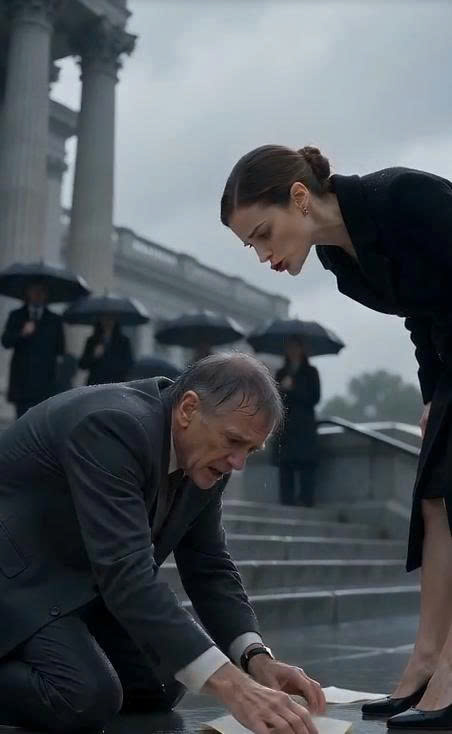
Rebecca’s criminal case turned on many documents.
But jurors remembered one.
The rain-soaked page.
Federal prosecutors displayed it during trial months later.
The paper had dried wrinkled.
Ink had bled slightly.
One corner was torn.
Across the lower margin remained a faint gray-black impression from Rebecca’s shoe.
Her heel had pressed the page against wet stone.
The same act intended to destroy evidence had preserved a trace of her contact with it.
Courthouse security video showed her throwing the records.
Witnesses confirmed the threat:
“Walk away before you lose more than paper.”
Her defense argued anger was not obstruction.
The government argued context.
She knew Richard’s envelope.
Knew the Raven dispute.
Knew the significance of the documents.
Then attempted to destroy them immediately outside federal court.
But the more important evidentiary question remained the second signature.
Thomas Keene.
Forensic experts established conclusively that his signature on the August 18 agreement had been digitally reproduced from a July certificate.
Daniel’s signature had been copied the same way.
Martin Hale testified Rebecca authorized the assembly.
Gary Mills corroborated.
Rebecca’s own emails discussed “executive counterparts already on file.”
The supposedly dead man had never signed the August agreement.
That was the answer Daniel feared on the courthouse steps.
Thomas was not secretly alive.
There was no miracle.
No conspiracy around his death.
Something more ordinary and more damning had happened.
Powerful people had used a dead man’s name because they believed dead people could not object.
But Thomas had spoken before dying.
Exhibit Forty-Two.
His memo.
His voicemail.
His records.
Death had not erased him.
Samuel testified at Rebecca’s trial for two days.
The defense attacked his settlement.
His hidden document.
His obsession.
He admitted everything again.
When asked whether he hated Rebecca, Samuel answered:
“Sometimes.”
A few jurors looked surprised.
“Do you want her convicted?”
“I want you to decide from the evidence.”
The defense lawyer smiled.
“That’s convenient.”
Samuel looked at him.
“No. Convenient was what everyone did fifteen years ago.”
Rebecca was convicted on multiple counts of conspiracy, wire fraud and obstruction, though acquitted on one charge tied to a transaction prosecutors could not sufficiently connect to her personally.
Samuel respected that acquittal.
Evidence mattered even when it denied total revenge.
Months later Judge Martinez sentenced Rebecca to a substantial federal prison term below the government’s maximum request but well above probation.
She also ordered restitution and forfeiture connected to improperly diverted corporate funds.
Martin received a shorter sentence because of cooperation.
Sloan Dynamics entered a corporate resolution with the government that included financial penalties, compliance monitoring and a victim-compensation fund.
The company survived.
It shrank.
It sold its luxury aviation subsidiary.
Closed two administrative offices.
Riverbend lost four hundred positions through restructuring.
The pain Rebecca had warned about was real.
But not apocalypse.
Samuel attended a meeting where laid-off employees shouted at him.
One man said:
“My mortgage doesn’t care about your truth.”
Samuel did not defend himself.
“I know.”
“You happy now?”
“No.”
That surprised the man.
Samuel continued.
“What happened to you matters too.”
Justice had costs.
The fact that Rebecca exaggerated them did not make them imaginary.
Daniel used part of his personal fortune to establish a transition fund for displaced workers.
He did not put his name on it.
Samuel learned about it from Anna.
“He’s trying,” she said.
“Yes.”
“Does that matter?”
“Yes.”
“Enough?”
Samuel smiled faintly.
“You ask hard questions.”
“I learned from you.”
“God help you.”
They laughed.
Judge Harrison formally unsealed the original Carter docket except for limited personal and protected information.
The public could finally see what had been buried.
Samuel received no miraculous fortune.
His original 2012 settlement remained legally complicated.
Sloan dropped the million-dollar contract claim as part of broader corporate remediation.
The government recognized his assistance but he did not suddenly become rich.
He still lived in Dearborn Heights.
Still drove a twelve-year-old Ford.
Still complained about grocery prices.
One afternoon Daniel visited.
No chauffeur.
No executive SUV.
Samuel opened the door.
“What?”
Daniel held a small archive box.
“The court released copies.”
Inside were certified copies of Richard’s letter, Thomas’s memo and the signature page.
Samuel touched the edge of the copy.
Daniel said:
“I keep thinking about that first day.”
“The courthouse?”
“I saw my signature beside Thomas’s and thought the impossible thing was that a dead man had signed.”
Samuel waited.
“The impossible thing was simpler.”
“What?”
“That I had spent thirteen years seeing pieces of the truth and convincing myself they didn’t add up.”
Samuel nodded.
“People are good at that.”
Daniel looked at him.
“Are we?”
“What?”
“Good?”
Samuel smiled sadly.
“That’s not a permanent condition.”
Daniel laughed once.
Then became serious.
“My father’s last letter to you.”
“Yes?”
“He said not to protect his name.”
Samuel nodded.
Daniel looked toward the archive box.
“I’m going to remove his name from the company ethics center.”
Samuel was surprised.
“What will you call it?”
“The Thomas Keene Center for Manufacturing Integrity.”
Samuel’s eyes filled.
Daniel continued.
“And the worker reporting program?”
“Yes?”
“Carter Line.”
Samuel frowned.
“No.”
Daniel almost smiled.
“I knew you’d say that.”
“Call it something useful.”
“Such as?”
Samuel thought.
“Open Door.”
Daniel nodded.
“No family names.”
“No family names.”
They shook hands.
Not forgiveness.
Not friendship.
Something more precise.
Recognition.
After Daniel left, Samuel opened the archive box again.
The copy of the rain-soaked page lay on top.
Thomas Keene’s copied signature sat beside Daniel’s copied signature.
May you like



For fifteen years, Rebecca had believed those signatures closed the story.
Instead they opened it.







