Chapter 20 - A Seat at Our Table
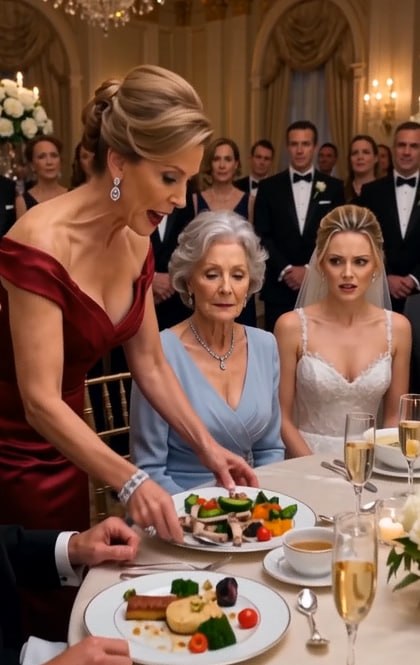
Three years after my wedding to Ethan Vale, my mother sat at the head of a table on Harbor Street.
Not because I assigned her that seat.
Because everyone else insisted.
The old warehouse had changed.
My father’s steel beams remained.
So did the brick.
But the ground floor now held studios, a legal-aid office Daniel helped establish, and a community kitchen partially funded through rental income.
Claire Morgan Studio occupied the upper floors.
We were profitable again.
Not invincible.
I no longer trusted that word.
Nina had taught me what healthy companies knew and powerful families often forgot:
Anything can break.
The goal is not to pretend otherwise.
It is to build so breaking one thing does not destroy everything.
That night we hosted a dinner celebrating the legal-aid fund’s second anniversary.
Margaret wore blue.
Almost the same shade she had worn at my wedding.
I noticed.
“So did you,” she said.
“What?”
“Notice the dress.”
“You did that deliberately?”
“Maybe.”
Daniel arrived carrying a bottle of wine.
“No violence tonight, please.”
Margaret looked offended.
“I have never thrown soup at anyone.”
He pointed at me.
“She has.”
“I had cause.”
“You had a bowl.”
We laughed.
Real laughter.
Not relief disguised as laughter.
Not panic.
Life.
Near eight, I brought out the plate.
White porcelain.
Gold V.
The room quieted because Daniel and Margaret knew what it was.
I placed it in the center of the long table.
Margaret frowned.
“You kept that horrible thing?”
“Yes.”
“Why?”
I brought out a marker made for porcelain.
Then I wrote one word across the center.
ENOUGH.
Daniel laughed softly.
“What does that mean?”
“It means nobody at this table eats scraps because somebody richer thinks they deserve less.”
Margaret’s eyes filled.
I turned the plate over.
On the back I had already written four names.
Joseph.
Margaret.
Daniel.
Claire.
My family.
Not the family I had married into.
The one I had almost undervalued because wealth had entered the room wearing better clothes.
I put the plate on a shelf near the community kitchen entrance.
Beneath it was a small card.
Not explaining the Vale scandal.
Not Ethan.
Not Victoria.
Just one sentence.
Everyone deserves a seat.
Margaret read it.
“You know Victoria would hate this.”
“That isn’t why I did it.”
That was how I knew I was finally free.
For years, every decision had been a response to Victoria.
Fight her.
Expose her.
Refuse her money.
Keep the property she wanted.
Justice had been necessary.
But revenge was exhausting when it became an address you lived at.
I had moved out.
Daniel poured wine.
“What about the envelope?”
“In my safe.”
“You’re keeping that too?”
“Yes.”
Evelyn’s letter remained important evidence of history, though every active case had ended.
I had considered donating it to an archive.
Maybe someday.
For now, I kept it because the red wax seal reminded me of something different than fear.
One person inside a powerful family had tried, too late and imperfectly, to create a consequence.
Evelyn had failed to stop Victoria when she should have.
Margaret had failed Martin.
My father had confused silence with protection.
I had confused trust with surrendering judgment.
Ethan had confused obedience with love.
Nobody in our story was made better by pretending they had never failed.
Dinner began.
Not scraps.
Roasted chicken.
Warm bread.
Vegetables.
Soup.
When the soup appeared, Daniel looked at me.
“No.”
“I’m sitting down.”
“Both hands visible.”
“Daniel.”
Margaret laughed so hard she nearly spilled her water.
Later, when the room emptied, she and I remained by the windows overlooking the harbor.
“You could still sell this place,” she said.
“I know.”
“Your father would understand.”
“I know.”
That mattered.
For years I had kept Harbor Street because selling felt like letting Victoria win.
Now I kept it because I wanted it.
If that changed tomorrow, I would sell.
Freedom was not keeping the building.
Freedom was making the decision without a dead father, an ex-husband, or a former mother-in-law standing invisibly behind my chair.
Margaret touched my hand.
“I’m sorry I didn’t tell you before the wedding.”
She had apologized many times.
This one felt different.
“I know.”
She smiled.
“Daniel hates that phrase.”
“I’m starting to understand why.”
“I thought if I stayed quiet, I could protect your happiness.”
“You couldn’t.”
“No.”
I looked at her.
“But you opened your handbag.”
She laughed softly.
“Eventually.”
That was the truth of our family.
Eventually.
Eventually Margaret stopped bowing her head.
Eventually Martin told the truth.
Eventually Sabrina chose consequence over fear.
Eventually Ethan stopped obeying his mother, though too late to save our marriage or himself from punishment.
Eventually I learned that love did not excuse betrayal, and betrayal did not make every loving moment imaginary.
People wanted simple villains because simple villains let everyone else feel safe.
Victoria was not frightening because she was inhuman.
She was frightening because every bad thing she did began with ordinary weaknesses fed too long by money and power.
Entitlement.
Shame.
Fear of losing.
Need for control.
The belief that some people belonged above others.
At nine thirty, someone knocked on the glass door.
A courier.
He handed me a registered envelope.
For one second, seeing cream paper made my heart jump.
Then I saw the return address.
Ethan Vale.
His sentence had ended months earlier.
We had not spoken.
Margaret watched me.
“You don’t have to open it.”
“I know.”
I did.
There was no plea for forgiveness.
No request to meet.
Just a short handwritten note.
Claire,
For a long time I thought the worst thing that happened at our wedding was the soup.
Then I thought it was the envelope.
It took me years to understand it was the plate.
I watched my mother tell Margaret where she belonged, and I said nothing.
Then I told you where you belonged too.
I am sorry.
Ethan.
I read it once.
Then folded it.
“Are you all right?” Margaret asked.
“Yes.”
“Do you forgive him?”
I looked at the old plate on the shelf.
“I don’t know.”
And for once, uncertainty did not frighten me.
Forgiveness was not a verdict.
It was not required to make a life continue.
I put Ethan’s letter into a drawer instead of the safe.
Then Margaret and I began turning off the lights.
At the doorway, she stopped beside the plate.
She looked at the sentence beneath it.
Everyone deserves a seat.
Then she smiled.
“You know what Victoria said to me that night?”
I knew every word.
Still, I let her say it.
“‘You wanted a seat with this family? Then learn your place.’”
I opened the door for her.
Cold harbor air moved through the building.
“And now?” I asked.
Margaret looked back at the long table we had built beneath my father’s old steel beams.
At the empty chairs waiting for tomorrow.
At the kitchen where nobody was served another person’s scraps.
Then she took my arm.
“Now I know my place.”
“Where?”
Her smile deepened.
“Anywhere I choose to sit.”
We walked out together.
And behind us, beneath the warm lights of Harbor Street, the plate that had once been used to humiliate my mother remained on the shelf.
Not as evidence that Victoria Vale had defeated us.
As evidence that she had made one terrible mistake.
She had believed the woman holding that plate was powerless.
She had believed I would remain silent.
She had believed Ethan would always obey.
She had believed money could purchase every conscience it frightened.
And most of all, she had believed a seat at her table was something worth begging for.
It never was.
May you like



We had built our own.
THE END







