Chapter 2 - What Rosa Left Behind
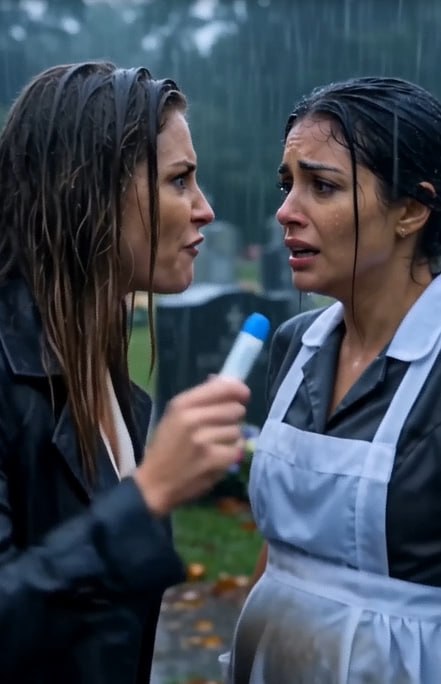
Julian insisted on driving Mara home.
Mara refused twice.
On the third attempt, she noticed the black SUV passing the cemetery entrance again.
She got into his car.
“You’re not coming upstairs,” she told him.
“I wasn’t going to suggest it.”
“You were thinking it.”
“I was thinking you shouldn’t be alone.”
“That sounds dangerously close to suggesting it.”
Despite everything, his mouth almost moved into a smile.
Almost.
Mara saw it and hated that she remembered that smile.
Three months earlier, Julian had seemed like an ordinary exhausted man in an expensive suit. He had told her his father was dead, that his company was swallowing his life, that sometimes money only purchased more sophisticated ways to be lonely.
Mara had told him about Rosa.
Not everything.
Only enough.
They had gone upstairs together because grief had made caution feel useless.
By morning, Mara had panicked.
She had left without her phone number.
She had expected the night to become a memory.
Instead, it had become a child.
And possibly a weapon.
Her apartment was on the third floor of an aging brick building in Queens.
The front door stood slightly open.
Mara stopped.
“I locked that.”
Julian put an arm across her path.
“Stay here.”
“This is my home.”
“And somebody has been inside it.”
He called 911 rather than entering.
That irritated her.
It also made her trust him slightly more.
Police arrived seven minutes later.
Nothing valuable appeared stolen.
The television remained.
Mara’s small emergency cash envelope remained inside the kitchen cabinet.
Her mother’s jewelry remained untouched.
But the bedroom had been torn apart.
Drawers emptied.
Mattress lifted.
Closet boxes opened.
One object was missing.
“My mother’s blue sewing case.”
An officer looked up.
“What was in it?”
“Thread. Buttons. Old receipts. I don’t know.”
Julian watched her.
“You’re sure?”
Mara hesitated.
There had been something else.
A brass key.
Rosa had kept it taped beneath the removable tray.
Three weeks after the funeral, Mara had found it and removed it without understanding why.
She had hidden it separately.
“No,” she said. “Nothing important.”
Julian waited until the police finished.
Then he shut the apartment door behind them.
“You lied.”
Mara crossed her arms.
“To whom?”
“The police.”
“You don’t know that.”
“You touched the left pocket of your coat when they asked about the sewing case.”
She stared at him.
“You notice too much.”
“I’m paid to.”
“So this is business now?”
“No.”
“Then stop interrogating me.”
Julian stepped back.
“You’re right.”
That surprised her.
He waited.
Mara finally reached into her coat.
The brass key lay in her palm.
“I found it after my mother died.”
“Safe-deposit box?”
“Maybe.”
“Did she have one?”
“I didn’t think so.”
They searched Rosa’s paperwork.
Buried inside an old folder containing hospital bills was a First National Trust Bank envelope.
Mara stared at it.
The envelope listed two authorized lessees.
Rosa Ellis.
Mara Ellis.
Julian exhaled.
“She made you a joint renter.”
“I never signed anything.”
“You may have years ago without understanding what it was.”
Mara remembered Rosa taking her to a bank shortly after Mara turned eighteen.
“Emergency paperwork,” Rosa had said.
At the time, Mara had been rushing to class.
She had signed where her mother pointed.
“I was stupid.”
“You were eighteen.”
“I was careless.”
“There’s a difference.”
Mara looked at him.
“People with your kind of money can afford to believe that.”
His face tightened.
Before he could answer, her phone rang.
Bellweather Grand.
Her supervisor.
Mara answered.
“Hello?”
“Mara, where are you?”
“At home. Why?”
“You’re scheduled at six tomorrow.”
“I know.”
A pause.
Then, “Mr. Whitmore wants you at the executive offices first.”
Mara’s fingers tightened around the phone.
“Grant?”
“Mr. Whitmore.”
“I’m housekeeping.”
“I know what you do.”
Her supervisor lowered her voice.
“He specifically asked for you.”
The call ended.
Julian had heard enough.
“Don’t go.”
“I need my job.”
“I can have a lawyer contact—”
“No.”
“Mara.”
“I am not becoming a woman financially dependent on a stranger because I slept with him once.”
His face went still.
“That isn’t what I offered.”
“It’s what everyone will say.”
“Who cares?”
“I do.”
She turned away.
Julian stayed silent.
That silence felt less manipulative than reassurance would have.
Finally, he said, “Go to the bank before work.”
“You’re not coming.”
“I know.”
“I mean it.”
“So do I.”
The following morning, Mara entered First National Trust alone.
The bank officer examined her identification and the brass key.
“Yes, Ms. Ellis. Box 414 is jointly leased to you.”
Mara’s pulse quickened.
“Has anyone accessed it recently?”
The woman checked.
“Your mother accessed it eleven days before her death.”
Rosa had barely been able to walk eleven days before she died.
“Was she alone?”
The banker looked uncomfortable.
“I can only tell you what our access record says.”
“Which is?”
“She was accompanied to the vault by a man listed in the visitor notation.”
Mara leaned forward.
“Who?”
The banker turned the screen slightly.
Mara read the name.
Grant Whitmore.
Her stomach clenched.
The box was brought into a private viewing room.
Inside were no jewels.
No money.
There was a USB drive.
A red accounting ledger.
Copies of property records.
A photograph of Rosa with Bianca, taken years earlier.
And an envelope addressed in Rosa’s handwriting.
Mara — only open this if Bianca comes looking.
Mara’s hands began to shake.
She tore it open.
The first line made her sit down.
My darling, if Bianca comes to my grave, her anger will not be the reason. Her fear will.
Mara read on.
Then stopped.
Because the next sentence named a company she had never heard of.
Briar Lane Holdings LLC.
And beneath it Rosa had written:
Grant stole from people who trusted me to stop him. Bianca helped him.
Mara looked at the closed door.
Her phone buzzed.
A message from Grant.
Executive floor. 8:30. Come alone. Bring whatever your mother left you.
May you like



Mara slowly looked at the red ledger.
Grant knew.







