Chapter 19 - The Cost of Control
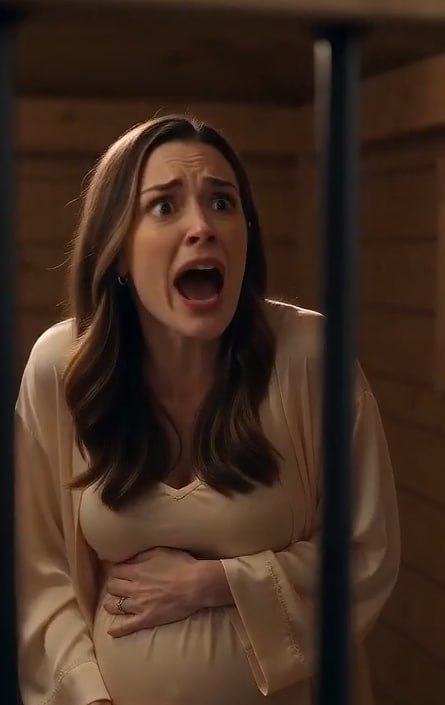
Damon did not go to trial on every count.
Almost a year after the kennel incident, he entered a negotiated plea.
The evidence was too strong.
The deleted video.
The keyed latch.
The forged deed used in bank representations.
The recorded financing call.
The AFTER DELIVERY plans.
The statement about leverage.
His own testimony.
He pleaded guilty to unlawful imprisonment, fraud-related offenses, and conspiracy counts resolved through the agreement.
The exact sentence reflected his lack of prior record, cooperation after indictment, restitution obligations, and the seriousness of the conduct.
He went to prison.
Not forever.
Long enough that Ava would know him first through supervised visits and photographs.
Lacey also pleaded guilty to fraud-related offenses.
Her cooperation reduced her sentence.
It did not erase it.
She admitted creating Emily’s signature file and falsely notarizing the deed.
Her notary conduct became part of the case against her.
The condominium purchased through questionable company funds was sold to satisfy restitution obligations.
Miles Rourke lost his law license after disciplinary proceedings and pleaded to offenses related to fraudulent documentation and obstruction.
Dr. Voss was not criminally convicted in the main conspiracy, but professional regulators sanctioned him severely for his conduct and conflicts.
Whitmore Development entered Chapter 11.
Crescent Bay was sold to another developer.
The company survived in smaller form under independent management.
One hundred twelve employees remained.
Others lost jobs or moved to new employers.
Emily thought about them.
Damon’s fears had not been imaginary.
His solution had been.
That distinction became the central truth of the entire case.
A legitimate crisis never makes coercion legitimate.
Lake Briar House remained Emily’s.
The court declared the forged deed void.
First Harbor released all claims against the property.
The lake became quiet again.
Emily almost sold.
Robert said nothing.
Hannah said, “You don’t have to decide because of what happened there.”
That sentence saved the house.
Emily waited six months.
Then stayed.
She replaced the security system.
Changed every lock.
Removed Damon’s office.
Turned the downstairs library back into a library.
Ava’s nursery returned upstairs.
Emily’s white silk robe went into the trash.
Not because Lacey had contaminated silk.
Because Emily never wanted to wear it again.
The emerald necklace was recovered from Lacey’s safe-deposit box.
Emily wore it on Ava’s first birthday.
The divorce became final.
Damon waived financial claims beyond ordinary division of legitimate marital property.
Emily did not request that his parental rights be terminated.
That surprised some people.
Hannah understood.
“Being a terrible husband and committing crimes does not automatically answer every future parenting question.”
Exactly.
Damon’s parenting contact remained supervised while he served his sentence and would be reviewed later based on Ava’s welfare.
Emily did not promise forgiveness.
She promised structure.
Rules.
Evidence.
Boundaries.
Robert became absurdly devoted to Ava.
At fourteen months, she learned to say “Pop” before “Mommy.”
Emily complained.
Robert called it meritocracy.
One autumn afternoon, Emily walked onto the patio.
The cedar kennel still stood.
She had avoided deciding what to do with it.
A contractor asked whether she wanted it demolished.
Emily stood in front of the bars.
The old key lock had been returned after the criminal case concluded.
It rested in her palm.
The metal was heavier than she remembered.
Robert came outside carrying Ava.
“You don’t need to make this symbolic.”
Emily smiled.
“Thank you.”
“I mean it. We can just burn the thing.”
“That’s extremely symbolic.”
“Fine. Sell it to someone we dislike.”
Emily laughed.
Ava reached toward the bars.
Emily’s body tightened automatically.
Then she stopped.
The kennel was wood.
Metal.
Memory.
It did not have power by itself.
People gave objects meaning.
People could change it too.
“I have an idea.”
Three weeks later contractors removed the barred cedar door.
Then two side walls.
They kept the roof.
Expanded the floor.
Added screens.
Built low shelves.
By spring, the kennel had become an open garden room facing the lake.
No lock.
No bars.
Emily placed a small table inside.
Ava’s toys.
Books.
A rocking chair.
Robert stared when it was finished.
“Still symbolic.”
“Very.”
“You denied it.”
“I changed my mind.”
That evening a letter arrived from Damon.
Prison mail.
Emily opened it after Ava was asleep.
I spent years thinking being afraid of losing something gave me the right to hold it tighter.
The company.
You.
Ava.
The house.
My reputation.
The harder I held, the more I destroyed.
Emily stopped.
No demand.
No request for forgiveness.
At the end:
I know she may grow up knowing what I did. Please don’t protect me from the truth. Just don’t make her carry my shame for me.
Emily folded the letter.
That, finally, sounded like a father.
Not a good one yet.
Perhaps not ever.
But a man beginning to understand that protection did not mean controlling the story.
The next morning Ava toddled into the garden room.
She found the old kennel key on a high shelf where Emily had placed it inside a small glass box.
Ava pointed.
“Key!”
Emily lifted her.
“Yes.”
“What open?”
May you like



Emily looked at the lake.
“Nothing anymore.”







