Chapter 16 - The Attic Chest
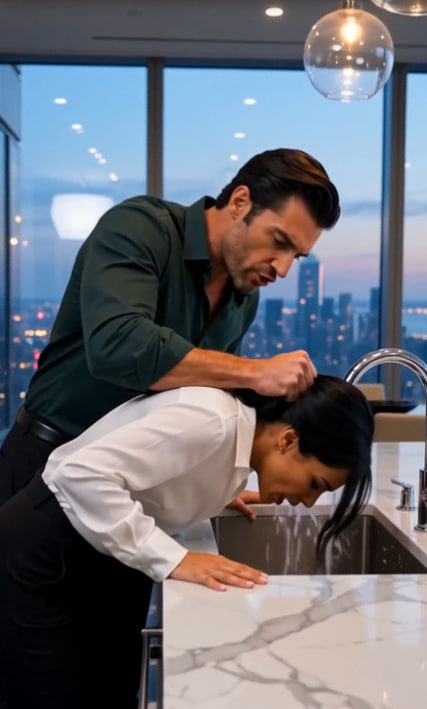
The chest was still there.
Dusty.
Heavy.
Wedged behind collapsed shelving.
Investigators had searched the attic but had no reason to break open an old locked family trunk unrelated to the warrant’s original scope.
Now Sofia gave written permission to examine it, and the receiver authorized access.
The key fit.
Inside were clothes.
Photographs.
Tax records.
Children’s school papers.
Then a leather cassette case.
Five tapes.
Paolo’s voice appeared on four.
Most were business dictation.
One was different.
Recorded in 2002.
Paolo sounded drunk.
Angry.
Talking to an attorney who repeatedly told him to stop recording.
Paolo continued anyway.
He admitted changing loan riders.
Using shell buyers.
Ordering Owen’s father—then a junior employee—to move records.
Then:
“Bennett thinks Sofia came to him because he’s some hero. She came because Helen gave her courage.”
Mara froze.
Her mother.
Paolo continued.
“I should’ve known those women were talking.”
Later:
“Luca saved the ledger. Good boy. Only one in this family with loyalty.”
Then something darker.
“If he grows up smart, he’ll understand land belongs to whoever can hold it.”
The tape did not create a new legal miracle.
Paolo was dead.
Many claims were decades old.
But historically it mattered.
It confirmed Sofia’s story.
Elias’s.
Daniel’s.
It also showed how intentionally Paolo had shaped Luca.
Mara wondered whether Luca should hear it.
Nisha said the recordings would likely enter the case archive.
His attorney would obtain copies.
Mara did not need to decide.
That felt healthy.
Not every truth required her to manage its delivery.
The nonprofit land trust acquired the farmhouse three months later with a combination of settlement funds, grants, and private donations.
Mara was hired—properly, contractually—to lead its restoration.
Her first major project since leaving Luca.
She insisted on external peer review even though the licensing board no longer required it.
Not from fear.
Because transparency felt good.
Ruby visited the site after school.
She chose paint for a small children’s reading room.
Lavender.
“Like my backpack.”
Mara smiled.
“Exactly like your backpack.”
Elias repaired old window trim under the contractor’s supervision.
“Retirement,” Mara teased.
“I was tricked.”
By spring, the house had changed.
The terracotta remained.
The heavy beams remained.
The glass door remained.
The sink did not.
Mara replaced it with a wide worktable where farm families could spread maps and documents.
The hidden pantry room became a visible archive behind clear glass.
No secret door.
No concealed lock.
Ruby loved that most.
“Everybody can see.”
“Yes.”
The phrase became the design principle.
Records belonged where people could see them.
Terms written clearly.
Ownership visible.
No one dependent on whispered explanations.
At home, Mara rented a small bungalow near Ruby’s school.
She could have afforded something larger after the marital property settlement.
She chose sunlight.
A garden.
A studio.
Enough.
The divorce finalized quietly.
Mara returned to Bennett legally.
Ruby kept Moretti.
Mara made sure she knew that was okay.
“You don’t have to change your name because Dad did bad things.”
“I like my name.”
“Then keep it.”
“Would you be sad if I don’t match you?”
“No.”
Another inheritance broken.
Love did not require sameness.
Luca’s first eligible in-person visit with Ruby after incarceration came under supervised conditions months later.
Mara did not attend the room.
She waited nearby.
Ruby brought her camera.
When she returned, she was quiet.
“How was it?”
“Dad looks different.”
“How?”
“Older.”
Mara nodded.
“He cried.”
“Okay.”
“I didn’t.”
“That’s okay too.”
Ruby looked at her.
“He said Grandpa didn’t destroy his family.”
Mara felt something shift.
“What did you say?”
“I said I knew.”
Despite herself, Mara laughed.
Ruby continued.
“He said Grandma Sofia helped save Grandpa’s house.”
“Yes.”
“Everybody keeps saving everybody’s houses.”
“That family has a complicated relationship with real estate.”
Ruby did not understand the joke.
Mara laughed harder.
That night Luca sent a parenting message.
Thank you for letting her come.
Mara replied:
The visit was part of the approved plan. Ruby wanted to see you.
She almost stopped there.
Then added:
I’m glad it went well.
Luca responded hours later.
I listened to Dad’s attic tape.
Mara stared.
Another message:
I spent my life trying to prove a dead man had been right about everyone.
Then:
I’m sorry I made you pay for that.
Mara did not answer immediately.
An apology could be sincere.
It still did not require access.
Eventually she wrote:
I hope you keep doing the work.
Nothing more.
He did not push.
That mattered.
The next morning Claire called.
Construction workers had found graffiti beneath old plaster in the archive room.
Child handwriting.
Luca’s.
Three words.
DAD TELLS TRUTH.
Mara stood in the half-renovated room staring at it.
At eleven, Luca believed that absolutely.
At thirty-six, he had learned otherwise.
The question was what remained after a foundational belief collapsed.
Mara decided not to paint over it.
Instead she covered it with clear protective glass.
Not as humiliation.
As context.
Beside it, she planned a small plaque:
Children inherit what adults teach them. Adults remain responsible for what they choose to continue.
Elias read the wording.
“Too pointed?”
Mara asked.
He considered.
“No.”
Then smiled.
“Maybe slightly.”
Mara smiled back.
Good.
May you like



Truth did not have to be comfortable to be useful.
---







