Chapter 20 - Bread on the Floor
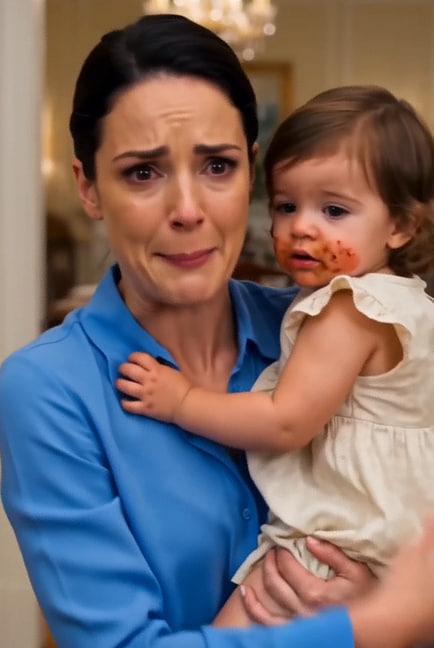
One year after the dinner, Lily turned three.
Claire did not hold the party in a hotel ballroom.
No caterers.
No silver serving dishes.
No executives invited for appearances.
The backyard of the new house held a small yellow play tent, balloons, bubbles, sandwiches, fruit, cupcakes, and twelve children running in every direction.
Lily wore a cream dress.
Claire almost asked Nora to change it when she arrived.
Then she stopped herself.
A dress was just a dress.
It did not belong to Diane.
It did not belong to that night.
Lily ran across the grass holding a dinner roll.
“Mama!”
Claire crouched.
“What happened?”
Lily opened her hand.
The roll had broken.
Crumbs fell into the grass.
For half a second Claire was back beneath the chandelier.
Dirty cheeks.
Bread scraps.
Diane laughing.
Ryan looking toward the pantry.
Claire’s chest tightened.
Then Lily giggled.
“Birdies eat.”
She deliberately scattered the crumbs.
Three sparrows hopped closer.
Lily squealed.
“More!”
Claire laughed.
The memory changed shape.
Bread on the floor no longer meant hunger.
It meant a three-year-old feeding birds because her stomach was already full.
Nora approached carrying lemonade.
“You okay?”
Claire nodded.
“I am now.”
Inside the house, a low kitchen cabinet stood open.
Claire had filled it with Lily-safe snacks.
Crackers.
Fruit pouches.
Cereal bars.
Small containers of raisins.
Nothing locked.
At first Claire had worried she was overcorrecting.
Dr. Shah reassured her.
“Structure matters. So does making food emotionally safe again.”
Lily no longer hoarded crackers.
For several months after the dinner, she had hidden food.
Under pillows.
Inside toy bins.
Once inside Bunny’s fabric basket.
The child therapist explained that toddlers remembered security through patterns even when they could not narrate events.
So Claire built new patterns.
Meals came reliably.
Snacks came without shame.
Food was never punishment.
Food was never leverage.
And adults never laughed at hunger.
Ryan had been released and remained under strict family-court conditions.
His visits continued with professional supervision.
Claire had not promised Lily he would become the father she deserved.
She had learned to stop making promises on behalf of other people.
Ryan had to build that himself.
Slowly.
Consistently.
Without asking Claire to reward effort.
Three days before Lily’s birthday, Claire had received a letter from him.
Not a text.
Not a settlement.
Not an argument.
A letter.
Claire,
For a long time I believed the worst thing I did was fail to stop my mother. That was another lie. I participated. I made choices. I kept trying to describe myself as the man who wanted less harm than Diane wanted, as if choosing a smaller cruelty made me protective.
The moment I understand most clearly now is not when you slapped me. It is when you opened the pantry.
I was afraid because you were looking at evidence.
I should have been afraid because Lily was hungry.
Claire had stopped reading there for several minutes.
That distinction contained the entire marriage.
Ryan’s fear had been about exposure.
Claire’s had been about Lily.
He continued:
I do not expect forgiveness. I hope one day Lily knows that accountability began when I stopped asking other people to explain my choices for me.
Claire had placed the letter in Lily’s future file.
Not because it redeemed Ryan.
Because someday Lily might ask whether her father ever understood what he had done.
The truthful answer, at least, would be yes.
Late in the afternoon, guests left.
Nora stayed to help clean.
Lily was exhausted and sticky with frosting.
Claire carried her into the kitchen.
“Dinner?”
Lily shook her head.
“No dinner.”
Claire smiled.
“Okay. We can try later.”
Lily pointed to the snack cabinet.
“Cracker.”
“Sure.”
Claire opened it.
Then she laughed at herself.
Lily looked confused.
“What funny?”
“Nothing, sweetheart.”
Claire crouched beside the open cabinet.
A year earlier, Ryan had kept a brass key in his pocket.
A year earlier, Claire had believed opening one pantry had exposed one act of neglect.
Instead it exposed the architecture of her marriage.
The money moved through North Harbor.
The forged signature.
The hidden debt.
Diane’s losses.
Ryan’s fear.
The custody plan.
The manipulated medical record.
The staged witnesses.
The disabled camera.
The lie that Claire’s love for her daughter was instability.
All of it had been hidden behind a wooden door filled with food nobody allowed Lily to eat.
Now Lily reached past Claire and selected crackers herself.
She held out one.
“For Mama.”
Claire accepted it.
“Thank you.”
Lily ate another, then climbed into Claire’s lap.
Her cream dress was stained with grass.
Her cheeks were smudged with frosting.
Almost like that night.
Almost.
But not the same.
Claire hugged her.
For months she had wondered whether revenge meant seeing Diane lose money, power, freedom, and access.
Whether it meant seeing Ryan lose the company, the marriage, and the unquestioned trust of his daughter.
Those things were consequences.
Revenge, Claire finally understood, was smaller and quieter.
It was building a life in which their cruelty no longer decided what happened next.
The doorbell rang.
Nora returned from the hallway carrying a delivery box.
“Birthday gift.”
“From whom?”
“Ryan.”
Claire checked the package before opening it.
Inside was a wooden child-sized plate, beautifully made.
No message except a small card.
For Lily’s table.
Claire stared at it.
Nora asked, “Do you want to keep it?”
Claire considered.
Then she carried the plate to Lily’s little table.
She set it down.
Not because Ryan deserved absolution.
Because Lily deserved to inherit objects without inheriting shame.
That evening, Claire served strawberries and toast on the plate.
Lily climbed into her chair.
Claire sat beside her.
No chandelier.
No audience.
No locked cabinet.
No one watching for a reaction.
Lily ate two strawberries.
Then she dropped a piece of toast.
It landed on the floor.
She started to climb down.
Claire picked it up first.
Lily looked at her.
Claire remembered Diane’s voice.
If she acts like an animal, she eats like one.
For a year, the sentence had lived inside her like broken glass.
Now Claire threw the fallen toast away and placed a fresh piece on Lily’s plate.
“There you go.”
Lily smiled.
“Mama eat too.”
“I will.”
Claire made herself a plate and sat down.
That was the new meaning.
Not that Lily would never drop food.
Not that bad things could be erased.
Not that Ryan’s apology repaired what he had done.
The meaning was that a child dropping bread was simply a child dropping bread.
It did not justify humiliation.
It did not require punishment.
It did not become evidence.
It did not become leverage.
It was only bread.
Claire looked around the little kitchen.
At the open snack cabinet.
At Lily’s full plate.
At the ordinary mess of a safe home.
For years, Diane and Ryan had taught Claire that power meant controlling what people could have, what they could know, what they could say, and how afraid they were to lose it.
Claire had learned something better.
Real power was being able to lock a door and choosing not to.
It was having evidence and letting courts decide consequences.
It was being betrayed without teaching Lily to hate.
It was refusing to confuse forgiveness with access.
It was feeding your child because she was hungry.
Lily lifted her toast.
“Cheers, Mama.”
Claire laughed and touched her own piece against it.
“Cheers.”
Outside, sparrows gathered beneath the evening feeder.
Inside, Lily ate until she was full.
And when she was finished, she left half a piece of bread on her plate without fear that anyone would take tomorrow’s food away.
Claire carried her upstairs.
The kitchen cabinet remained open behind them.
No key.
No lock.
May you like



Nothing hidden.
THE END







