Chapter 20 - What Was Left on the Cart
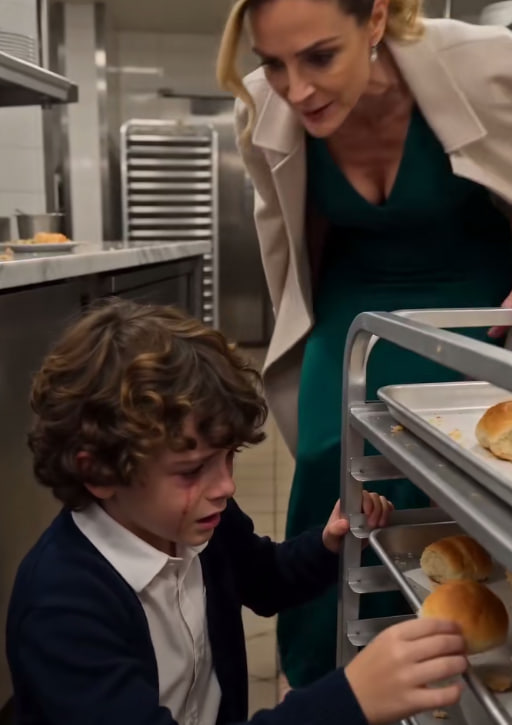
Two years after the kitchen incident, Ethan stood beside Maya Torres in the newly renovated banquet kitchen.
He was ten now.
Taller.
Still serious when adults lied badly.
Still refused coconut frosting.
Still kept Claire’s letter in a blue envelope beside his bed.
The Ashford Grand charity gala was happening upstairs.
But Ethan had asked to spend the first hour helping Claire’s Table.
Staff packed untouched banquet food into sealed containers.
Shelter volunteers signed collection forms.
Everything was logged.
Maya had insisted.
“Your mother would haunt me if inventory didn’t reconcile.”
Ethan smiled.
“Mom can haunt spreadsheets.”
“Exactly.”
David entered carrying his tuxedo jacket over one shoulder.
He no longer moved through the kitchen as if he owned every decision.
Patricia Monroe remained CEO.
David served as nonexecutive chairman.
Some days he hated not running operations.
Most days he appreciated it.
Margaret followed behind him.
At sixty-nine, she had discovered that retirement from foundation leadership did not prevent her from giving everyone opinions.
Maya handed her a volunteer apron.
Margaret stared.
“You enjoy this too much.”
“Immensely.”
The kitchen laughed.
It had taken time before laughter here sounded normal again.
The legal cases had ended.
Julian Mercer was serving his sentence under the terms of his plea.
Serena too faced the consequences imposed through her resolved criminal cases, restitution orders, and the divorce.
David never gave Ethan detailed prison numbers unless Ethan asked.
The boy knew enough.
Serena had done wrong.
Julian had done wrong.
Claire had discovered it.
They had failed to call for help.
They had lied afterward.
That was the core.
Grant Bell and Crescent Atlantic had paid substantial civil settlements connected to transaction misconduct, with Bell barred from certain industry roles after regulatory proceedings.
Ashford Hospitality recovered most, but not all, of the foundation money.
The foundation itself had become smaller.
That was deliberate.
Less family prestige.
More audited partnerships.
Margaret once called it “humbling.”
Maya replied:
“That’s the idea.”
Claire’s twelve-percent Ashford stake remained in trust for Ethan.
Margaret no longer voted it alone.
Helen Cho and a corporate fiduciary handled major decisions.
Ethan received age-appropriate financial education.
At his first session, he asked:
“How much is twelve percent?”
The adviser answered:
“Depends twelve percent of what.”
Claire would have approved.
David and Ethan’s relationship changed too.
There were still bad days.
Ethan sometimes became furious when David was late.
Sometimes storms brought nightmares.
Sometimes the smell of old banquet scraps made Ethan leave a kitchen abruptly.
Healing had no dramatic closing scene.
It had repetitions.
Choices.
Exits.
Returns.
That evening a junior banquet employee rolled a sealed waste container past Ethan.
He stopped.
David saw.
“You okay?”
Ethan stared.
The old memory returned.
Cake crumbs in his hair.
Napkins stuck to his clothes.
Serena’s hand on his cardigan.
You wasted dinner? Then eat what’s left.
His breathing changed.
Maya noticed.
She did not touch him.
“Want to go upstairs?”
Ethan looked at the container.
Then shook his head.
“No.”
He walked toward it.
The employee stopped nervously.
Ethan looked at the label.
COMPOST ONLY — NON-RECOVERABLE FOOD
Beside it sat another cart.
Clean.
Closed.
CLAIRE’S TABLE — SAFE SURPLUS
Ethan smiled faintly.
Two carts.
One for waste.
One for food that could still help somebody.
The same banquet kitchen.
Different system.
He looked at Maya.
“Mom would like that.”
“Yes.”
David’s eyes burned.
Margaret looked away.
Then Maya reached into her chef coat.
“Speaking of your mother.”
She took out the brass key.
Ethan laughed.
“You still have it?”
“You told me not to hide it.”
She wore it on a simple blue cord around her neck.
The same color Ethan remembered Claire using.
Not because Maya wanted to replace her.
Because the key had become part of the kitchen’s story.
New employees were told why independent reporting mattered.
Why security footage could not be altered by a single executive.
Why sealed employee property required documented access.
Why nobody—not an owner, spouse, CFO, or family member—could bypass controls because their surname looked important.
Ethan touched the key.
“It doesn’t open the locker anymore.”
During renovation, locker 318 had been replaced.
The old lock was removed.
The key was functionally useless.
Maya smiled.
“Best kind of key.”
“Why?”
“Because now it only reminds us what happens when people don’t open the right doors soon enough.”
David looked at her.
“That’s disturbingly poetic for a pastry chef.”
“I contain multitudes.”
Ethan laughed.
Upstairs, music began.
The gala program was starting.
David checked his watch.
“We should go.”
Ethan hesitated.
Then looked toward the food-recovery volunteers.
“Five more minutes.”
David almost said they were late.
Almost.
Then stopped.
“Okay.”
He had missed too many important moments because somewhere else seemed urgent.
Five minutes would survive.
Ethan helped seal another container.
Margaret filled out a collection sheet.
Maya checked temperatures.
David carried two boxes toward the loading door.
One volunteer stared.
“Aren’t you David Ashford?”
He looked at the box in his arms.
“Unfortunately.”
Ethan laughed so hard he nearly dropped a container.
For one perfect moment, the hotel was not an inheritance.
Not a crime scene.
Not a corporation.
Just people doing work.
Later they walked upstairs together.
At the ballroom entrance stood a modest framed photograph of Claire.
Not enormous.
Not worshipful.
She was in her hotel office, laughing at something outside the frame.
Beside the photograph:
CLAIRE ASHFORD — ASK THE SECOND QUESTION
Ethan had chosen the words.
David stopped.
“Still like it?”
Ethan nodded.
“Mom always asked more questions.”
“Yes.”
“You didn’t.”
David winced.
“Correct.”
“Do you now?”
“Annoyingly many.”
Margaret said:
“He does.”
They entered the ballroom.
At the same table where Ethan had once refused dinner because Serena’s presence made him anxious, a place had been set for him between David and Margaret.
He sat.
Nobody watched how he chewed.
Nobody told him what he could say about his mother.
Nobody asked him to protect the Ashford name.
Halfway through dinner, Ethan left three pieces of bread on his plate.
David noticed.
For one instant the old kitchen returned.
Serena’s voice.
You wasted dinner? Then eat what’s left.
David looked at his son.
“You finished?”
Ethan nodded.
“Yeah.”
“Okay.”
Nothing else.
No lesson.
No punishment.
No humiliation.
A server cleared the plate.
The untouched bread went to the proper compost stream because it had been served to a guest and could not be redistributed under the program’s safety rules.
Accurate rules.
No sentimental shortcuts.
Claire would have approved of that too.
After dinner, Ethan reached into his pocket.
He carried something.
David expected Claire’s letter.
Instead Ethan pulled out a tiny brass replica Maya had made from the old key.
Stamped:
318
“What’s that for?” David asked.
Ethan placed it beside his water glass.
“So I remember.”
“Remember what?”
Ethan looked around the ballroom.
At Margaret.
At Maya near the service doors.
At David.
Then toward the kitchen below where Claire’s Table volunteers were still working.
“The key didn’t find Mom.”
David’s throat tightened.
“No.”
“It found what she was trying to tell us.”
“Yes.”
“And it was in the garbage.”
David smiled sadly.
“Yes.”
Ethan looked at him.
“So important things can be somewhere people don’t want to look.”
David felt the full meaning of Chapter 1 return.
A waste cart.
A crying child.
A stepmother convinced humiliation would make Ethan smaller.
Instead, the garbage carried the one object Serena had lost.
The key opened a locker.
The locker opened Claire’s records.
The records opened the financial conspiracy.
And the truth opened a family that had spent generations closing doors whenever honesty threatened reputation.
David reached across the table.
Ethan took his hand.
Margaret placed hers over theirs.
No speeches.
No promises that nothing bad would ever happen again.
They had learned better.
The band began playing.
Ethan looked toward the dance floor.
“Dad?”
“Yes?”
“Did Mom like dancing?”
David laughed.
“She loved dancing. I was terrible.”
“Are you still terrible?”
“Absolutely.”
“Show me.”
David stood.
Margaret smiled.
Ethan dragged his father toward the floor.
David missed the beat almost immediately.
Ethan laughed.
And somewhere beneath them, in the hotel kitchen where an eight-year-old boy had once been covered in discarded food and told he belonged beside waste, another cart of safe surplus meals rolled toward the loading dock.
This time it was going somewhere useful.
This time nobody was being humiliated.
This time the system knew the difference between what should be thrown away—
May you like



and what should never have been wasted in the first place.
THE END







