Chapter 18 - The Verdict
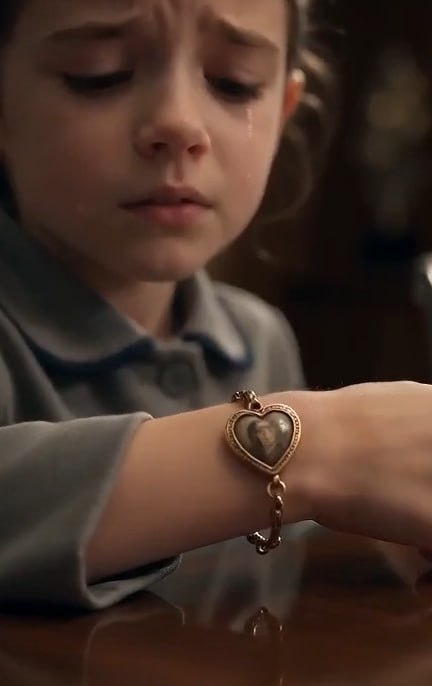
The jury deliberated for three days.
Claire hated all three.
She went to work.
She took Mia to school.
She pretended ordinary life could coexist with waiting for strangers to decide what Daniel’s death legally meant.
On the third afternoon, Rebecca called.
“Verdict.”
Claire arrived at court with Nora.
Mia remained at school by her own choice.
“I have math,” she said.
Claire had laughed.
Daniel would have loved that.
Richard entered.
He looked at Claire once.
Then at the jury.
The foreperson stood.
Guilty.
Conspiracy to commit murder.
Guilty.
Second-degree murder under the prosecution’s charged theory that Richard knowingly engaged in conduct creating grave risk and causing Daniel’s death.
Guilty.
Witness tampering.
Guilty.
Fraud.
Guilty.
Conspiracy related to Grace’s unlawful concealment.
Some counts produced acquittals.
Others guilty.
The verdict was not total.
Justice rarely was.
Richard closed his eyes.
Claire felt no explosion of triumph.
Only exhaustion.
Richard’s mother began crying behind him.
Claire found herself looking away.
Pain did not become pleasant merely because it belonged to someone on the other side.
At sentencing months later, Richard spoke.
“I loved Claire.”
The courtroom shifted.
Claire did not.
“I know nobody believes that.”
She did.
That was the terrible part.
“I wanted Bennett Meridian before I wanted her. Then I wanted both. When Daniel discovered what we’d done, I thought one more act could preserve everything.”
He swallowed.
“It destroyed everything.”
Richard looked toward Claire.
“I am sorry.”
Claire did not answer.
An apology was not a question requiring response.
The judge imposed a lengthy prison sentence.
Neil Ransom received a lesser sentence after cooperation.
Edward Sloan faced no criminal charge related to the call but publicly admitted his silence.
Harrison was sanctioned and permanently disbarred.
Victoria received a substantial prison sentence for fraud, obstruction, conspiracy to conceal Grace, and financial crimes, reduced because of cooperation in Richard’s prosecution.
Before sentencing, Victoria addressed Claire.
“I do not ask you to forgive me.”
Claire appreciated that more than any apology.
Victoria continued.
“I loved this family as a possession.”
Claire’s eyes filled.
“I thought if I controlled it, I could prevent losing it.”
She looked toward Mia, who attended this proceeding from a protected family section because she had asked to.
“I nearly lost everything human inside it.”
Victoria was taken away.
Mia held Claire’s hand.
“Do you feel better?”
Claire thought.
“Not exactly.”
“Worse?”
“No.”
“What then?”
“Finished with one part.”
Mia nodded.
“That makes sense.”
Civil consequences followed.
Bennett Meridian recovered millions through insurance, restitution, and asset clawbacks.
Marrow Bay Holdings was dissolved.
Richard’s frozen shares were sold under court-supervised arrangements to satisfy judgments.
Victoria’s illicit consulting funds were forfeited in part.
The $18 million offshore trust she had created for Mia was preserved only to the extent courts determined the assets were legitimate and not subject to restitution.
Mia did not become miraculously richer.
She had already been born into extraordinary wealth through Arthur’s legitimate trust.
Claire restructured that inheritance.
Independent trustees.
No single-family controller.
Education.
Health.
Reasonable distributions.
No unlimited access at eighteen.
Mia read the simplified explanation.
“So I’m rich?”
Claire sighed.
“Yes.”
“How rich?”
“Enough that it could ruin your personality if we’re careless.”
Mia grinned.
“Can I get a horse?”
“No.”
“Then what is money for?”
“Nora, help.”
Nora laughed.
Life began becoming absurd again.
That was healing.
The Bennett Meridian board asked Claire to become permanent chair in addition to CEO.
She refused.
Thomas Reed asked why.
“Too much power.”
“You own significant voting rights.”
“Exactly.”
Claire appointed an independent chair.
The family seal was retired.
No legal instrument could be authenticated by ceremonial authority alone.
Every major trust transaction required independent counsel for minor beneficiaries.
Every related-party deal required disclosure.
Every whistleblower complaint went outside management.
Arthur Bennett had built a family empire.
Claire decided family would no longer be its internal control system.
One afternoon, Harrison requested permission to send Mia a letter.
Claire asked Mia.
“Do you want it?”
“Can I throw it away if I don’t like it?”
“Yes.”
“Then okay.”
Harrison wrote:
I spent years believing silence prevented harm. It usually protected the people causing it.
Mia read it twice.
Then placed it beside Daniel’s photograph.
Claire asked why.
“They both waited too long.”
Claire stared.
Children could be mercilessly accurate.
That evening Mia opened the antique bracelet.
The memory-card compartment was empty.
All evidence had been copied, authenticated, and stored through proper systems.
“No secrets left?” she asked.
Claire thought about it.
“Probably some.”
Mia frowned.
“Bad ones?”
“Every family has things people are scared to say.”
“What do we do?”
May you like



Claire smiled.
“We try not to build a company around them.”







