Chapter 14 - What Truth Costs
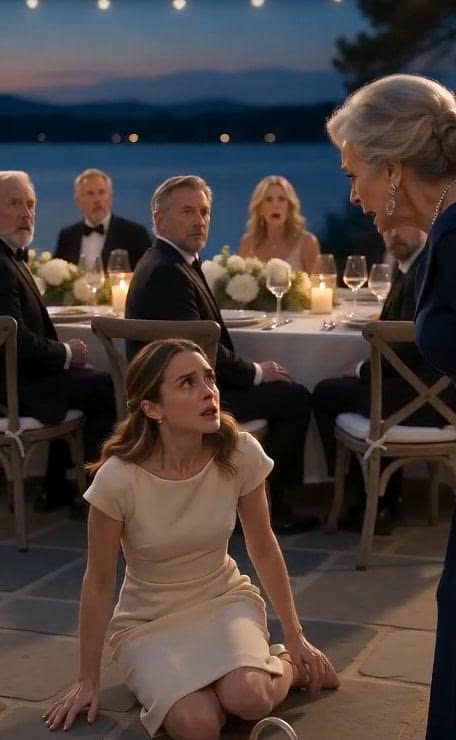
The Riverside Park sale never closed.
The formation recording, the original Blackridge agreements, the blue ledger, banking records, and Grant’s statements in the garden gave Robert’s lawyers enough to obtain an emergency injunction the next morning.
Two weeks later, Hale Meridian’s board removed Grant as interim chief executive.
He had served nine days.
Federal investigators joined the case because the scheme involved interstate wires, bank fraud allegations, and foreign transfers.
Claire learned quickly that justice looked less dramatic after the police lights disappeared.
There were interviews.
Subpoenas.
Account freezes.
Attorneys arguing over definitions.
Digital forensic teams reconstructing emails.
Bank compliance officers explaining transactions.
Months of uncertainty.
Grant was charged with conspiracy, wire fraud, bank fraud, identity theft-related offenses, and corporate fiduciary violations.
His lawyers denied several allegations and argued Diane had controlled Blackridge.
Diane was charged separately for her role in moving funds and creating the shell structures.
She began cooperating.
Not out of sudden virtue.
Out of survival.
Her cooperation did not erase what she had done to Claire.
The document examiner confirmed Claire’s Cedar Quay signature had been copied from her prenuptial agreement.
Electronic records tied the company formation to a device controlled by Grant’s assistant and an email alias linked to Diane.
The theft allegation against Claire collapsed.
But her own professional problem did not vanish.
She had accessed Mason’s financial portal without authorization.
The licensing board reprimanded her for poor professional judgment but found no evidence she used the information for personal financial gain.
Her firm offered to bring her back after six months.
Claire declined.
Mara asked why.
“Because I don’t want to return to the person who thought being good at investigations meant I had the right to investigate anyone I loved.”
Mara smiled.
“That sounds expensive.”
“It is.”
Claire started a smaller consulting practice months later.
No Hale money.
No Robert investment.
Her own savings and a bank loan.
She wanted every piece of it traceable.
Mason resigned from Hale Meridian.
His attorney negotiated with prosecutors.
He was not accused of stealing money for himself, but his signed authorizations and deliberate concealment created serious exposure.
He accepted responsibility in a civil settlement, surrendered his board seat, and agreed to cooperate fully.
The company clawed back part of his deferred compensation.
For the first time in his adult life, Mason had no title waiting for him.
Robert returned as temporary CEO for three months.
Then the independent directors forced a governance restructuring.
He hated it.
Claire thought it was probably the healthiest thing anyone had ever done to him.
An outside executive became CEO.
Robert remained a significant shareholder but lost unilateral control.
Diane’s divorce proceeded separately.
Her claim that Robert had broken financial promises decades earlier gained credibility from the ledger.
Her criminal conduct did not erase her marital property rights.
Robert’s misconduct did not erase hers.
The court system did what their family had refused to do for decades.
Separated the wrongs.
One did not cancel another.
The McLean mansion was eventually listed for sale as part of the marital settlement.
Robert moved to a condominium in Washington.
Diane lived in a rented townhouse while awaiting resolution of her criminal case.
Claire saw her once at a settlement conference.
Diane wore no makeup.
She looked older.
When they passed in the hallway, Diane stopped.
“Claire.”
Claire did too.
“I owe you an apology.”
“Yes.”
Diane seemed startled by the answer.
Claire had no interest in helping her feel better.
“I accused you because I was afraid you would expose me,” Diane continued. “And because I knew Mason’s silence would make people doubt you.”
Claire’s throat tightened.
Diane’s eyes filled.
“I knew exactly what I was doing.”
“Yes.”
“I’m sorry.”
Claire studied her.
“I believe you’re sorry.”
Hope appeared briefly in Diane’s face.
Claire continued.
“That doesn’t mean I forgive you.”
Hope disappeared.
Diane nodded.
“I understand.”
Claire believed that too.
Robert’s apology came differently.
He mailed Claire a copy of an old photograph.
The apartment building Diane had inherited.
On the back Robert wrote:
She was right about this.
I should have written that down thirty years ago.
Claire kept the photograph.
Not because Robert deserved absolution.
Because it was proof that even men who built empires could spend decades running from one sentence.
Mason did not contact Claire for four months.
Then a divorce petition arrived.
He had signed first.
No fight over property.
No attempt to claim part of Claire’s future practice.
No pressure.
Attached was a short handwritten note.
I spent my life thinking losing meant somebody else winning.
I finally understand that sometimes losing is simply the cost of what you chose.
I will not make you fight me for your freedom.
Claire read it twice.
Then signed.
The final hearing was quiet.
Their marriage ended in less than fifteen minutes.
Outside the courthouse, Mason stood beneath the stone columns.
“Are you okay?” he asked.
Claire almost laughed at the ordinary question.
“Yes.”
He nodded.
“I’m working at a nonprofit housing group.”
She looked surprised.
“Doing what?”
“Financial operations.”
“No CEO?”
A sad smile.
“No CEO.”
“Good.”
He laughed quietly.
Then his eyes turned serious.
“I’m sorry I watched her hit you.”
Claire felt the old garden return instantly.
The stone beneath her knees.
The burning cheek.
The guests.
Mason standing still.
He continued.
“I’ve apologized for the documents. The money. The lies. But that moment…”
His voice cracked.
“I knew something was wrong before she ever touched you. And when she did, I still calculated what would happen to me if I defended you.”
Claire swallowed.
“I know.”
“That’s the part I hate most.”
Claire looked at him.
“You should remember it.”
He nodded.
“I will.”
She walked away.
May you like



Behind her, Mason did not ask her to return.
For once, he allowed a consequence to remain a consequence.







