Chapter 20 - Steak Is for Family
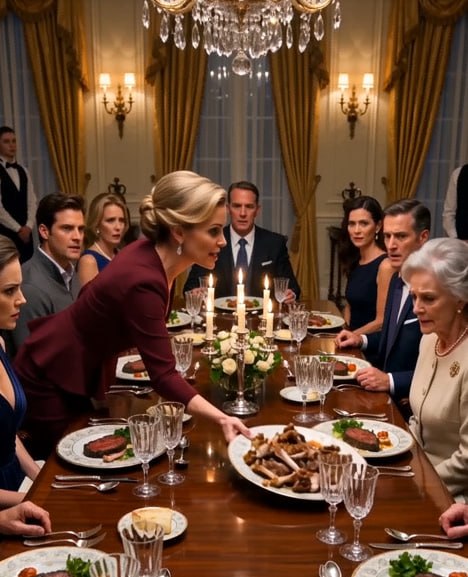
Wycliff House belonged to no Vale when I returned.
That was the first thing Mom told me.
The buyer was a nonprofit foundation formed by a group of local investors and hospitality employees, partially funded through a below-market sale agreement negotiated during Diane’s civil settlement.
The mansion would become the permanent home of the Thomas Vale Center for Hospitality Training—a workforce program providing culinary, hotel-management, accounting, and trade education.
Vale Crest contributed funding.
Mom contributed part of her settlement.
Peter contributed.
Victor helped structure it.
Ryan anonymously donated too.
Mom discovered that because anonymous rich people are not as anonymous as they imagine.
“You didn’t buy yourself a mansion?” Daniel asked.
Mom looked offended.
“Who wants to clean twenty-three bathrooms?”
We laughed.
The dining room remained.
Same polished mahogany table.
Same crystal chandelier.
Different people.
Former Vale Crest employees.
Two scholarship recipients.
Daniel.
Hannah.
Marcus.
Peter.
Victor.
Mom.
Me.
No Diane.
No Ryan.
I had started a small development advisory firm with two former colleagues. It was not an empire.
I slept better.
Mom kept her Yonkers house.
She replaced the old roof, bought a new furnace, and refused Daniel’s suggestion of a luxury car.
“I spent forty years telling your father not to waste money,” she said. “I’m not going to betray him because a check cleared.”
Before dinner, I walked to the exact chair where I had sat that night.
For a moment I could hear it.
The clack of the plate.
Diane’s voice.
Steak is for family.
Ryan’s slap.
Daniel’s chair crashing.
Mom’s envelope touching wood.
So much had begun in less than five minutes.
Mom came beside me.
“You all right?”
“Yes.”
“Liar.”
I smiled.
“Mostly.”
She touched my cheek.
The mark from Ryan’s hand had disappeared months ago.
Some marks lasted longer without being visible.
A young culinary student entered carrying dinner.
Steaks.
Roasted potatoes.
Asparagus.
Then another student brought a large bowl of orange carrot-and-ginger soup.
Daniel saw it and started laughing.
“No.”
Mom looked innocent.
“What?”
“You planned that.”
“I like soup.”
Hannah raised an eyebrow.
“Do you?”
“Tonight I do.”
We sat.
Every plate was the same.
Mom looked at hers for several seconds.
Then she looked at me.
“You know, I almost ate the scraps.”
My chest tightened.
“Why?”
“Because I thought if I swallowed one more humiliation, maybe Diane would leave you alone.”
“You should never have done that for me.”
“I know.”
I reached for her hand.
“I almost stayed with Ryan for the same reason.”
“To protect me?”
“To protect everything.”
My job.
Marriage.
Money.
Reputation.
The future I thought I had earned.
Mom squeezed my fingers.
“People can survive losing almost everything they planned.”
I looked around the room.
“What can’t they survive?”
“Losing themselves and calling it compromise.”
Dinner began.
Halfway through, Peter received a message.
He glanced at me.
“What?”
“Diane entered a plea.”
The room quieted.
Her attorneys had negotiated an agreement to resolve several charges. There would be restitution, probationary conditions, restrictions, and consequences still to be finalized by the court.
Not the cinematic ending Daniel wanted.
No dramatic prison door slamming that night.
Real consequences move through filings, hearings, money, professional destruction, and years.
Diane had lost Wycliff.
Lost Vale Crest.
Lost the authority she treated as identity.
Most painfully, Ryan no longer spoke to her except through attorneys.
I did not celebrate.
Revenge had once seemed like watching Diane become powerless.
But by then I understood something better.
Freedom mattered more than watching someone else fall.
After dessert, the students cleared plates.
One young man hesitated beside Mom.
“Mrs. Mercer?”
“Yes?”
“There are leftovers. Should we package them for donation or staff meal?”
Mom smiled.
“Staff first. Good food. Not scraps.”
He nodded.
“Of course.”
She looked across the table at me.
I understood.
Later, when most guests had left, I carried the soup bowl into the kitchen.
Mom followed.
“You missed,” she said.
“What?”
“That night.”
I laughed.
“I covered Diane.”
“You missed her face.”
“Mom!”
She laughed so hard she had to hold the counter.
I had not heard her laugh like that in years.
Then she became quiet.
“I was proud of you.”
“For throwing soup?”
“No.”
“For standing.”
My throat tightened.
“I was terrified.”
“So was I.”
“You didn’t look terrified.”
“I had seventy-two years of practice.”
I hugged her.
For a long time neither of us spoke.
Finally she whispered, “Your father would have hated all this.”
“The fighting?”
“The legal bills.”
I laughed against her shoulder.
“He would have loved Hannah.”
“No. He would have been frightened of Hannah.”
From the doorway Hannah said, “Correct.”
We burst out laughing again.
Before leaving, Mom returned to the dining room.
Only three place settings remained from the cleanup.
She picked up one empty plate.
Plain white porcelain.
Not the expensive china Diane had used.
She set it gently in front of the chair where she had once been served bones.
Then she placed a folded note on it.
I read it.
No one who sits at this table will ever have to earn the right to be treated like family.
My eyes filled.
“That should be the rule of the center,” I said.
“It is.”
I looked around the room.
Months earlier, Diane had believed the house proved who mattered.
She believed steak proved who belonged.
She believed money gave her the right to decide who sat above and who sat below.
But houses change hands.
Companies remove chairmen.
Marriages end.
Money moves.
Documents survive.
Servers preserve deleted logs.
Witnesses eventually speak.
And old women people dismiss as servants sometimes keep the papers everyone powerful hopes they have forgotten.
Mom slipped her arm through mine.
“Ready?”
I nodded.
We walked toward the front door together.
At the threshold, I looked back once.
The mahogany table reflected the chandelier.
No bones.
No threats.
No envelope.
Nothing beneath anyone’s plate.
Outside, Daniel waited beside the car.
Mom squeezed my arm.
“Claire?”
“Yes?”
“If anyone ever serves me scraps again—”
I smiled.
“You’ll call a lawyer?”
She shook her head.
“I’ll throw the soup myself.”
We laughed all the way down the steps.
And this time, when the great doors of Wycliff House closed behind us, nobody had been thrown out.
May you like



We were simply going home.
THE END







