Chapter 18 - What Charles Knew
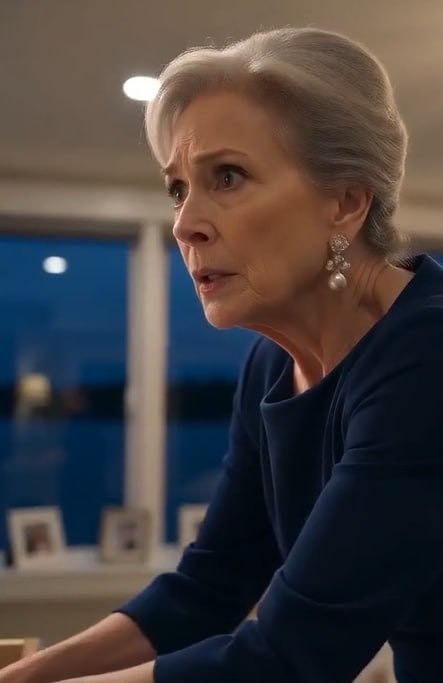
Rachel did not believe Margaret.
Not immediately.
But Marcus did what Rachel had learned to do.
He checked.
Charles Vale’s archived files contained an unfinished restructuring proposal created two months before his death.
The concept was legal.
Vale Development would establish outside acquisition advisers to keep early land negotiations confidential.
Charles had called the model “Project Heron.”
Margaret had taken the idea after his death.
Blue Heron was not Charles’s fraud.
It was a legitimate concept repurposed into one.
That distinction mattered.
Margaret had tried to contaminate Charles’s legacy because she no longer had another defense.
Rachel met her at a formal deposition three days later.
Margaret’s lawyer sat beside her.
Celia questioned.
“Did you establish Blue Heron Consulting?”
“No.”
“Did you direct Stephen Ames to establish it?”
“No.”
Celia displayed a message from the blue phone.
Margaret to Stephen:
Use Blue Heron. Charles liked the Heron name. It makes internal references look familiar.
Margaret stared.
Celia asked, “Is that your message?”
“I don’t recall.”
Another message.
Stephen:
How much goes back to you?
Margaret:
Twenty percent initially. Owen’s note gets cleared separately.
Celia waited.
Margaret looked at Rachel.
“This is what you wanted?”
Rachel did not answer.
Celia continued.
“Did you use the custody dispute to pressure Rachel into resigning?”
“No.”
Celia played the recording Rachel had made in Margaret’s townhouse.
Owen might reconsider.
The accusations can disappear.
Some concerns are only concerns as long as people continue to have them.
Margaret closed her eyes.
Celia asked, “Did you say those words?”
“Yes.”
“Were you offering to influence the custody dispute if Rachel resigned?”
“I was trying to save my family.”
Rachel finally spoke.
“By taking mine?”
Dean objected to the interruption.
Rachel apologized.
Margaret smiled faintly.
Even cornered, she loved reaction.
Celia knew it.
She returned to facts.
“Did you instruct Lily Bennett to falsely claim her mother drank excessively?”
“No.”
The tablet recording played.
Say it.
Mom drinks wine and gets angry.
Margaret’s face remained motionless.
“Did you strike Lily?”
“I lost my temper.”
“Twice?”
Margaret looked at Rachel.
“Yes.”
The admission entered the record.
For Rachel, the moment was strangely quiet.
No triumph.
No explosion.
Only truth finally placed where denial could not erase it.
Owen’s deposition occurred the next day.
He admitted stealing the security token.
Admitted knowledge of the scripts.
Admitted accepting the elimination of his debt.
Admitted helping Margaret obtain internal files.
He denied knowing the full scope of financial diversion.
Whether prosecutors believed that remained uncertain.
Celia asked why he filed for custody.
Owen stared at the table for almost a minute.
Then said, “Because Margaret told me it was the only leverage Rachel couldn’t ignore.”
“And you agreed?”
“Yes.”
“Did you believe Rachel was an unsafe mother?”
“No.”
Rachel closed her eyes.
That answer changed everything.
Not because she needed Owen’s validation.
Because his sworn petition had said the opposite.
He had asked a court to separate a mother and child using allegations he did not believe.
The family-court response was swift.
Owen’s expanded temporary parenting schedule was suspended pending further review.
Supervised contact replaced it.
Lily returned to Rachel full-time.
When Rachel told her, Lily cried into her mother’s shoulder.
“Is Dad going to jail?”
“I don’t know.”
“Is Grandma?”
“I don’t know.”
“Why don’t you know anything?”
Rachel almost laughed through tears.
“Because grown-ups pretend they know more than they do.”
Lily pulled back.
“Are you still mad at Dad?”
“Yes.”
“Do you hate him?”
Rachel thought carefully.
“No.”
“Why?”
“Because hate would make him too important.”
Lily seemed to consider that.
Then she asked, “Do you hate Grandma?”
Rachel looked toward the wardrobe.
“No.”
That answer surprised her.
“What do you feel?”
Rachel whispered, “Finished.”
The independent corporate committee released its preliminary findings one week later.
Rachel had not authorized Blue Heron payments.
Her credentials had been misused.
Margaret had undisclosed financial conflicts.
Owen had violated security and governance rules.
The board reinstated Rachel as CEO.
She accepted only after the committee adopted stronger controls.
No family member would ever again approve related-party transactions without independent review.
No spouse would hold overlapping executive authority without disclosure.
No board chair could suppress audit findings.
Charles’s greatest mistake had been allowing family loyalty to weaken governance.
Rachel refused to repeat it.
Margaret was removed from the board by shareholder action supported by enough independent voting interests to carry the resolution.
Her private company’s assets were frozen temporarily in the civil case.
Stephen Ames entered negotiations with prosecutors.
Dean Holloway withdrew from representing Owen because conflicts had become impossible to ignore.
Power moved.
Not dramatically.
Legally.
Document by document.
Vote by vote.
Then Detective Mills called.
“We’ve completed our review of the child-related videos.”
Rachel tightened her grip on the phone.
“And?”
“There are five.”
Five coerced recordings.
Rachel sat down.
Mills continued.
“In three, your daughter is visibly distressed. In one, she says she doesn’t want to continue. Margaret tells her she has to if she wants to keep seeing her father.”
Rachel closed her eyes.
“And Owen?”
“He’s present in one.”
Rachel stopped breathing.
“What does he do?”
There was a pause.
“He tells Margaret, ‘That’s enough.’”
For one instant, Rachel felt relief.
Then Mills continued.
“Margaret says, ‘Then take over.’”
Rachel whispered, “And?”
“Owen sits in front of Lily.”
May you like



Rachel’s hand began shaking.
“And he asks her to repeat the statement himself.”







