Chapter 13 - The Hearing
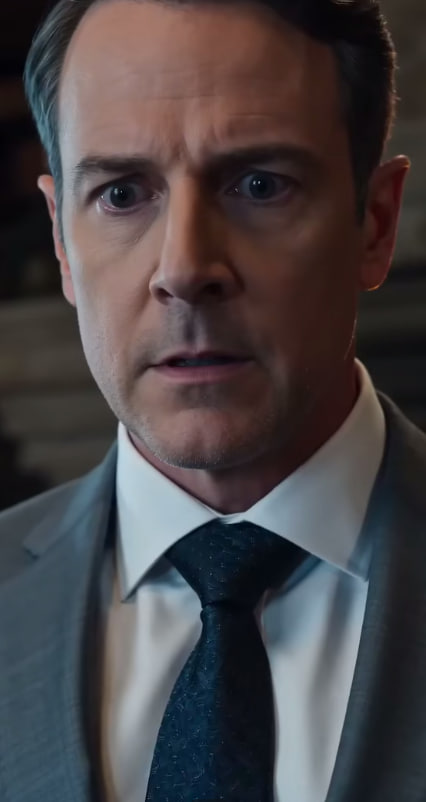
The courtroom was packed.
Reporters sat behind Claire.
Julian sat across the aisle.
Richard was absent under advice of counsel.
Harrison looked twenty years older.
The issue was not whether Noah owned his trust.
Everyone agreed he did.
The issue was whether Claire should continue exercising fiduciary authority over it.
Julian’s attorney portrayed her as reckless.
“She publicly accused senior officers before investigations concluded.”
True.
“She failed for years to discover her fiancé’s conflicts.”
True.
“She inherited an unresolved financial structure created by her late husband and treated every challenge as personal betrayal.”
Partly true.
Claire hated how dangerous selective truth could be.
Naomi did not deny her mistakes.
That strategy surprised Julian.
“Ms. Whitmore made a serious error by speaking publicly while litigation was active,” Naomi said.
Claire heard whispers behind her.
“She also trusted individuals who abused that trust.”
Julian smiled faintly.
Then Naomi continued.
“But fiduciary law does not require clairvoyance. It requires loyalty, care, disclosure, and correction.”
She presented evidence Claire had hired independent forensic accountants.
Disclosed the Northstar funds.
Accepted a special fiduciary.
Refused to sign documents she now understood to be compromised.
Turned over evidence even when it embarrassed her.
Then Harrison testified.
He admitted altering Section Seven.
Admitted forging Edmund’s amendment through a reproduced signature.
Admitted Richard and Julian knew.
Julian’s expression remained controlled.
Until Naomi showed the psychological profile file from March Capital.
“Did Claire commission this?”
“No,” Harrison said.
“Did Noah?”
“No.”
“Who?”
“Julian.”
The judge looked toward Julian.
His face tightened.
Then Richard entered the courtroom.
Claire had not known he was coming.
He took the stand under a cooperation agreement.
Julian stared at him with open contempt.
Richard described the plan.
The shell companies.
The eight-million-dollar compensation agreement.
The marriage strategy.
His entry into Edmund’s cabinet.
His knowledge of the altered inheritance section.
Naomi asked, “Did Claire Whitmore know you were acting for Julian March?”
“No.”
“Did Noah Harper?”
“No.”
“Did Michael Harper?”
“Yes.”
“What did Michael do?”
“He tried to expose us.”
Claire looked down.
Richard’s voice weakened.
“He told me once that I would eventually become the kind of man who couldn’t remember which lie bought which luxury.”
Naomi paused.
“Was he right?”
Richard looked toward Claire.
“Yes.”
Julian’s lawyer demolished him on cross-examination.
“You are testifying to reduce your own criminal exposure.”
“Yes.”
“You lied to Claire.”
“Yes.”
“You lied to Edmund.”
“Yes.”
“You participated in the scheme.”
“Yes.”
“You expected millions.”
“Yes.”
“You would say anything to save yourself.”
Richard paused.
“I used to.”
A murmur spread through the courtroom.
The hearing lasted two days.
The judge did not restore Claire fully.
Instead she ruled that Claire had not acted disloyally toward Noah but that the trust’s complexity and ongoing litigation justified a professional co-trustee.
Claire felt humiliated.
Then strangely relieved.
Noah’s protection would no longer depend on one grieving parent.
Julian’s request to remove her entirely was denied.
The altered Section Seven was declared invalid for purposes of interim administration.
The forged Edmund amendment was excluded.
Noah’s veto survived.
Outside court Julian approached Claire.
“You think you won.”
“No.”
That stopped him.
Claire continued.
“I think Noah did.”
Julian smiled coldly.
“The company is still dying.”
Claire knew.
Whitmore Heritage’s liquidity crisis remained.
Winning the trust case did not restore cash.
Julian had created financial pressure that threatened employees, lenders, and properties unrelated to the estate.
Claire met Samuel Vega and independent restructuring advisers.
They needed at least eighteen million dollars within thirty days.
Options:
Sell a hotel.
Sell timber acreage.
Bring in outside capital.
Or pledge part of Whitmore.
Claire’s personal wealth could cover perhaps six million without destroying her own stability.
No miracle.
No hidden billion-dollar inheritance.
Actual tradeoffs.
She chose to sell the company’s underperforming Charleston hotel.
The board—still controlled by Julian—refused.
“He wants crisis,” Samuel said.
“Then we need the board.”
Three directors were aligned with Julian.
Two were neutral.
Claire began meeting them individually.
Not threatening.
Not buying.
Showing documents.
One changed sides.
Then another.
Julian realized he might lose control.
His response came at 11:40 p.m.
Claire’s phone rang.
Eleanor.
“Someone’s in the library.”
Claire sat upright.
“What?”
“I heard glass.”
“Get out.”
“I’m upstairs.”
“Stay there. I’m calling 911.”
Claire activated the security app.
A hooded figure stood before Edmund’s portrait.
Not Richard.
Too short.
The figure opened the concealed cabinet.
Empty now.
Then turned toward the camera.
Harrison Blake.
Claire stared.
He was supposed to be cooperating.
Why was he back?
On-screen Harrison pulled something from his coat and placed it inside the cabinet.
Then he looked directly at the camera.
As if he wanted Claire to see him.
Police arrived minutes later.
Harrison did not run.
He surrendered.
Inside the cabinet officers found a sealed evidence bag.
Claire’s name was written across it.
Harrison whispered only one sentence.
May you like



“Julian was going to destroy this tomorrow.”
Inside was Michael’s original revocation.







