Chapter 17 - What Richard Finally Said
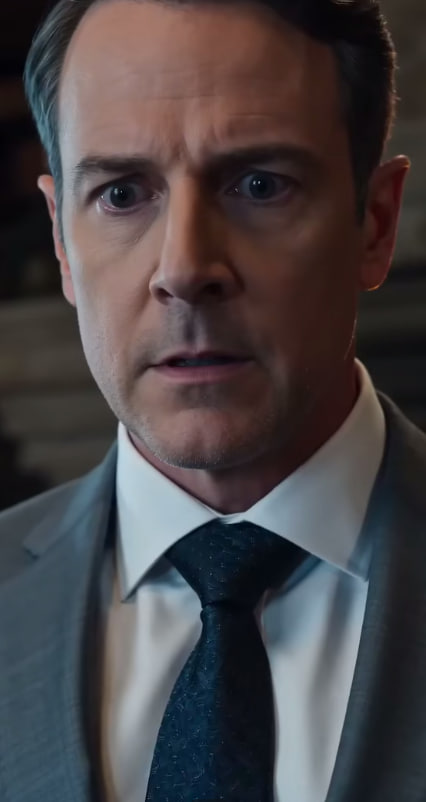
Richard’s second day on the witness stand destroyed what remained of Julian’s defense.
Not because Richard was trustworthy.
Because documents corroborated him.
The prosecutor asked how the inheritance substitution had been planned.
Richard answered plainly.
“Harrison prepared two versions.”
“One legitimate?”
“Yes.”
“One fraudulent?”
“Yes.”
“Why retain the legitimate version?”
“So Claire could review it with staff without seeing the operative change.”
“How would the switch occur?”
“Harrison brought the final signature copy.”
“Did Claire know?”
“No.”
“What did you tell her?”
“That the agreement preserved Noah’s rights.”
“Was that true?”
“No.”
Claire sat behind the prosecution table.
Richard did not look at her.
The prosecutor continued.
“What were you promised?”
“Eight million initially.”
“And later?”
“Twelve million more if my relationship with Claire gave durable access.”
“What does that mean?”
“Marriage.”
A murmur moved through the courtroom.
Richard’s jaw tightened.
“I proposed partly because Julian wanted permanent influence.”
“Partly?”
“Yes.”
“What was the other part?”
Julian’s attorney rose.
“Objection. Relevance.”
Sustained.
Claire almost laughed.
Even the court did not need to decide whether Richard had loved her.
Neither did she.
The facts were enough.
Richard described stealing Edmund’s signet ring.
Entering the hidden cabinet.
Removing the ledger.
Reporting Claire’s routines.
Pressuring Noah about Edmund’s backup papers.
The prosecutor asked, “Did you strike or physically harm Noah?”
“No.”
“Did you frighten him?”
Richard stopped.
“Yes.”
“How?”
“I told him the estate could be lost if his mother made the wrong decisions.”
“Why?”
“I wanted him to tell me where Edmund hid documents.”
“Was that appropriate?”
“No.”
“Was he seven?”
“Yes.”
Richard’s voice cracked for the first time.
Claire looked away.
Then came Harrison.
He explained the false notarizations.
The altered trust pages.
The detachable signature sheets.
The forged amendment.
The hidden financial benefits tied to his wife.
Julian’s defense showed Harrison’s crimes in painful detail.
The strategy was obvious.
If Harrison was disgusting enough, perhaps the jury would stop seeing Julian behind him.
But Harrison no longer protected himself.
“Yes, I lied.”
“Yes, I forged.”
“Yes, I benefited.”
“Yes, I betrayed Edmund.”
Each admission took ammunition away.
Then the prosecutor asked, “Who could have stopped you?”
Harrison answered, “I could have.”
Claire looked at him.
Not Julian.
Not Richard.
Not fear.
Harrison himself.
That answer mattered.
Martin Kessler did the same.
Richard too.
The conspiracy finally became understandable because nobody claimed to be helpless.
Julian was its architect.
But others built it.
On the fourth day, Julian chose to testify.
His lawyers reportedly advised against it.
Claire believed ego made the decision.
Julian sat calmly.
He admitted promoting development.
Denied fraud.
Called shell entities “customary project vehicles.”
Called payments “incentives.”
Called the altered inheritance section “an unauthorized legal drafting choice.”
The prosecutor asked, “Did you authorize Richard Cole to seek domestic influence over Claire Whitmore?”
“No.”
The compensation agreement appeared.
Julian claimed the phrase referred to “relationship stability.”
The prosecutor almost smiled.
“Twenty million dollars for relationship stability?”
“Success compensation.”
“For a man dating an heiress?”
“For a consultant.”
“Who happened to sleep in her house?”
Julian’s face tightened.
Then came the succession email.
The prosecutor read:
“Michael suspects the vendor structure. If he forces audit, shift strategy to succession.”
Julian said it was contingency planning.
“Claire will inherit operational control. Noah will inherit veto. We need one, preferably both.”
“Need one what?”
“Cooperative stakeholder.”
“And when Richard wrote, ‘Leave the child out of it,’ you responded, ‘The child is the trust. Grow up.’”
Julian shifted.
“Poor wording.”
The prosecutor walked closer.
“Was Noah seven when his name was crossed out?”
“Yes.”
“Was he one when you first identified his veto as an obstacle?”
Julian said nothing.
“Mr. March?”
“Yes.”
That was the moment Claire saw the jury change.
Not at the millions.
Not at the shell companies.
At the timeline.
Julian had looked at a one-year-old child and planned for the day his inheritance would need to be neutralized.
The verdict came three days later.
Guilty on conspiracy.
Guilty on multiple wire-fraud counts.
Guilty on bank-fraud-related conspiracy.
Guilty on obstruction.
Not guilty on two narrower counts where the government had not met its burden.
Claire appreciated that too.
Justice was not supposed to be total simply because anger was.
Outside court reporters shouted.
She declined interviews.
Richard was led away to await sentencing.
Before disappearing through the side door, he finally looked at Claire.
He mouthed two words.
I’m sorry.
Claire did not answer.
She did not owe him a response large enough to match his remorse.
Back at the rental house Noah waited awake.
“Did the bad guy lose?”
Claire sat beside him.
“The jury found Julian guilty.”
“So yes.”
“Yes.”
Noah smiled.
Then his smile faded.
“What happens to Richard?”
“He’ll be sentenced later.”
“Do you hate him?”
Claire thought.
“No.”
“Why?”
“Because I don’t want to carry him around that way.”
Noah nodded slowly.
Then he asked the harder question.
“Do you forgive him?”
Claire looked toward the window.
“No.”
Noah seemed surprised.
“You can not hate somebody and not forgive them?”
“Yes.”
“Cool.”
Claire laughed.
Children sometimes accepted emotional complexity more easily than adults.
Then Noah reached into his backpack.
“I made something.”
He handed her a drawing.
The library table.
Claire.
Noah.
The fountain pen.
But in the picture Noah was not screaming.
He was holding Claire’s hand.
Above them he had written:
MOM LISTENED.
May you like



Claire cried.
And for the first time since the library doors had burst open, the memory did not end with fear.







