Chapter 11 - The Founder’s Lie
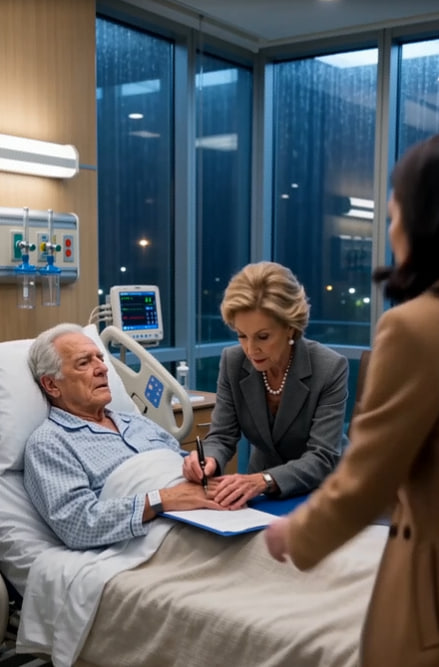
Robert did not deny the recording.
He listened to it from his hospital bed while Sophie stood beside the window.
When it ended, he said nothing.
Sophie turned.
“You told me you refused after the first four million.”
“I did.”
“You told James to hide the full problem from me.”
“For sixty days.”
“You left that out.”
“Yes.”
“Why?”
Robert looked tired.
Not medically tired.
Older than that.
“I was ashamed.”
Sophie felt anger rise.
“You hired Mercer to find the truth while editing your own part out of the story.”
“I told Mercer about the first bridge advance.”
“Not this.”
“No.”
“Why did you give James sixty days?”
“Because I believed if Harbor Crown became public then, we would lose financing immediately.”
“Exactly the argument Mom made.”
Robert looked away.
Sophie continued.
“You keep acting as if everyone else corrupted your principles.”
“I never said that.”
“You didn’t have to.”
She crossed the room.
“You created a family where mistakes were humiliations, then you were shocked when people hid them.”
Robert’s eyes hardened.
“I built a company from nothing.”
“And?”
“I made decisions under pressure you have never faced.”
“Then explain them. Don’t worship them.”
His face flushed.
For a moment Sophie saw the Robert who had dominated conference rooms for decades.
“You think because you found the numbers you understand everything?”
“No.”
She met his anger.
“I think because I found the numbers, I finally stopped believing you did.”
Silence.
The monitor beeped steadily.
Robert’s anger faded first.
He looked at his hands.
“I thought James needed one success that belonged to him.”
Sophie said nothing.
“I thought if you knew, you would insist on impairment, project sale, lender disclosure.”
“I would have.”
“Yes.”
“And we would have lost money.”
“Yes.”
“But maybe not eighteen million.”
Robert nodded.
“No.”
“And maybe James would not have forged my approval.”
“No.”
“And maybe Mom wouldn’t have forged yours.”
“No.”
Each answer seemed to cost him something.
Sophie sat.
“What do you want now?”
“To tell the board the truth.”
“You may lose the chairmanship.”
“Yes.”
“You may damage your reputation.”
“Yes.”
“Lenders may argue your concealment breached covenants.”
“Yes.”
Sophie watched him.
“Are you prepared for that?”
Robert looked at her.
“I am trying to learn the difference between losing control and losing everything.”
It was the closest thing to change Sophie had heard from him.
The special committee arranged a secure video meeting.
Robert disclosed the sixty-day concealment.
He accepted responsibility.
Charles asked difficult questions.
Robert answered them without blaming James.
At the end, Robert voluntarily stepped aside as executive chairman pending the investigation.
The board appointed Charles interim chair.
No Hale controlled the board.
Margaret called Sophie immediately afterward.
“You humiliated your father.”
“He told the truth.”
“You forced him.”
“He volunteered.”
Margaret laughed bitterly.
“You finally got what you wanted.”
Sophie almost hung up.
Then she stopped.
“What do you think I wanted?”
“To prove you were better than James.”
“That was never the point.”
“It has always been the point.”
“No, Mom. That was the competition you and Dad built for us.”
Margaret went quiet.
Sophie continued.
“I don’t want his chair.”
“Of course you do.”
“I want the company solvent, the foundation protected, employees paid and Dad making his own decisions.”
“That sounds very noble.”
“It sounds boring.”
Sophie closed her eyes.
“And right now boring sounds wonderful.”
She ended the call.
The sale-leaseback process moved quickly.
Two institutional buyers submitted preliminary offers.
One was high enough to stabilize Hale Urban if Redcrest agreed to release the headquarters collateral.
Mercer’s team uncovered more good news: several Harbor Crown transfers had paid legitimate construction obligations. The full eighteen-point-four million had not vanished.
The real unrecoverable exposure appeared closer to nine million.
Still catastrophic.
But survivable.
Then came the bad news.
Redcrest rejected Hale Urban’s first settlement proposal.
Their attorney demanded full repayment.
Charles slammed the letter onto the table.
“They know we’re vulnerable.”
Sophie reread it.
Something felt wrong.
“Why refuse immediate partial repayment plus a controlled project sale?”
James, attending with counsel, said, “Because they want Harbor Crown.”
“Why?”
“The land.”
“It isn’t worth enough.”
“Not at current zoning.”
Sophie looked up.
“What does that mean?”
James hesitated.
“There’s a pending transit rezoning.”
“When?”
“Expected next quarter.”
Sophie stared.
“If rezoning passes, density increases.”
“Yes.”
“By how much?”
“Potentially forty percent.”
Now she understood.
Redcrest did not want repayment.
They wanted default.
They wanted control of land that could become vastly more valuable in months.
“You knew?”
“I suspected.”
“Did they?”
“I don’t know.”
Sophie looked toward Mercer.
“Find every communication between Redcrest and city-planning consultants.”
James said, “Why?”
“Because if Redcrest bought distressed debt while possessing material nonpublic information about the rezoning—”
Charles interrupted.
“We don’t know that they did.”
“No.”
Sophie closed the letter.
“But we finally have a reason they might prefer our failure to our money.”
For the first time since the hospital room, the family was no longer the only source of danger.
Someone outside it had been waiting for them to collapse.
May you like



And James’s desperation may have given that person exactly the opening they wanted.
---







