Chapter 16 - The Altered Document
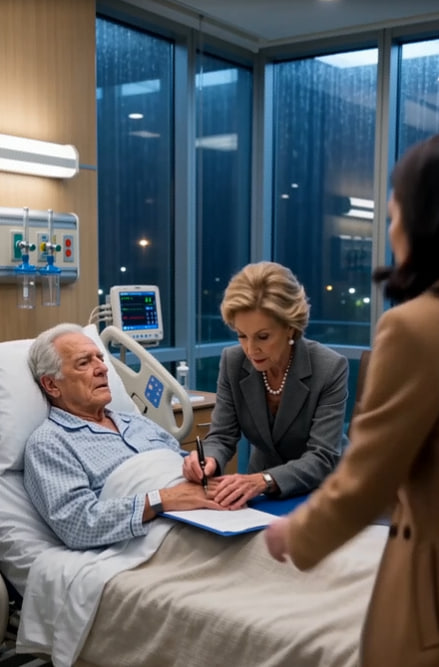
Digital forensics answered the question.
Victor Ames had emailed the draft to Margaret and copied a Redcrest-associated attorney at Margaret’s request because Redcrest wanted reassurance that someone could act for Robert if his condition worsened.
Margaret then forwarded the document to James.
The file recovered from her laptop matched Ames’s version.
The file printed in the hospital did not.
Metadata showed it had been modified eighteen hours later on a computer associated with Ashbury Strategic.
The same company that had received $3.4 million.
Elaine stared at the forensic report.
“They inserted the beneficiary authority.”
Mercer nodded.
“And the altered insurance form.”
Sophie felt sick.
“Mom still brought it.”
“Yes.”
“And she still tried to make Dad sign.”
“Yes.”
Nothing erased Margaret’s conduct.
But the scheme was broader than they knew.
James asked, “Why would Vale care who received Dad’s insurance?”
Mercer answered.
“Northbridge was guaranteeing Redcrest debt. If Northbridge became beneficiary of a thirty-two-million-dollar policy, Redcrest could take a security interest in the expected proceeds.”
James stared at the table.
“They were turning Dad into collateral.”
Sophie looked at him.
“So were you.”
He nodded.
“I know.”
That mattered again.
The federal inquiry expanded rapidly once the forensic report and Ashbury payments were produced.
Conrad Vale stopped taking Hale Urban’s calls.
Redcrest’s outside counsel took control.
Negotiations changed overnight.
The lender now offered to settle its disputed claims, release the headquarters collateral upon closing of the sale-leaseback and accept an orderly auction of Harbor Crown.
They wanted confidentiality.
Hale Urban refused confidentiality regarding suspected misconduct.
The final settlement preserved all government-investigation rights.
The headquarters transaction closed three days later.
For the first time in weeks, payroll, vendor payments and core construction projects were financially secure.
Harbor Crown would be sold.
At a painful loss.
But not through a forced seizure.
Sophie sat alone in the boardroom after the closing.
James came in carrying two coffees.
She raised an eyebrow.
“Is one poisoned?”
“I can leave.”
“No.”
He placed a cup near her.
They sat.
“We saved it,” he said.
Sophie shook her head.
“We stabilized it.”
“Always the CFO.”
“Someone has to be.”
James looked toward the skyline.
“I’m resigning.”
“You’re suspended.”
“I mean permanently.”
Sophie studied him.
“From the board too?”
“Yes.”
“That may be required anyway.”
“I know.”
He slid a signed letter across the table.
“I’m also transferring voting control of my shares to an independent trust until the investigations end.”
“Whose idea?”
“Mine.”
She believed him.
“What will you do?”
“I don’t know.”
“For once?”
James gave a tired smile.
“For once I’m trying not to invent an answer because silence feels embarrassing.”
Sophie looked at the resignation.
“Are you expecting me to forgive you?”
“No.”
“Good.”
“I’m hoping someday you won’t hate me.”
She thought about that.
“I don’t hate you now.”
James looked surprised.
“Really?”
“I’m furious with you.”
“That feels similar.”
“It isn’t.”
She folded his resignation letter.
“Hate would make this easier.”
His eyes dropped.
The following week Margaret was charged with falsifying financial documents connected to the foundation borrowing and Robert guarantee.
The charges did not allege she created the altered hospital document.
Her lawyer entered a not-guilty plea pending negotiations, but publicly acknowledged that Margaret was cooperating and accepted responsibility for signing Robert’s name.
James received a target letter from prosecutors concerning wire fraud and falsified corporate records.
He was not arrested.
Not yet.
Robert left the hospital for rehabilitation at home under medical supervision.
Not the Westchester house.
That property would be sold as part of Margaret’s restitution plan.
Robert rented a smaller apartment near the rehabilitation center.
Margaret moved into a separate residence.
Their marriage, after forty-two years, entered a legal separation neither had imagined.
One evening Sophie visited Robert.
There were no staff beyond a nurse.
No marble foyer.
No family portraits arranged like corporate history.
Just an apartment with moving boxes.
Robert sat at a dining table reviewing papers.
The black fountain pen rested beside him.
Sophie stopped.
“Why do you have that?”
“The hospital released it.”
He picked it up.
“I was thinking of throwing it away.”
“Why?”
“Too much happened around it.”
Sophie sat opposite him.
“The pen didn’t do anything.”
He smiled.
“No.”
“What are you signing?”
“Nothing.”
He looked at her.
“I have an appointment with independent estate counsel tomorrow.”
“Good.”
“I’m changing my will.”
Sophie stiffened.
Robert raised a hand.
“Not because of James.”
She waited.
“I’m placing both of your company shares into governance trusts with independent trustees. Neither of you gets extra voting power because of inheritance.”
“That sounds reasonable.”
“The personal estate will still be divided.”
“How?”
“Equal.”
Sophie studied him.
“And the foundation?”
“A separate bequest after restitution.”
She nodded.
Robert rotated the pen between his fingers.
“I spent years using money to say things I should have said myself.”
“To both of us.”
“Yes.”
“Don’t use the new will as an apology.”
“I won’t.”
He slid the pen toward her.
“You keep it.”
Sophie stared.
“No.”
Robert blinked.
“It belonged to your grandfather.”
“It belongs to you.”
“I want you to have it.”
She pushed it back.
“Then give it to me when it’s just a pen.”
Robert looked at her for a long time.
Then nodded.
He placed it beside his own hand.
His choice.
His responsibility.
May you like



For the first time, that felt more important than inheritance.
---







