Chapter 18 - The Sterling Reckoning
The Orpheus deal never returned.
Sterling Crown refinanced at a higher cost.
It sold one noncore hotel property in Arizona.
Executive bonuses were suspended.
Several board members resigned.
Fifteen thousand employees did not lose their jobs.
The disaster Charles predicted did not arrive.
A more expensive future did.
That was different.
Lillian Cho remained independent chair.
Edward returned as chief executive after regulators completed an interim suitability review, but his powers changed.
Related-party vendors required independent approval.
Security reported to a board committee, not only management.
Heritage Restoration was terminated.
Claire Donovan became vice president of security and integrity.
She hated the title.
Victor congratulated her anyway.
“What about me?” he joked.
“You’re still banned from employee entrances.”
“Cruel.”
“Accurate.”
Charles entered a not-guilty plea initially.
Months later, after Grant’s testimony, financial records and the evidence-destruction messages survived pretrial challenges, he changed course.
He pleaded guilty to federal wire-fraud conspiracy and obstruction charges.
The old 1979 arson itself could not be prosecuted against Walter, who had been dead for decades.
Arthur was dead.
Raymond was dead.
But public records could still be corrected.
Sterling Crown issued a formal historical statement.
It acknowledged:
Raymond Lane did not order the Sterling House fire.
Walter Sterling arranged the attempted destruction of accounting records.
Arthur Sterling knowingly supported a false narrative and coerced Raymond’s exit.
Raymond had separately violated financing rules.
The company did not erase that either.
Victor read the statement three times.
“My grandfather finally got his name back.”
Agnes stood beside him.
“Not all of it.”
He looked over.
“What?”
“He was never just the accusation.”
Victor nodded.
That mattered more than sainthood now.
The Lane heirs retained counsel.
Any direct ownership claim from 1980 faced enormous statute-of-limitations, laches and evidentiary problems.
Victor wanted to sue for twenty-five percent of everything Sterling Crown had become.
His lawyer explained that forty-seven years of corporate evolution did not work like a stolen wallet.
Victor hated the answer.
Agnes understood it.
“You want a number large enough to make history feel corrected.”
“Yes.”
“It won’t.”
“What will?”
“Nothing.”
He stared.
Agnes continued.
“That is what makes injustice expensive. Some parts cannot be repaid.”
Sterling family representatives nevertheless entered mediation over the coerced 1980 settlement.
Not because the Lane heirs were guaranteed to win.
Because Edward wanted the matter resolved without another generation spending its life fighting.
Agnes had her own civil claim.
Sterling Crown’s insurer agreed to settle the guest-abuse incident.
Victor’s conduct had been public, unsupported and humiliating.
Agnes accepted compensation after one condition was added.
No confidentiality clause.
Her daughter laughed when she heard.
“You finally took money without silence.”
Agnes smiled.
“I’m learning slowly.”
Elena forgave her in pieces.
Not all at once.
Some conversations ended badly.
Some ended with tears.
One ended with Elena saying:
“I wish you had told me who paid Dad’s medical bills.”
Agnes answered, “I was ashamed.”
Elena said, “You taught me shame was a reason to hide things.”
Agnes absorbed it.
Another inherited habit.
She apologized.
No defense.
Months passed.
Then the board voted on the new Sterling Crown history exhibit.
Edward insisted Walter, Arthur, Raymond and Agnes all appear.
No saints.
No villains simplified beyond evidence.
Claire reviewed the security portion.
Victor was invited to contribute a Lane family photograph.
He hesitated.
Then gave them the one Agnes had carried in her purse.
Arthur.
Walter.
Raymond.
Agnes.
Four smiling people twelve days before the fire.
The exhibit caption ended:
What followed was shaped not only by wrongdoing, but by decades of silence from people who feared the cost of truth.
Edward read it.
“That includes Agnes.”
She nodded.
“It should.”
“It includes my father.”
“Yes.”
“And me.”
“You delayed disclosure.”
“Forty-eight hours.”
Agnes smiled.
“Truth counts in hours too.”
Edward left it unchanged.
The last unresolved matter was the original fire ledger.
The federal court eventually released it from evidentiary custody after certified copies were preserved.
Edward asked Agnes where it should go.
“Not in your office.”
He almost laughed.
“Museum?”
“Public archive.”
“Outside Sterling?”
“Yes.”
He nodded.
The University of Nevada, Las Vegas Special Collections agreed to preserve it with full research access.
The founder token remained federal evidence longer.
When it was finally released, investigators asked who owned it.
Edward answered before Agnes could.
“She does.”
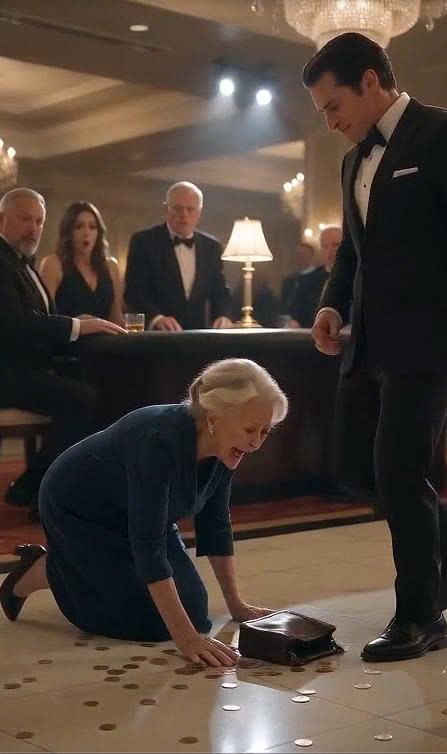
The token returned to the same purse Victor had emptied across the floor.
Its leather had been repaired.
May you like



The scuff from his shoe remained.
Agnes chose not to remove it.







