Chapter 2 - The Name Inside Brass
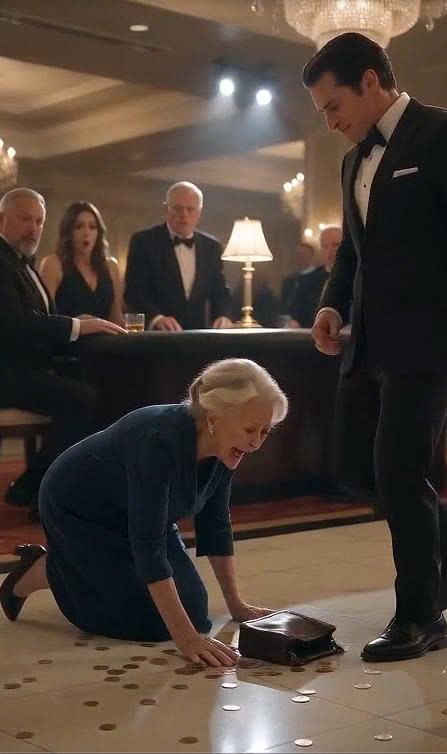
Edward shut down the central roulette pit.
Not the entire casino.
That would have created panic.
But every person involved in the confrontation was moved upstairs to a private security conference room.
Claire collected Agnes’s belongings herself.
Every coin.
Every photograph.
Every key.
Even the empty leather purse Victor had kicked across the floor.
She placed them in separate evidence bags because by then nobody knew what might matter.
Victor stood near the window.
His face had lost all color.
“Raymond Lane was my grandfather,” he repeated.
Edward sat opposite Agnes.
“You knew him?”
“Yes.”
“What exactly does the note say?”
Agnes looked at the folded paper.
“You read it.”
“I want to hear you say it.”
She understood.
He wanted to know whether her story had existed before the paper opened.
Agnes took a breath.
“Raymond discovered money missing from construction accounts before the Sterling House opened. He accused Walter Sterling.”
Edward’s jaw tightened.
Walter had been Arthur Sterling’s older brother.
And Edward’s uncle.
Victor asked, “What money?”
“More than two million dollars.”
In 1979, it had been enough to threaten the entire project.
Agnes continued.
“Walter had debts. Business debts, personal debts, gambling debts. He had been moving money through subcontractors.”
Edward shook his head.
“My father never said Walter had any ownership role.”
“He had fifteen percent.”
“That isn’t in company history.”
“No.”
Victor laughed bitterly.
“Apparently company history is flexible.”
Edward looked at him.
Victor did not retreat.
Agnes continued.
“Arthur had sixty percent. Raymond had twenty-five. Walter had fifteen.”
Claire glanced at Edward.
Sterling Crown’s official founding records claimed Arthur had controlled eighty-five percent before selling small employee interests.
If Agnes was right, the mythology had been rewritten.
Edward unfolded the paper again.
The line was unmistakable:
Raymond Lane found the gasoline. Walter paid Rourke. I signed the lie that followed. Vault C-17 holds the books. Agnes has the key. — Arthur Sterling, 11/3/79
Edward read it aloud.
Nobody spoke.
Victor’s eyes focused on one phrase.
“I signed the lie that followed.”
Agnes nodded.
“Your father helped frame Raymond.”
Edward looked at her sharply.
“You said Walter ordered the fire.”
“He did.”
“Then why would my father frame the man who discovered it?”
“Because exposing Walter would have exposed Arthur too.”
Edward leaned back.
“For what?”
“That comes later.”
Victor slammed a hand against the table.
“No.”
Everyone turned.
“My family spent forty years with people saying Raymond tried to burn this place.”
Agnes’s face tightened.
“I know.”
“My father died believing the Sterlings stole everything from us.”
“I know.”
“You knew all this?”
“Yes.”
“And you stayed quiet?”
That accusation struck harder than Victor expected.
Agnes looked away.
“Yes.”
He laughed without humor.
“You let my grandfather die disgraced.”
Edward stood.
“Watch yourself.”
Victor turned.
“You don’t get to defend her.”
“I’m not defending anyone.”
Victor pointed toward the note.
“Your father signed the lie.”
Edward’s face hardened.
“And you dumped a seventy-four-year-old woman’s purse across my floor twenty minutes ago.”
Victor stopped.
The power reversal was immediate.
Edward continued.
“Before you inherit your grandfather’s grievance as an excuse, remember what you did tonight.”
Victor’s jaw clenched.
He looked at Agnes.
For the first time, shame appeared.
Not enough to become an apology.
Yet.
Claire’s radio vibrated.
She stepped into the hall, answered quietly, then returned.
“Mr. Sterling.”
“What?”
“Someone attempted access to the old west-service sublevel four minutes after the incident downstairs.”
Edward frowned.
“That level is closed.”
“Yes.”
“Who?”
“Badge reader shows executive credentials.”
Victor looked toward the door.
“Whose credentials?”
Claire checked her device.
Before she could answer, the conference-room door opened.
Charles Sterling entered.
Edward’s cousin was sixty-one, silver-haired like Edward but heavier, with a smile designed for boardrooms and funerals.
He was vice chairman of Sterling Crown Holdings.
And Walter Sterling’s only son.
“What happened downstairs?” Charles asked.
Nobody answered.
His eyes moved around the table.
Then landed on the founder’s token.
His face changed.
Only for an instant.
Agnes saw it.
So did Claire.
Charles smiled.
“Where did you find that?”
Agnes said, “I didn’t.”
Charles looked at her.
“I kept it.”
The smile disappeared.
Edward handed him a copy Claire had made of the note.
Charles read.
His expression barely moved.
Then he laughed.
“This is absurd.”
Victor stepped toward him.
“My grandfather’s name is on it.”
“So?”
“So your father is named too.”
Charles looked at Victor as if seeing him properly for the first time.
“Raymond Lane was your grandfather?”
“Yes.”
“How interesting.”
Agnes watched Charles’s right hand.
He had begun rubbing his thumb against his ring finger.
Walter used to do the same thing when nervous.
Edward said, “Claire, whose badge accessed the sublevel?”
Claire looked at Charles.
The room went still.
“It was registered to the vice chairman’s office.”
Charles stopped rubbing his finger.
“My office has six staff members.”
“Which one has your master credentials?” Edward asked.
Charles smiled.
“Edward, please.”
“Which one?”
Charles looked at Claire.
“Find out.”
Claire did not move.
“I already did.”
A photograph appeared on the wall monitor from a security camera.
Timestamp: nine minutes earlier.
A man in a tuxedo stood outside the old west-service elevator.
He was Charles Sterling’s executive assistant, Grant Mercer.
In his hand was something small and brass.
Agnes suddenly looked toward the evidence bag holding her keys.
Claire followed her gaze.
The bag was open.
One key was missing.
Agnes whispered, “C-17.”
Edward stood.
May you like



Charles’s face went blank.
And somewhere three floors beneath the casino, a vault that had remained unopened for nearly half a century was no longer secure.







