Chapter 16 - The Last Order from Edmund
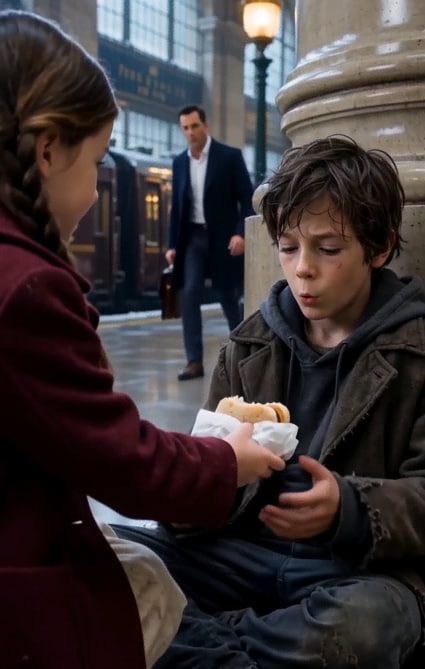
The codicil was legally dubious.
It could not override Daniel’s parental rights.
But its contents were devastating.
Edmund had written:
If Caleb is recovered while Daniel remains controlled by Rebecca’s influence or demonstrates emotional instability, Victor is to petition for guardianship of the boy and preserve the succession shares from Daniel’s control.
Daniel laughed when he read it.
A bitter sound.
Rebecca had been dead three years when Edmund wrote the final version.
Yet Edmund still blamed her influence.
Even after death.
Victor’s attorney had possessed a copy.
He had not filed it.
Jonathan looked at Daniel.
“That matters.”
“Why?”
“Because Victor could have used this immediately after Caleb returned.”
“But he didn’t.”
“No.”
Another fragment of remorse.
Not absolution.
But evidence Victor had finally stopped carrying out Edmund’s orders.
William claimed the original codicil was stored in Edmund’s old country office.
Investigators went there.
They found more.
A video recording of Edmund dictating instructions.
Daniel watched only once.
His father sat behind a mahogany desk.
Still powerful.
Still convinced control was morality.
Daniel is sentimental. Victor understands continuity. The railway must survive whatever damage the family suffers.
Daniel switched it off.
“The family suffered because he protected the railway.”
Jonathan said nothing.
Daniel understood.
This was the final confrontation.
Not only with Victor.
With Edmund’s entire philosophy.
The board had scheduled a vote on permanent governance.
Several family shareholders wanted Daniel restored as CEO and executive chairman.
They argued only an Ashford could repair the Ashford name.
For most of his life, Daniel would have agreed.
Now the idea frightened him.
Victor’s sentencing was also approaching.
William’s cooperation hearing.
The pension settlement.
Caleb’s custody review.
Everything converged.
Chapter sixteen of Daniel’s life, if he had thought of it that way, ended with one unavoidable fact:
He had to decide whether finding Caleb would restore the old Ashford order—
or end it.
At the board meeting Daniel stood before portraits of Edmund, his grandfather Charles, and great-grandfather Henry.
Generations of men who believed owning the railway meant owning every decision.
Daniel placed Edmund’s codicil on the table.
“My father kidnapped my child to protect family control.”
Silence.
“He stole from employees to protect family control.”
He looked at the directors.
“My brother continued the lie to protect family control.”
Then he looked at the family shareholders.
“And now some of you want to give me more control because our name is damaged.”
One cousin interrupted.
“You’re different.”
Daniel answered:
“I hope so.”
He paused.
“But systems should not depend on one man being good.”
That ended the argument.
Daniel proposed permanently separating chairman and CEO roles.
Independent directors would hold a majority.
Family voting trusts would retain ownership rights but lose unilateral authority over management, pension assets, audit committees, and related-party transactions.
Major family transactions required independent approval.
Caleb’s twelve-percent trust would be overseen by a professional co-trustee until adulthood.
Daniel voluntarily surrendered sole proxy authority.
Margaret Sterling stared at him.
“Your father would hate this.”
Daniel smiled.
“I know.”
The reforms passed.
When Daniel returned home, Caleb was waiting.
“You gave away my votes?”
“Not your ownership.”
“What’s the difference?”
“You still benefit from what belongs to you. But I can’t use it alone.”
Caleb looked relieved.
“Good.”
Daniel laughed.
“Most ten-year-olds would be angry.”
“I don’t want anyone doing things because of my shares ever again.”
Daniel’s smile disappeared.
“Neither do I.”
Then Caleb pulled out the brass token.
“I want to go back to the terminal.”
Daniel’s chest tightened.
“Why?”
“I need to see where Sophie found me.”
Sophie appeared behind him.
“I found you because you looked hungry.”
Caleb rolled his eyes.
“I know.”
Daniel looked at both children.
The terminal was where the story had begun.
But before they could return, Jonathan called.
Victor had requested permission to address Caleb at sentencing.
Caleb would not be required to attend.
Daniel could object.
Daniel looked at his son.
The final confrontation could no longer be avoided.
May you like



Sooner or later, Caleb would have to decide whether he wanted to hear the man who stole six years of his life explain himself.
And Daniel could not make that decision for him.







