Chapter 13 - The Red Suitcase
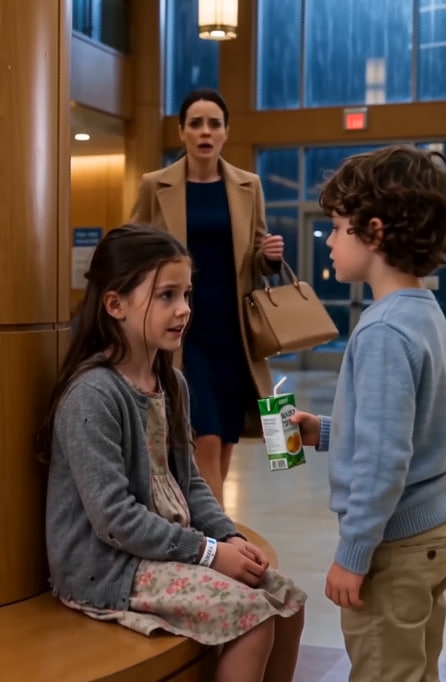
The court ordered Evelyn to produce the red suitcase.
She claimed she no longer had it.
Maya stared at her affidavit.
“She entered Marianne’s house, removed a suitcase, and now doesn’t know where it is?”
Rachel said, “That means she knows exactly where it is.”
Investigators obtained surveillance footage from the storage facility used by the Whitmore Foundation.
Two days after Marianne’s death, Evelyn’s driver carried a red suitcase into a private storage room.
One week later, it was removed.
The driver, Marcus Dean, was questioned.
He had worked for Evelyn for eleven years.
At first he said he did not remember.
Then prosecutors showed him the footage.
He requested counsel.
By evening, Marcus admitted driving the suitcase to Evelyn’s country house in Bedford.
A search warrant followed.
The suitcase was found inside a locked basement archive room.
Rachel was not present when police opened it.
Maya called afterward.
“There are letters.”
“From Marianne?”
“And original documents.”
Rachel sat down.
Among them was a handwritten temporary-care agreement.
Marianne acknowledged taking physical custody of Lucy for “no longer than six months.”
Evelyn signed it.
So did Arthur Wynn.
The document stated Rachel’s consent would be obtained “when medically appropriate.”
Rachel whispered, “They knew they didn’t have it.”
“Yes.”
It was devastating evidence.
Another paper was worse.
Six months later, Evelyn drafted a permanent guardianship declaration falsely stating Rachel had abandoned the child.
Marianne refused to sign.
Instead she wrote across the bottom:
RACHEL DID NOT ABANDON LUCY. EVELYN WILL NOT LET ME RETURN HER.
Rachel cried when she saw the photograph.
Marianne had resisted.
Too late.
Too quietly.
But she had resisted.
The red suitcase also contained the second recorder.
Daniel’s recorded offer to pay Marianne was there.
So was the full conversation.
Daniel: “I’ll give you fifty thousand dollars if you know where my daughter is.”
Marianne: “Keep your money.”
Daniel: “Then tell me the truth.”
Marianne: “The truth will cost more than you have.”
Daniel: “Is Lucy alive?”
A long silence.
Marianne whispered:
“Go home.”
Daniel’s voice broke.
“She is, isn’t she?”
Marianne began crying.
“I said go home.”
Daniel did not bribe her to fabricate anything.
He had offered money for information because he suspected Lucy lived.
Evelyn’s threat lost its power.
The recorder also contained Marianne confronting Evelyn five years earlier.
“You promised six months.”
Evelyn: “Things changed.”
“You made Rachel believe her baby died.”
“She recovered.”
“She thinks Daniel left her.”
“That relationship was never suitable.”
“You’re controlling everybody.”
“I’m containing damage.”
Marianne: “Lucy asks about her mother.”
Evelyn: “Then tell her what we agreed.”
“I hate you.”
“No, Marianne. You hate that you took the money.”
Silence.
Then Marianne said:
“I took the money because you made sure I had nowhere else to go.”
Evelyn answered:
“And yet you took it.”
The recording captured Evelyn perfectly.
Not screaming.
Not threatening dramatically.
Simply converting everyone’s weakness into obedience.
Rachel recognized her childhood in that tone.
Grades.
Boyfriends.
Careers.
Clothes.
“Think carefully, Rachel.”
“Don’t embarrass the family.”
“You’ll understand when you’re older.”
Lucy’s disappearance was the extreme version of a lifelong pattern.
Control disguised as wisdom.
The criminal case strengthened.
So did Rachel’s custody petition.
But Evelyn found one last legal weapon.
Marianne’s will.
The original named Evelyn as successor guardian for Lucy.
Rachel stared at the document.
“She wanted my mother to get Lucy if she died?”
Maya shook her head.
“Look at the date.”
Seven years earlier.
Before Marianne’s later recordings.
A newer unsigned draft named Daniel.
But it had never been executed.
Under ordinary circumstances, Rachel’s biological parentage and absence of voluntary relinquishment would outweigh Marianne’s nomination.
Still, Evelyn used it publicly.
She claimed Marianne trusted her.
Rachel’s lawyers responded with the red-suitcase evidence.
The judge denied Evelyn any guardianship rights.
Temporary placement with Rachel continued.
Then Lucy made her own request.
“I want to talk to Evelyn.”
Rachel said no immediately.
Lucy stared.
“You said I don’t have to choose.”
“This is different.”
“Why?”
“Because she hurt you.”
“I know.”
“She lied to you.”
“I know.”
“Then why would you want to see her?”
Lucy’s eyes filled.
“Because everybody keeps telling me what she did.”
A pause.
“I want her to tell me why.”
Rachel wanted to protect her.
Which meant refusing.
Which suddenly sounded terrifyingly familiar.
Evelyn had justified everything with protection.
Rachel stopped.
She called Dr. Monroe, the child therapist working with Lucy.
They designed a supervised therapeutic meeting.
Evelyn could not discuss litigation, money, trust assets or blame Marianne.
Rachel would watch from another room.
The meeting happened two days later.
Lucy sat across from Evelyn.
Evelyn looked older.
No pearls.
No perfect suit.
Just a dark sweater.
Lucy asked:
“Did you take me?”
Evelyn’s eyes filled.
“Yes.”
Rachel’s breath caught behind the glass.
“Did my mom give me to you?”
“No.”
“Did she leave me?”
“No.”
Lucy swallowed.
“Then why did you tell Marianne to say she did?”
Evelyn began crying.
“Because by then I had already done something terrible.”
Lucy waited.
“And I was afraid if the truth came out, I would lose everything.”
Lucy’s face changed.
Rachel gripped the edge of the table.
Evelyn had finally said it.
Not the company.
Not thousands of jobs.
Not Rachel’s health.
Herself.
Lucy asked, “Did you love me?”
Evelyn closed her eyes.
“Yes.”
Lucy’s voice was quiet.
“Then why wasn’t loving me enough?”
Evelyn had no answer.
May you like



Neither did Rachel.
And in that silence, Lucy became the most powerful person in the room.







