Chapter 14 - The Hospital’s Price
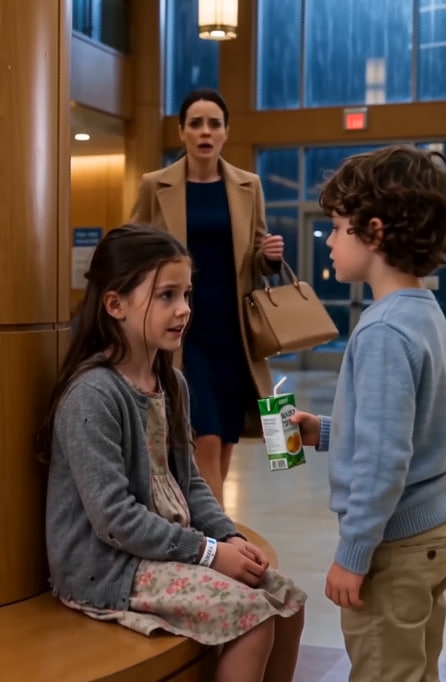
Whitmore Children’s Hospital had spent weeks insisting Lucy’s disappearance was the work of individuals.
Then Dr. Morgan found the donor override policy.
It was institutional.
For years, major foundation donors had access to a “VIP administrative pathway” allowing foundation staff to expedite transfers, private-room assignments and record routing.
It was not designed to remove babies.
But it created a system where wealthy people could bypass ordinary controls.
Evelyn exploited it.
Arthur Wynn exploited it.
Richard Bell ignored it.
Hospital executives had later discovered irregularities during a compliance review.
They never reported them because the Whitmore Foundation threatened to suspend a capital campaign.
Rachel stared at the internal memorandum.
“You knew?”
The current hospital CEO, Patrick Sloan, looked miserable.
“I did not. I joined three years ago.”
“But the institution knew.”
“Yes.”
The hospital’s outside counsel shifted.
“We are prepared to discuss resolution.”
Rachel hated the word.
Resolution.
Money.
Again.
The hospital offered to create a compensation fund for Lucy, reimburse therapy, issue a public acknowledgment, and fund an independent review.
Rachel asked only one question.
“Will you say my daughter was removed through forged authorization?”
Counsel hesitated.
“That language has liability implications.”
Rachel stood.
“Then we’re done.”
Maya followed her out.
“You know they may increase the offer.”
“I don’t care.”
“You should care somewhat.”
Rachel looked at her.
“Why?”
“Because Lucy will live with this for the rest of her life. Money can pay for therapy, education, security.”
Rachel stopped.
Again, Maya forced complexity into anger.
Taking money did not mean selling truth.
The second negotiation changed.
The hospital agreed to a factual public statement after consultation with prosecutors.
It admitted unauthorized donor-office access was used to create a false transfer record and that institutional controls failed.
No dramatic confession.
But no lie.
A substantial settlement went into a protected trust for Lucy under independent trustees—not Evelyn.
Rachel insisted the hospital establish barriers separating donor influence from clinical record authority.
Dr. Morgan helped design them.
The foundation’s name was removed from the neonatal wing pending board review.
Evelyn resigned as foundation chair.
Not voluntarily.
The board voted.
Eleven to two.
Rachel attended.
Evelyn sat across from her while decades of power disappeared by raised hands.
When the vote ended, Evelyn said, “Your grandfather built this.”
Rachel answered, “Then he should have built it so one donor couldn’t override a newborn’s record.”
Evelyn looked around.
“These people will abandon this hospital the moment the scandal fades.”
“Maybe.”
“And you think you’ve improved things?”
“I think a mother shouldn’t need to be richer than a foundation to prove her baby existed.”
Evelyn flinched.
Rachel left.
Then the financial investigation uncovered another secret.
During 2019, when Ethan’s trust loaned money to Whitmore Medical Holdings, Evelyn had charged the trust a “special administrative fee.”
$480,000.
Paid to a private advisory company she owned.
Daniel stared at the transfer.
“She paid herself from Ethan’s trust.”
Maya nodded.
“And if Lucy was the rightful beneficiary—”
“She paid herself from Lucy’s too.”
Evelyn’s claim that she preserved the lie only to save jobs weakened further.
She had profited.
Prosecutors added potential fiduciary-theft charges to the investigation.
Rachel confronted her mother privately after a court appearance.
“You paid yourself.”
Evelyn did not deny it.
“I performed extraordinary work.”
“For half a million dollars?”
“I saved the company.”
“With a child’s money.”
“With trust capital legally available for investment.”
“Then why hide Lucy?”
Evelyn’s face hardened.
“You think companies survive on morality?”
Rachel stared.
“No.”
She stepped closer.
“But families don’t survive without it.”
Evelyn laughed bitterly.
“You’re naive.”
“Maybe I was.”
Rachel looked at her.
“You cured me.”
For the first time, Evelyn seemed genuinely wounded.
Then she said something Rachel did not expect.
“Your father knew.”
Rachel froze.
“My father?”
Rachel’s father, Jonathan Whitmore, had died when she was twenty-two.
Four years before Lucy’s birth.
“That’s impossible.”
“He knew what your grandfather planned for the trust.”
Evelyn continued.
“He begged Henry to change it. He said tying voting control to one firstborn child would poison the family.”
Rachel stared.
“He was right.”
“Yes.”
“Then why didn’t you change it after he died?”
Evelyn looked away.
“Because your grandfather refused.”
“And when you finally had control, you used the poison.”
Evelyn said nothing.
Rachel walked away.
That evening, Lucy sat at the kitchen counter doing homework.
Ethan drank apple juice.
Lucy looked at his bottle.
“You know this is all your fault.”
Ethan gasped.
“What?”
She smiled.
“You gave me juice.”
He grinned.
“Oh.”
Rachel watched them.
For weeks the case had revolved around millions.
But the truth had surfaced because a seven-year-old saw a scared child and shared a drink.
Then Maya called.
Arthur Wynn had disclosed that Evelyn kept one original ledger separate from the family trust files.
A handwritten record of “special family interventions.”
Payments.
Instructions.
Private settlements.
Including Lucy.
“Where is it?” Rachel asked.
Maya answered.
“In the chairman’s vault at Whitmore Medical Holdings.”
Rachel’s stomach tightened.
The company board was scheduled to vote in forty-eight hours on a major sale that would transfer control to an outside private-equity group.
If the sale closed, Evelyn’s allies could remove records during the transition.
Rachel had two days.
May you like



And David Whitmore, still owning substantial shares, had suddenly switched sides again.
He supported the sale.







