Chapter 17 - The Grand Jury
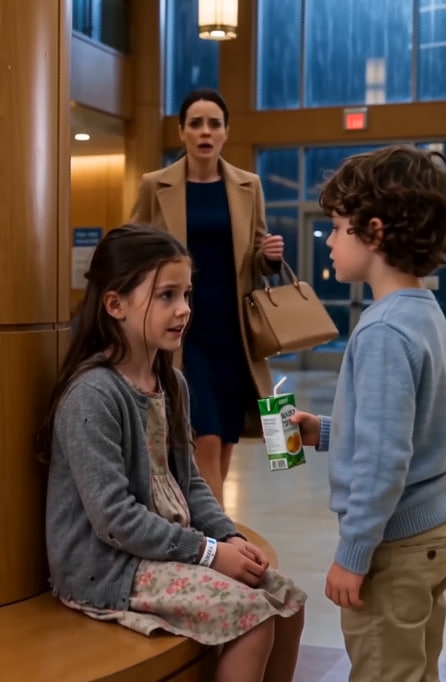
Evelyn surrendered rather than being arrested publicly.
Rachel was grateful for that.
Not for Evelyn.
For Lucy and Ethan.
The charges were serious.
Some counts were limited by statutes of limitation.
Others were preserved by later conduct, continuing fraud, concealment, trust transactions and obstruction.
The prosecution did not pretend every moral wrong had a matching criminal charge.
That mattered.
Reality was messier than revenge stories.
Arthur Wynn pleaded guilty first.
He admitted falsifying medical records and participating in the fraudulent trust certification scheme.
He agreed to testify.
David received no immunity.
But prosecutors treated his cooperation and lesser role differently.
His legal consequences remained substantial, especially in civil and corporate matters.
Evelyn’s case was the center.
Her lawyers attacked Arthur as a self-interested witness.
They attacked Marianne because she was dead.
They attacked the surveillance footage as incomplete.
They argued Evelyn’s early conduct arose from a temporary-care arrangement, not an intent to permanently deprive Rachel of her child.
Then prosecutors played Marianne’s recordings.
Presented the temporary-care agreement.
The chairman’s ledger.
The forged certification after Ethan’s birth.
Foundation payments.
The attempt to remove archive evidence.
The sale contingency prepared when Marianne became ill.
Intent evolved.
That was the prosecution’s theory.
Even if the first six hours began as some warped temporary plan, Evelyn deliberately maintained the separation for eight years.
Rachel testified before the grand jury.
She described waking after delivery.
Asking for Lucy.
Being told the baby had been transferred.
Then being told she died.
A juror asked:
“Did you ever authorize your mother to place Lucy with Marianne Whitmore?”
“No.”
“Did you ever tell Daniel Price you wanted no contact?”
“No.”
“Did you ever tell anyone you wished to relinquish Lucy?”
“No.”
Her answer did not tremble.
For years Rachel had thought strength meant not crying.
Now she understood strength was saying the same truth whether her voice shook or not.
Daniel testified too.
Helen Park.
Howard Pell.
Dr. Morgan.
Samuel Cole.
The grand jury returned indictments.
Evelyn pleaded not guilty at arraignment.
Outside court reporters shouted questions.
Rachel ignored them.
One called:
“Do you want your mother in prison?”
Rachel stopped.
Maya whispered, “You don’t have to answer.”
Rachel turned.
“I want the court to know what she did.”
“Is that a yes?”
Rachel looked directly at the cameras.
“Consequence is not mine to sentence.”
Then she walked away.
That sentence was repeated everywhere.
Evelyn hated it.
She called Rachel from her attorney’s office despite being told all contact should go through counsel.
Rachel answered once.
“You made me sound like a monster.”
Rachel closed her eyes.
“You made me believe my daughter was dead.”
“I am still your mother.”
“And Lucy is still my daughter.”
Silence.
Evelyn whispered, “Can both things be true?”
Rachel thought of Marianne.
Daniel.
Henry.
Her own mistakes.
“Yes.”
Evelyn breathed.
Rachel continued.
“And neither truth cancels the other.”
Then she ended the call.
The trust court issued its own ruling months later.
Lucy was recognized as the beneficiary who should have received the first-descendant allocation at birth.
But the court refused to strip Ethan of every interest created in good faith under false trustee certifications.
Instead, using available trust powers, family reserve assets, Evelyn’s surrendered interests and settlement funds, the court reformed the structure.
Lucy received the full economic value she should have had.
Voting shares were placed under independent trustees.
Ethan retained a separate substantial trust funded from family reserve assets rather than property that should have belonged to Lucy.
Neither child became the loser.
Evelyn’s personal reserve funded a major portion of the correction.
When Rachel told Ethan, he asked:
“So I still can’t buy a dinosaur?”
“No.”
“What is money even for?”
Lucy answered, “College.”
Ethan groaned.
Rachel laughed.
The children’s relationship had developed strangely.
They fought over cereal.
Bathroom time.
Who got to choose movies.
Lucy accused Ethan of breathing too loudly.
Ethan accused Lucy of stealing his markers.
Rachel treasured every argument.
Ordinary sibling conflict was a miracle.
Then came a harder question.
Daniel wanted regular parenting time.
Lucy wanted him too.
Rachel agreed.
But watching Lucy leave with Daniel the first Saturday made Rachel panic.
Her body remembered loss before her mind could stop it.
She called him twelve minutes later.
“Is she okay?”
“She’s eating waffles.”
“Send a picture.”
“Rachel.”
“Please.”
He sent one.
Lucy holding a fork.
Eyes rolled dramatically.
Rachel laughed.
Then cried.
She was still learning that love did not require constant possession.
That lesson had come at terrible cost.
At Evelyn’s next court appearance, plea negotiations became public.
She was considering admitting major parts of the conspiracy.
Maya asked Rachel how she felt.
“I thought I’d want to hear her say guilty.”
“And now?”
Rachel looked toward Lucy and Ethan arguing over homework.
“Now I want her to stop saying everybody else made her do it.”
Two weeks later, Evelyn agreed to plead guilty to several felony offenses involving fraud, falsification and conspiracy, with other counts resolved under the negotiated agreement.
She would also make substantial restitution.
But before the plea, she asked permission to make a full statement in court.
Her attorney advised against it.
May you like



Evelyn insisted.
For once, she was choosing words nobody had scripted for her.







