Chapter 10 - The Blue Numbers
Digital records were less dramatic than photographs.
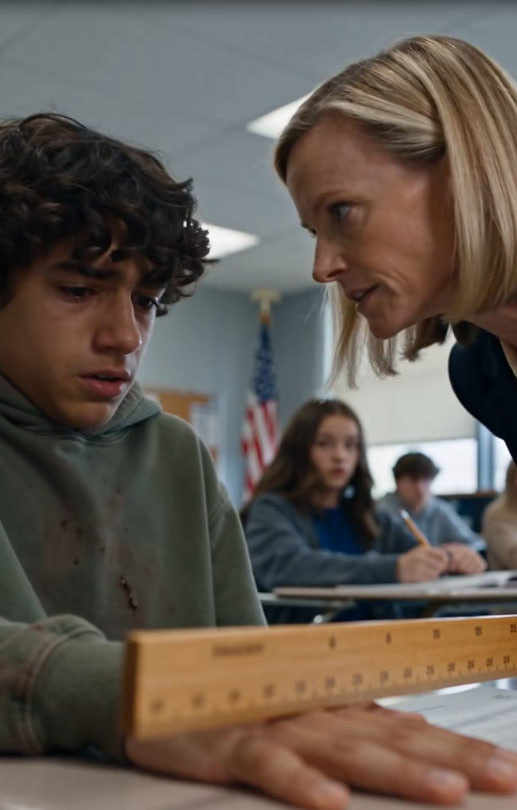
No ruler.
No crying child.
No shocking sentence.
Just numbers.
But numbers remembered things people hoped paper would forget.
Complaint 18-144: originally entered as Student Dignity/Harassment Concern.
Changed two days later to Parent Communication.
Complaint 19-031: originally Staff Conduct—Economic Status Reference.
Changed to Classroom Management.
Complaint 20-087.
Complaint 21-116.
Complaint 22-044.
Seven in total.
Every alteration came from Principal Harris’s credentials.
His attorney offered an explanation immediately.
“Administrative categories are routinely corrected for accuracy.”
The investigator asked, “Why were they consistently changed into less serious categories?”
No answer.
Harris agreed to a formal interview.
He entered with an attorney and left three hours later.
He denied trying to protect Mrs. Vance.
“I protected the school from inflated grievance statistics.”
Patrick Lyle asked, “Why?”
“Because raw complaints are not findings.”
“Then why maintain the blue binder?”
“To track concerns.”
“Why outside the formal system?”
“Efficiency.”
“Why write ‘keep socioeconomic complaints out of the formal count’?”
Harris rubbed his forehead.
“Poor wording.”
“Was the meaning inaccurate?”
Silence.
Harris finally said, “Briarwood serves a complicated population.”
“What does that mean?”
“We have affluent families. Working-class families. Students in temporary housing. Students whose parents expect different approaches to discipline.”
“And you believed formally documenting socioeconomic complaints would harm Briarwood?”
“I believed unresolved allegations could be misunderstood.”
“By accreditation reviewers?”
“Yes.”
“So you changed how they were recorded.”
“I corrected categories.”
Patrick slid Ava Morales’s original complaint across the table.
“She alleged humiliation based specifically on her father’s unemployment.”
Harris looked at the document.
“Her primary concern was tone.”
“Who decided that?”
“I did.”
Across town, Elena received a certified letter from her employer.
Her Briarwood suspension remained in effect.
However, she would be temporarily reassigned to two office buildings.
Fewer hours.
Longer bus commute.
No disciplinary finding.
She read the letter at the kitchen table.
Jonah watched.
“They’re punishing you without calling it punishment.”
Elena exhaled.
“It feels that way.”
“Can Rachel do something?”
Rachel, sitting nearby, corrected him.
“I’m not an employment lawyer.”
“What are you, exactly?”
Sophie answered for her.
“A professional pain in everyone’s—”
“Sophie.”
Rachel gave her daughter a look.
Sophie smiled innocently.
Rachel turned back to Elena.
“I work in nonprofit compliance. I can help you document what happened, but you need actual labor counsel if this becomes a retaliation claim.”
“I can’t afford that.”
“There are legal-aid organizations.”
Elena shook her head.
“No more people.”
Jonah stared at her.
“What?”
“I’m tired.”
She pressed her fingers against her eyes.
“I’m tired of meetings. Forms. Emails. People using words I have to Google afterward.”
Jonah understood that feeling.
She continued.
“And I still have to pay rent next week.”
Nobody spoke.
Then there was a knock.
Curtis Lane stood outside.
Elena stiffened.
“What are you doing here?”
“I need five minutes.”
Rachel and Sophie moved toward the living room.
Curtis shook his head.
“They can stay.”
He placed a printed email on the table.
“I shouldn’t have cut your shifts.”
Elena looked at him.
“No.”
“I thought I was protecting everyone else.”
“By making me easier to sacrifice?”
Curtis accepted the blow.
“Yes.”
Jonah watched him.
Curtis pushed the email toward Elena.
“This came from Harris the morning after you asked about the blue binder.”
Elena read.
Given Ms. Reed’s personal involvement in an active student matter and apparent access to nonpublic administrative materials during custodial duties, we request she be removed from Briarwood pending review.
Elena’s face went still.
Rachel leaned over.
“Did Harris have authority to remove her?”
“Contractually, he could request reassignment.”
“Did he claim she improperly accessed materials?”
“Yes.”
“Did you investigate?”
Curtis looked ashamed.
“No.”
Elena raised her eyes.
“You believed him.”
“I believed the client.”
“I was your employee.”
“I know.”
For several seconds nobody spoke.
Curtis placed another paper down.
“I restored your full hours starting tomorrow.”
“At Briarwood?”
“If you want them.”
Elena stared at him.
“Why now?”
“Because the company’s lawyer read that email and asked whether I wanted to explain retaliation to a district investigator.”
Rachel almost smiled.
Curtis did not.
“I’m not pretending I became brave overnight.”
Elena appreciated that.
“I’ll go back.”
Jonah looked surprised.
“You will?”
She nodded.
“Yes.”
The following evening Elena returned to Briarwood.
She unlocked the custodial closet.
Put on her gloves.
Rolled her cart into the eighth-grade corridor.
When she reached Mrs. Vance’s classroom, she stopped.
A substitute was using it now.
The room was empty.
On the teacher’s desk sat a stack of student essays.
Beside them was a small plastic box labeled MEASURING TOOLS.
Inside were protractors.
Tape measures.
And three wooden rulers.
Elena stared at them.
Then continued cleaning.
She no longer needed the object to disappear.
She needed the fear attached to it to stop deciding where her son belonged.
The next morning, Lorraine Kim called.
“We found another document.”
Elena closed the custodial closet.
“What kind?”
“A performance evaluation.”
“For Mrs. Vance?”
“Yes.”
“Was it bad?”
“No.”
Lorraine paused.
“That’s the problem.”
The evaluation was dated six months after Ava Morales’s complaint.
Principal Harris had rated Mrs. Vance Exemplary in “respect for diverse student backgrounds.”
And in the comment box, he had written:
May you like



Effectively maintains high expectations despite increasing socioeconomic challenges within the student population.
---







