Chapter 20 - The Chair Above the Floor
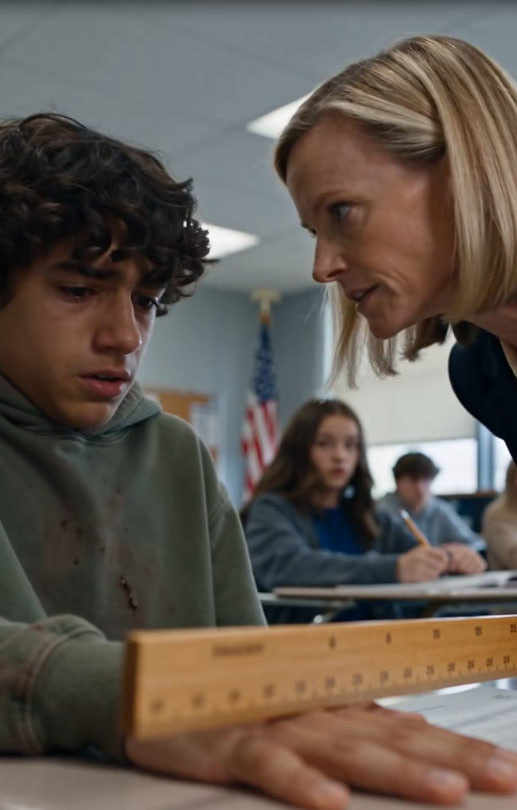
Six months later, Jonah returned to Briarwood on a Saturday morning.
He was fourteen now.
A high-school freshman.
Taller.
New sneakers already beginning to show wear.
Sophie arrived five minutes late and blamed traffic despite living three blocks closer.
“You walked here.”
“Pedestrian traffic.”
Jonah rolled his eyes.
Briarwood was hosting its first Family Work and Learning Day.
The idea had come from students.
Not a career fair.
Not a charity event.
Families were invited to explain what they actually did for work—nurses, mechanics, restaurant workers, accountants, drivers, technicians, cleaners, small-business owners, unemployed parents retraining for new careers.
No profession was placed on a prestige stage.
Elena had almost refused to participate.
Jonah made her.
Now she stood in the cafeteria beside a display about building operations.
Children were fascinated by the floor machine.
More fascinated than they were by the attorney two tables away.
A sixth grader pointed to a diagram.
“You control all that?”
Elena smiled.
“My team does.”
“How many people?”
“Twelve directly. More when we coordinate buildings.”
“So you’re like the boss?”
“Sometimes.”
Jonah watched from across the room.
A year earlier he might have worried someone would connect him to the woman who cleaned their school.
Now three students were asking Elena how the automatic scrubber worked.
Bernard demonstrated.
One kid announced that the machine was “way cooler than accounting.”
The accountant at the next table protested.
Everybody laughed.
Dr. Foster approached Jonah.
“You should be upstairs.”
“Why?”
“Student panel starts in ten minutes.”
“I agreed to five.”
“You agreed to answer questions.”
“That sounds different.”
“It wasn’t.”
Sophie appeared with two bottles of water.
“She tricked us.”
Dr. Foster smiled.
“Education.”
The panel included former Briarwood students discussing the new reporting system.
Ava joined virtually.
Marcus sat beside Jonah.
The questions were less dramatic than expected.
Did reporting really stay anonymous?
What happened if someone lied?
Could students complain about grades?
Were teachers afraid of the system?
Then a seventh-grade boy in the audience raised his hand.
“What if you’re scared your parent will get in trouble because they work here?”
Jonah stopped.
The room became quiet.
He looked at Elena in the back row.
She nodded once.
Jonah leaned toward the microphone.
“That was the hardest part for me.”
The boy waited.
“I thought speaking up would cost my mom her job.”
“Did it?”
“For a while, it cost her hours.”
Adults shifted uncomfortably.
Jonah continued.
“That’s why the new rules include retaliation protections.”
“What if the rules don’t work?”
Jonah thought.
“Then document what happens. Tell another adult. Use the tracking number. Ask who is reviewing it.”
The boy frowned.
“That sounds like a lot.”
“It can be.”
Jonah smiled slightly.
“But being scared alone is harder.”
Afterward, the boy approached him.
“My dad works in the cafeteria.”
Jonah nodded.
“He hates when people call him lunch guy.”
“What’s his name?”
“Mr. Kessler.”
Jonah looked toward a man stacking sample trays nearby.
“Then call him Mr. Kessler.”
The boy smiled.
Simple.
Not everything needed a campaign.
Sometimes dignity began with a name.
By late afternoon families packed their displays.
Jonah helped Elena carry boxes upstairs.
They passed his old English classroom.
The door was open.
Inside, Dr. Foster had arranged chairs for a teacher workshop Monday.
Elena stopped.
“Remember?”
“Unfortunately.”
They entered.
The room had changed slightly.
New posters.
Different books.
Same windows.
Same floor.
Jonah walked toward his old desk.
Elena followed.
On the teacher’s supply shelf lay several wooden rulers.
Normal classroom objects.
One had fallen onto the floor.
Jonah picked it up.
For a second, memory flashed.
The crack.
Mrs. Vance’s face.
His own fingers pulling back.
Then nothing.
Just wood.
Twelve inches.
Faded numbers.
He placed it on the shelf.
Elena watched.
“You okay?”
“Yeah.”
He meant it.
They carried the boxes downstairs.
In the cafeteria, the last families were leaving.
Bernard waved.
Sophie was stealing leftover cookies.
Rachel pretended not to notice.
Elena placed her box down and rubbed her shoulder.
Jonah pulled out a chair.
“Sit.”
“I have cleanup.”
“Your team has cleanup.”
“I am part of my team.”
“You’re also my mom.”
She smiled.
“Bossy.”
“Inherited.”
Elena sat.
Jonah pulled another chair beside her.
For several minutes they watched the mostly empty cafeteria.
A custodian pushed a floor machine across the far end.
Its low mechanical hum filled the room.
Elena looked at Jonah.
“You used to wait here for me sometimes.”
“I remember.”
“You hated it.”
“I hated being tired.”
“You were eight.”
“I was very oppressed.”
She laughed.
Then grew quiet.
“I worried you’d resent my work.”
Jonah looked at her.
“I resented what people thought it meant.”
“And now?”
He watched the custodian guide the machine around the tables.
“Now I think floors get dirty.”
Elena laughed again.
“That’s your grand conclusion?”
“Pretty much.”
“And somebody has to clean them.”
“Yes.”
“And?”
Jonah smiled.
“And the people sitting in the chairs aren’t better than the people cleaning underneath.”
Elena’s eyes softened.
There it was.
The sentence that had once been used against him, finally turned back into something true.
Jonah reached into his backpack.
He still carried the corrected disciplinary record in a plastic sleeve.
Elena noticed.
“You still keep that?”
“For now.”
“Why?”
“To remember.”
“Which part?”
He thought.
“Not what Mrs. Vance did.”
Elena waited.
“What happened after.”
Sophie shouted from across the cafeteria.
“Are you two having an emotional moment without me?”
Jonah groaned.
“Yes.”
“Rude.”
She dragged a chair over.
Rachel followed.
Bernard joined them with coffee.
Someone opened the leftover cookies.
The custodial machine continued humming across the floor.
Jonah looked around the table.
His mother.
His friend.
The adults who had helped.
The people who had made mistakes and corrected some of them.
The ordinary cafeteria chairs beneath all of them.
A year earlier, Mrs. Vance had tried to convince Jonah that a chair was something he had to deserve.
He knew better now.
Dignity was not a prize handed down by teachers, principals, employers or anyone else with temporary authority.
It could be violated.
Ignored.
Delayed.
But it was never theirs to grant.
Elena nudged him.
“What are you thinking about?”
Jonah looked at the polished floor beneath their feet.
Then at the chair holding his mother.
“Nothing.”
She raised an eyebrow.
He smiled.
“Just glad you’re sitting down.”
Outside, evening settled over Briarwood.
Inside, nobody hurried Elena from the chair.
May you like



And this time, no one questioned whether she belonged in it.
THE END







