Chapter 14 - Thomas’s Mistake
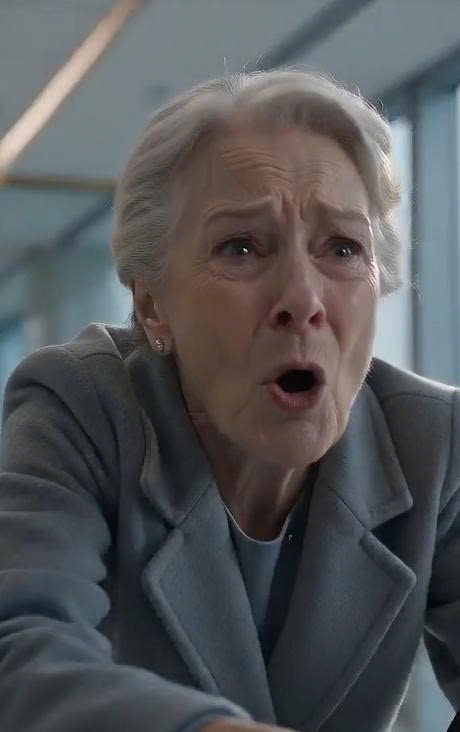
Victoria’s final weapon was real.
Not forged.
That made it dangerous.
In 1982, Thomas Moore had approved a loan to a construction company owned by his brother-in-law.
The loan violated Hale & Moore’s conflict policy.
It later defaulted.
Loss:
$1.4 million.
Evelyn stared at the file.
“He never told me.”
Sarah replied, “It appears genuine.”
Robert read it.
“I didn’t know.”
Victoria’s lawyers did.
They leaked it.
HEADLINE:
MOORE FOUNDER CLAIMANT HID FAMILY LOAN LOSS BEFORE OWNERSHIP DISPUTE.
Commentators asked whether Charles had removed Thomas for misconduct rather than greed.
Evelyn’s credibility took a hit.
She hated it.
Not because Thomas made a mistake.
Because part of her wanted him perfect.
He wasn’t.
Sarah said, “We do not hide this.”
Evelyn nodded.
“We tell the truth.”
The loan documents showed Thomas disclosed his relationship but failed to obtain full board approval.
He later wrote a memo accepting responsibility.
I believed the collateral was sufficient and allowed family loyalty to influence judgment.
Evelyn read the sentence.
Then laughed softly.
“What?”
Sarah asked.
“He sounds like Robert.”
Robert, sitting nearby, looked up.
Evelyn handed him the memo.
He read it.
Thomas had made a governance mistake for family.
The difference came afterward.
He disclosed it.
Took a salary reduction.
Recommended independent review.
The loss was recorded.
No forged documents.
No hidden reserve.
No forty-year concealment.
Victoria’s attack backfired partially.
Thomas became less saintly.
More credible.
Evelyn gave one interview.
Only one.
She sat with a serious financial journalist.
“My husband made a mistake,” she said.
“Does that weaken your claim?”
“No.”
“Why?”
“Because ownership is not a prize for perfect people.”
The interviewer paused.
Evelyn continued.
“If Thomas made a bad loan, hold him responsible for the bad loan. If Charles forged his shares, hold Charles responsible for the forgery.”
The interview went viral.
Not because Evelyn shouted.
Because the sentence was impossible to distort.
Robert watched.
He later told Sarah, “She understands governance better than half the people who ran this bank.”
Sarah replied, “She understands consequences.”
The family conflict intensified.
Victoria’s creditors demanded replacement collateral.
She sold a townhouse.
Then private equity holdings.
Then more Hale National stock.
Her personal fortune remained enormous, but her leverage weakened.
She blamed Evelyn.
Robert blamed himself.
Evelyn blamed systems that let powerful people call self-preservation responsibility.
Jason quietly provided another piece of evidence.
His father’s diary.
Michael Keller wrote in 1983:
Thomas’s bad loan gives Charles cover, but not legal authority. C.H. wants removal to look disciplinary while transfer occurs separately.
That distinction mattered.
Thomas’s mistake had been exploited as camouflage.
Sarah’s case strengthened.
Then the court appointed an accounting expert to trace Project M.
The report was staggering.
Of the $216 million current balance:
Approximately $148 million was reasonably traceable to original Moore reserve value and growth.
Another $38 million reflected commingled Hale contributions.
The rest could not be clearly allocated.
Sarah looked at Evelyn.
“This is the strongest number we’ve had.”
Evelyn nodded.
“What about broader company equity?”
“Still contested.”
The bank’s independent board separately calculated the value of Thomas’s lost founder interest through later mergers.
Their estimate:
Between $410 million and $780 million depending on assumptions.
Evelyn sat quietly.
Susan whispered, “Mom.”
Evelyn thought of Thomas clipping grocery coupons.
Refusing to replace an old furnace.
Driving a fourteen-year-old Buick.
Not because poverty was noble.
Because theft had consequences.
She began to feel anger differently.
Less like fire.
More like mathematics.
Then Robert came to her with no lawyers.
Sarah almost refused.
Evelyn allowed ten minutes with Anna nearby.
Robert placed something on the table.
A small wooden box.
“What is it?”
“My father’s founder signet.”
The same eagle, key, and three stars as the shredded certificate.
Evelyn stared.
Robert continued.
“The eagle was Charles.”
“The key?”
“Thomas.”
“Why?”
“He designed the trust structures.”
“And the stars?”
“Three founders.”
Evelyn frowned.
“Warren Bell.”
“Yes.”
“What happened to him?”
Robert’s face changed.
“He died in 1986.”
“His shares?”
“Sold.”
“To whom?”
“My father.”
“Legitimately?”
Robert hesitated.
Evelyn stared.
“Robert.”
“We don’t know.”
Another founder.
Another transfer.
Another dead man.
Sarah was called back immediately.
The case expanded again.
Warren Bell had heirs.
His sale agreement would have to be examined.
Evelyn looked at Robert.
“How many people did your father steal from?”
May you like



Robert’s answer was quiet.
“I’m beginning to think Thomas was only the one who kept the key.”







