Chapter 18 - What Money Could Not Return
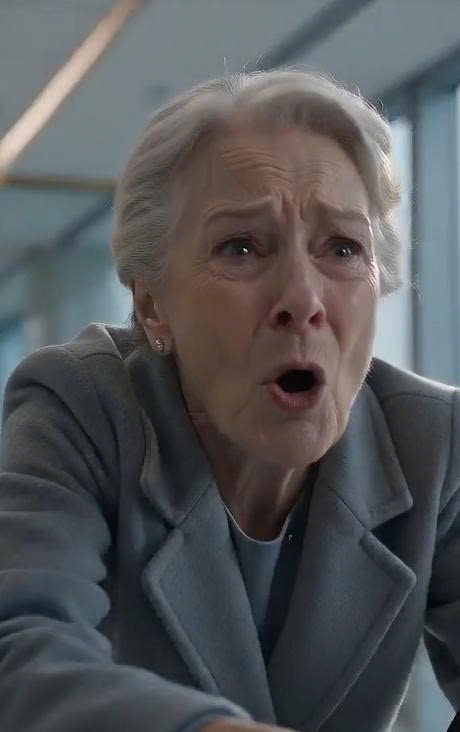
Six months after settlement, Evelyn visited Thomas’s grave.
She brought no flowers.
Only a copy of Hale National’s revised history.
She sat on the grass.
“They finally wrote your name.”
Wind moved through the cemetery trees.
Evelyn laughed softly.
“You made this much too difficult.”
Her anger at Thomas had grown after the case ended.
That surprised her children.
She had defended him fiercely.
Then, once justice no longer required idealizing him, grief became complicated.
“You should have told me.”
Her voice broke.
“I was your wife.”
Thomas had believed secrecy protected her.
Like Robert.
Like Rose.
Like nearly everyone in the story.
Different motives.
Same theft of choice.
“You left me a key instead of a conversation.”
She cried.
Then placed the history beside the stone.
“I forgive you for being afraid.”
A pause.
“I am still angry you made fear my inheritance.”
That was as honest as she could be.
At Hale National, governance changed.
Founder-family related-party transactions required independent approval.
Historical records were digitized and locked against unilateral destruction.
Customer-provided original documents could not be destroyed without consent and retention review.
Employees received training on elder financial dignity.
The first slide showed no photograph of Jason.
He insisted.
“This shouldn’t become one bad employee story.”
Anna agreed.
The problem was larger.
Status bias.
Document handling.
Escalation failures.
Executive secrecy.
Family control.
Jason’s action had been spectacularly cruel.
But institutions became dangerous when they pretended cruelty was the only problem.
Margaret Ellis became permanent chair.
Hale National retained its name after a shareholder review.
Evelyn supported that.
“Why?”
Susan asked.
“Because changing the name is easy.”
“What’s harder?”
“Changing what the name means.”
Robert became a private citizen.
His wealth remained substantial, though reduced.
He sold his Manhattan penthouse.
Not from poverty.
From discomfort.
Too many rooms built for entertaining people who now stopped calling.
He moved to a smaller apartment.
He began teaching occasional unpaid seminars on banking governance at a university.
The first time, a student asked:
“Why should we listen to someone who concealed fraud?”
Robert answered:
“You should not listen because I succeeded. You should listen because I can explain exactly how intelligent people convert cowardice into policy language.”
The classroom went silent.
A clip circulated online.
Evelyn watched.
“He’s improving,” David said.
“He’s talking.”
“That’s improvement for a banker.”
Evelyn laughed.
Jason’s career took longer.
Two years after being fired, he received an offer from a regional credit union.
Not private wealth.
Financial counseling.
Lower salary.
No marble floor.
He accepted.
Before his first day, he visited Evelyn.
“I wanted to tell you.”
“Why?”
“I don’t know.”
She smiled.
“Good.”
“What?”
“You are learning not everything needs a strategic reason.”
He handed her a small box.
Inside were mounted copies of surviving fragments from the original certificate.
The bank’s conservation team had reconstructed about eighty-three percent.
Missing strips remained blank spaces.
The 37% was visible.
Thomas’s name.
Founder seal.
And on the back, partially restored handwriting:
If they deny this, use the key.
Evelyn’s breath caught.
“I thought that was gone.”
“Most of it survived.”
She touched the glass.
Jason said, “The bank wanted to keep it for the archive.”
“What did you say?”
“That it belongs to you.”
Evelyn looked at him.
“Does it?”
He hesitated.
“Legally, probably.”
She laughed.
“Better answer.”
Then she handed it back.
Jason stared.
“What?”
“Put it in the Thomas Moore Center.”
“You don’t want it?”
“I already know what it says.”
The document had changed.
Once, it was proof Thomas clung to because nobody believed him.
Then Jason destroyed it.
Then the scraps triggered truth.
Now Evelyn no longer needed the paper to prove her husband existed.
She needed other people to see what institutions were capable of calling worthless.
Jason nodded.
“I’ll hang it.”
“Not high.”
“What?”
“Eye level.”
“Why?”
“So nobody has to kneel to look at it.”
Jason went still.
He remembered Evelyn on the marble floor beside his shredder.
“Yes.”
That evening, Robert called.
“I heard about the certificate.”
“News travels.”
“Are you sure you want it public?”
Evelyn smiled.
“Still managing?”
He laughed.
“Old disease.”
“Terminal?”
“Apparently chronic.”
She told him where it would hang.
Robert went quiet.
“Thomas would like that.”
“You don’t know.”
“No.”
“Better.”
They had developed something that was not friendship.
Not forgiveness.
A disciplined honesty.
Robert asked:
“Do you ever wish the box had stayed closed?”
Evelyn looked around her modest home.
Thomas’s chair.
His books.
A photograph from their thirtieth anniversary.
“No.”
“Even knowing everything?”
“Yes.”
Robert waited.
Evelyn continued:
“I lost the husband I thought I had.”
“That sounds terrible.”
“It was.”
May you like



She touched his photograph.
“Then I got the real one back.”







